Category: Grammar

  • Word Wednesday – The Princess Who Wasn’t

    Word Wednesday – The Princess Who Wasn’t

    I like to joke about never having seen Star Wars – as in I’ve never sat down and consciously watched more than a single Star Wars movie at a time. I have seen the entire original set though, just in pieces. I think Return of the Jedi was the only one I watched in one sitting. Nevertheless, as a self-proclaimed geek, most of my friends are very into Star Wars and it’s pretty much impossible not to have absorbed a lot of Star Wars information and trivia via osmosis. Princess Leia wasn’t the type of princess to sit around waiting to be rescued – in fact, she’s the one who leads the rescue mission for Han Solo in Return of the Jedi. All that being said, I adored Carrie Fisher – not just because she was amazing in Star Wars, but because she was one of the most well rounded Hollywood actresses I’ve ever heard of.

    The first movie I remember seeing that had Carrie Fisher in it was The Blues Brothers. She played a mystery woman – Jake’s ex-fiancée – who had a bone to pick with the Blues Brothers and a small arsenal at her disposal with which to make her point. She was seriously badass and I desperately wanted to be like her one day. Not that I wanted to blow up a propane booth and send a telephone booth airborne because of an ex-fiancée who’d done me wrong, but I wanted to be the type of woman who would take up a flamethrower if necessary to show that she meant business.

    via GIPHY

    When I was in high school, I dated a guy who was a cinema geek. the more obscure the movie, the more likely it was that he and while we were dating I, had seen it. He had a thing for Woody Allen movies, and we spent many an evening watching and re-watching his favourites. One of these movies, Hannah and her Sisters, had Carrie Fisher in it and once again, I was drawn to her like a moth to a flame. I liked the April-Holly story arc the best of the three in the film and wanted more of April (played by Fisher). April wasn’t flamethrower badass but she was a woman who knew what she wanted and was determined to get it – no matter the setbacks.

    Fisher was also a celebrated screenwriter and script doctor – at a time when there weren’t a lot of women in the business. She was one of the most in-demand script doctors (writers not previously associated with the script who fix it up pre-production, making it funnier, filling plot holes, and shoring up any shaky bits) in Hollywood. As a writer and editor myself, I have tremendous respect for those who toil behind the scenes making things better. As a freelancer, I have even more respect for Fisher walking away from her script doctoring career when movie studios started to take advantage of script doctors by making them do what amounted to spec-work. Instead of hiring a script doctor based on their previous works or recommendations from other writers, studios started to demand that script doctors “audition” by sending in their notes for proposed changes, and then using the notes from various prospective script doctors to change the scripts themselves without paying. As Fisher bluntly put it in an interview with Newsweek in 2008 “That’s free work and that’s what I always call life-wasting events.” I couldn’t agree more.

    Carrie Fisher was very candid about her struggles surrounding mental health. While early in life she tried to hide it, in the past two decades she owned her chemical imbalance. She basically said “this is who I am, warts and all, and if you don’t like it, I don’t care” – this message is hugely empowering for women in general but especially for women in the arts who often feel the need to be ‘perfect’ in order to secure jobs. Her message when asked what advice she would give people living with mental health issues who were afraid to pursue their dreams struck a chord with many people. “Stay afraid, but do it anyway. Stay afraid, but do it anyway. What’s important is the action. You don’t have to wait to be confident. Just do it and eventually the confidence will follow.”

    Carrie Fisher, a woman in her 50s with medium length brown hair stares at the camera
    Carrie Fisher looking dead on at the camera.

    Finally, there is one Star Wars movie I’ve watched a couple of times: The Force Awakens. This was the movie in the franchise that made me want to go back and watch the others – particularly the original trilogy – and it was all due to Carrie Fisher’s role. She was still Leia, but she is no longer just Princess Leia, but General Leia Organa. She is not the young, naive, girl in we first met, but an older, stronger, and wiser version of herself. Leia Organa carries herself with authority, takes no crap from anyone, and does what needs to be done. Even when she learns that the love of her life has been killed, when she could easily say “to hell with this” and walk away, General Organa fights on. With apologies to the mystery woman from The Blues Brothers, but I really want to be General Organa when I grow up. If I can muster half the intrepidity that General Organa (and Carrie Fisher herself) have, I’ll be delighted. I was struggling for a single word to describe Carrie Fisher – strong, courageous, brave, and full of moxie came to mind – so did spunk but that’s more aligned with Mary Tyler Moore in my brain. I have been trying all day to figure out the right word when it landed in my lap… intrepid. Intrepid is another Latin root word – with the prefix in meaning not in front. The Latin word trepidare means ‘to tremble’ so intrepid means not trembling. Unafraid, or rather, afraid but doing it anyway – Perfect.



    Stylized version of the word Intrepid
    Intrepid

    Intrepid ( in·trep·id) adjective

    Characterized by resolute fearlessness, fortitude, and endurance
  • Word Wednesday Not Quite Feeling It (Yet)

    Word Wednesday Not Quite Feeling It (Yet)

    In case anyone hasn’t noticed, the holiday season is creeping up on us rather quickly. Here in Ontario, we’ve had our first snowfall and all of the requisite bad driving conditions that accompany it. It’s just over 2 weeks until Christmas and Hanukkah, because this is one of those magical years where both celebrations overlap.  I have several friends who celebrate both holidays and when they fall over the same period, their already crazy lives get even crazier.  My schedule is certainly filling up as the end of the year draws near – with babysitting gigs, dinners with friends, and a couple of holiday parties. I love the chance to get dressed up, put on some holiday themed jewelry (usually that I made myself) and celebrate with friends. As I wrote last week, I love picking out gifts for friends and family and seeing them smile when they open it. But unlike other years where I’m in full on Santa, Cheesy Romantic Comedies, and Christmas baking explosions, I’m feeling decidedly non-festive this year.

    I have felt like this before and it usually resolves itself long before we hit double digit dates in December. I’m not sure what is so different this year but there’s something missing for sure. I was briefly in the Christmas spirit a couple of weeks ago when I went with my friend Louise to see the Trans-Siberian Orchestra do their annual Christmas Show.  It was spectacular: he music was amazing even at the Air Canada Centre (a place not known for great acoustics), the set design was nothing short of magical, and the special effects and pyrotechnics were beyond what I expected. This was one of those shows I’d wanted to see for awhile but had never managed to attend the one or two nights they were in Toronto due to scheduling conflicts. This year I was gifted the tickets, and finally went and I regret not going sooner and making it a Christmas tradition long before now. If you like Christmas music with screaming guitars, fire, an awesome group of background singers, and joined with instrumentalists from the local symphony, go see the Trans-Siberian Orchestra if you possibly can. You won’t regret it. But you may want to bring ear plugs because it’s a pretty loud concert.

    %{include image.html url=“/wp-content/uploads/2016/12/IMG_20161123_215606_edit_edit.jpg” alt=“Four musicians play on a stage with fireworks going off behind them.” description=“Definitely one of the best concerts I’ve seen.”}

    I know it’s partly grief – I came by my love of all things Christmas quite honestly – Mum adored Christmas and would have the house decorated long before the Grey Cup participants were decided. This is the third Christmas without her, and things are getting a little easier but I still have moments when grief washes over me like waves washing away a sandcastle on the beach. One of those happened this past weekend as I was getting groceries after volunteering. I was in a good mood after volunteering and was enjoying walking the aisles of the supermarket in search of new things to cook in the pressure cooker. Then I rounded a corner and came face to face with a display of Mrs. Kipling’s Mince Pies. I cannot abide mince pies – I don’t like the taste or the texture. Dad’s firmly in my camp – not a fan of mincemeat nor fruitcake (unless it is positively swimming in brandy). Mum was another story and every year we would start hunting as early as mid-November for the coveted Mrs. Kipling’s Mince Pies. Seeing them on display made me smile and I had one of those grief-fog moments where I forgot mum isn’t here anymore. I grabbed the package and as I turned to put it in my cart the realization hit me like a ton of bricks. I felt sick – my head got all foggy and muffled, I was really really hot all of a sudden, and needed to go somewhere to regain my composure. Fortunately the grocery store in question has bathrooms that are pretty much impossible to find and are single family style washrooms instead of gendered multi-stall affairs. I beelined to the washrooms and had a good cry, emerging a few minutes later red-faced but able to continue shopping.

    I’m going through the motions – the tree is up and decorated, the Christmas stuffed animals that surround the stairs to the basement are being put out as we speak, the family and dining rooms look like an elf was let loose with every holiday decoration known to man. I even got the blasted Noma musical boxes (circa 1990 ) out and untangled the wires to set them up. The manger is set up, awaiting the arrival of the baby Jesus figurine on December 25th (assuming I haven’t forgotten where I put it). I even hung the stockings on the mantle. Dad never really liked filling stockings – I was in charge of mum’s stocking once I was old enough to be let loose in a store with $30 (Santa only filled kids stockings in our house). Since mum died, we haven’t done stockings and that makes me sad because I love opening the stocking to find some of the same things in there year after year – an Archie comic book, a lottery ticket, Ovation chocolates, and lip balm. There were other things in the stocking too, but those were in there without fail every year. Seeing the empty stockings hanging on the mantle makes me feel sad, but not having them hanging at all was upsetting too so it’s hard to choose.

    %{include image.html url=“/wp-content/uploads/2016/12/IMG_20161207_141253_edit.jpg” alt=“A mantel with 4 stockings hanging on it” description=“The family room mantel ready for Christmas”}

    I’ve got a couple of days ahead which will involve me playing Santa Jenn to a few of my friend’s kids and lots more gifts to be distributed next week. I’m also volunteering to help sort gifts for the local Santa fund so that should improve my Christmas spirit.  Have you ever had a year where you just didn’t get into the holiday spirit? What helped you?

    Spirit comes from Latin – which shouldn’t be a surprise at all – the root word is spirare – to breathe.

    %{include image.html url=“/wp-content/uploads/2016/12/coollogo_com-31270177.png” alt=“Stylized text of the word Spirit” description=“Spirit”}

    Spirit (spir·it) Noun

    1. Qualities regarded as forming the definitive or typical elements in the character of a person, nation, or group or in the thought and attitudes of a particular period.

    2. The real meaning or the intention behind something as opposed to its strict verbal interpretation.

    3. The attitude or intentions with which someone undertakes or regards something.

    4. The nonphysical part of a person that is the seat of emotions and character; the soul.

    5. Strong distilled liquor such as brandy, whiskey, gin, or rum.

  • Word Wednesday – Present Tense

    Word Wednesday – Present Tense

    In case you’ve been living under a rock, last Friday was Black Friday and even though Canada doesn’t have the day off like many Americans (nice job getting a 4 day weekend for Thanksgiving by the way), we seem to have adopted the Black Friday shopping insanity. I’m all for a bargain, but getting up at 5 am to line up to get into a store to save $20? Not so much. Of course, there’s always Cyber Monday where there are deals online and I don’t need to put on real clothes, but this year many online retailers had deals for both Black Friday AND Cyber Monday which made me a happy girl.

    I’m pretty lucky when it comes to Christmas present shopping. I love to shop for other people (not so much for myself though). For me, taking the time to find the perfect present is worth it when you see the look on the recipient’s face. I’m reluctant to get people gift cards for this reason, though I certainly understand their appeal. I have a lot of kids in my life that I am “Auntie Jenn” to and they all get books for Christmas. I decided long ago that Christmas wasn’t the time when I wanted to try to keep track of who had what Barbie, whose parents didn’t agree with Barbie, who liked Thomas the Tank Engine vs Chuggington, or who had what creepy-eyed Beanie Boo. Books are much easier to keep track of and toys are saved for birthday celebrations which are scattered throughout the year.  Some kids, who are clearly after my heart, want books for birthdays too which is totally fine with me.

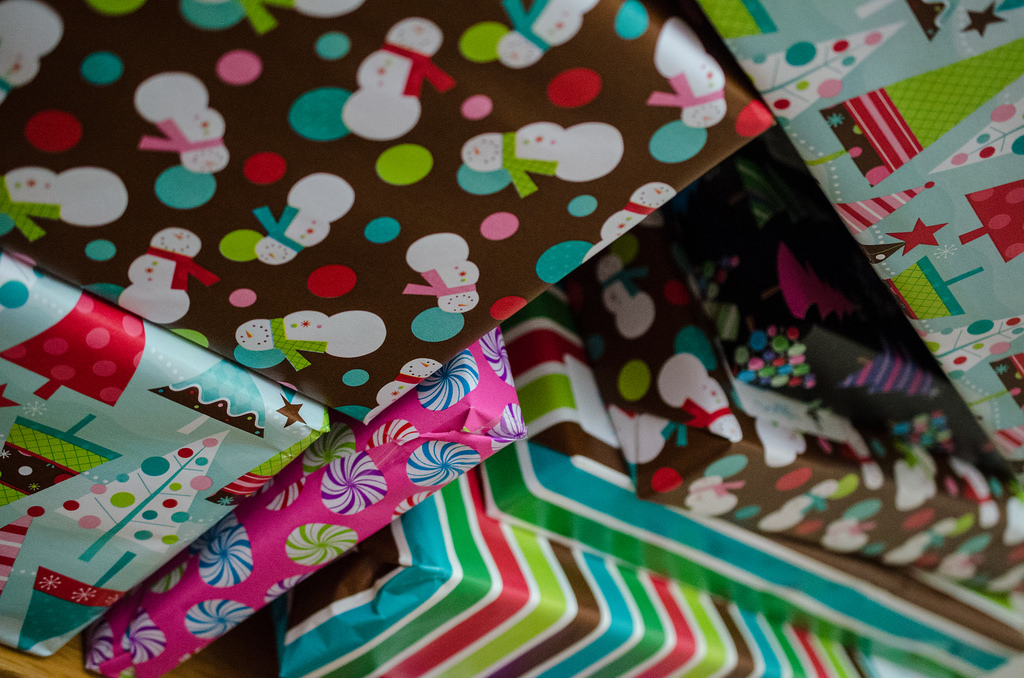
    A pile of presents wrapped in many different wrapping papers
    My presents don’t usually look this pretty.

    I’ve had my eye on one thing for the household for awhile now. Actually since last year around this time. I kept telling myself that if it went on sale this year I would get it as a Christmas present to myself. So, when it went on sale, I did just that.  

    I bought it on Friday, and then promptly left for 3 days in Toronto. It arrived Monday afternoon, which amazed me because I don’t have Amazon Prime anymore since I never got things in 2 days even though I’m roughly 40 minutes away from one of the main Amazon warehouses. But, I digress. It arrived, I eagerly opened it up, read the entire manual because that’s the kind of geek I am, and ran it through a test cycle. I already had dinner for Monday planned and so I made a mental note to use the Instant Pot for Tuesday’s dinner. After a quick run to town to hit up the grocery store (where the cashier guessed I had just purchased an instant pot because of the items in my cart – apparently I’m not the only one to cash in on the deal), I made a roast with veggies for dinner in about an hour. I even stepped up the game by making Yorkshire puddings to go with the roast (in my second favourite kitchen appliance – our amazing Breville Smart Oven.

     The results were amazing – the photo doesn’t do it justice but I was too hungry to try to stage a proper photo.

    %{include image.html url=“/wp-content/uploads/2016/11/IMG_20161129_183723_edit1.jpg” alt=“A plate with roast beef, potatoes, carrots, gravy, and a yorkshire pudding” description=“A fancy dinner, made fast.”}

    Look how cute the Yorkshire pudding looks!

    So I’m really happy with my purchase and for once I got myself a gift that I’m going to use and that is going to benefit everyone around me since I can make dinner in no time flat.  I am going to have to start seeking out some good pressure cooker recipes. I love that I don’t have to thaw meat before cooking and that I can walk away from it while it does its thing unlike with a traditional pressure cooker which I’m pretty sure would blow up my house if I tried to actually use it.

    Anyway, all of this got me thinking about the word gift and where it comes from any why we use it. So, being me, I looked it up. It turns out that gift comes from the Old Norse word gipt which means “something given”. Well that’s pretty straightforward now isn’t it? There’s also an Old English word giefan which means “to give”. Either way, the word dates to about the 12th Century.

    %{include image.html url=“/wp-content/uploads/2016/11/coollogo_com-201011804.png” alt=“Stylized word gift” description=“gift”}

    Have you started on your holiday gift shopping? Have you ever bought yourself a Christmas / Holiday gift? Would you?  Do you have an Instant Pot (if so… send me recipes please!).

    Gift (gift) Noun

    1. A thing given willingly to someone without payment; a present.
    2. A natural ability or talent.
  • Word Wednesday – Losing Faith

    Word Wednesday – Losing Faith

    It’s been a week since I woke up to the news that Donald Trump had won the US Presidential Election. I’d like to say the world is the same place in the week since, but that would be a lie. There have been protests. There has been fear. There have been many bad words. There has been a President-Elect who has has zero experience in government making appointments that make supporters of BOTH parties cringe. There has not been much in the way of hope.

    For those who are about to comment “but you’re Canadian” I’d like to point out the words of former Canadian Prime Minister Pierre Trudeau when speaking to the Washington Press Club about Canadian-American Relations in 1969. “Living next to you is in some ways like sleeping with an elephant. No matter how friendly and even-tempered is the beast, if I can call it that, one is effected by every twitch and grunt.” Canadians do have more than a passing interest in American politics – and not just because this year was best symbolized by this (photoshopped) image found on Reddit a few years back.

    A mother moose lays on a lawn while two baby moose calfs rest in a wading pool. There is a van on fire in the street in front of the lawn but the moose seem unconcerned.
    Just some moose watching a van burn. From: Reddit

    I’m kind of a politics geek, or I was until this recent US election cycle. The non stop election for 18 months exhausted me and I don’t even have to deal with it on every commercial break like my American friends do. I took lots of political science courses in university – I almost double majored in history and political science back when I had the crazy idea I’d want to be a Constitutional Lawyer (before I realized how tough the job market would be for constitutional lawyers). I learned a lot about the Canadian electoral system and a lot about the American electoral system thanks to a few comparative classes I took. I understand the way the Electoral College works and though I’ve often admired the ability to directly vote for the leader of the country the way the American system allows, I have never understood why a simple majority isn’t what decides the winner. (The answer is that the US is not a direct democracy, votes don’t actually determine who becomes president which is so mind boggling to me.)

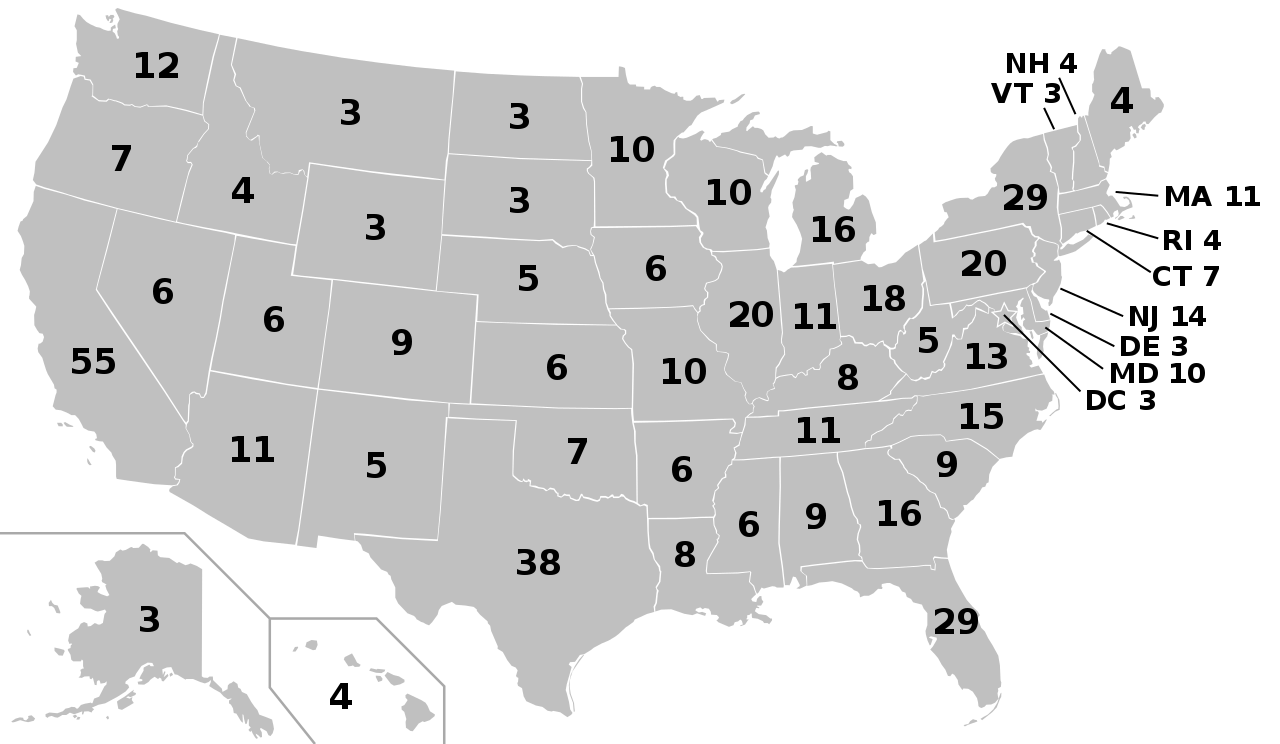
    A quick explanation of the Electoral College for those who don’t know or have forgotten. Instead of each vote directly going towards the candidate and the one with the most votes winning the presidency, the founding fathers of the US decided to make things interesting. The reasoning behind the decision was to keep power in the hands of the people and to make partisan politics less of a factor. It worked well in 1800… and even 1850. It does NOT work well in 2016. Anyway, instead of each vote directly going towards the president, they instead go to the members of the Electoral College who officially cast the 538 votes for president. Each state (and the District of Columbia) gets the number of Electoral College votes equal to their Representatives and Senators combined. It can be as few as 3 (Montana, DC, North Dakota, South Dakota, Vermont, and Alaska) or as many as 55 (California). The representatives are supposed to vote the way the popular vote in that state went.  Every state other than Maine and Nebraska is all or nothing – so if 50.01 percent of the state votes one way, ALL of their electors in the electoral college are supposed to vote that way (in reality, Maine and Nebraska usually vote as a bloc too but they aren’t mandated to). So take Florida for example. It has 29 Electoral College votes – but all of them go to Donald Trump because he got a slim majority of the overall votes in the state.

    A map of the United states with numbers on each state denoting the number of electoral college votes it has
    The Electoral College votes by state.

    Right now, Donald Trump is president-elect. Nothing is official until the members of the Electoral College meet on December 19th and cast their ballots for President. There is still a scenario that has Trump not winning the presidency – if members of the Electoral College go rogue. The official term for this is going faithless – as in they have no trust in the results from their state. Some states have laws that punish electors who go faithless, usually by a fine, but others have no such rules. So in theory enough voters could go faithless in December and the result would be historic and unprecedented but more in line with the popular vote.

    At the very least it will give the pundits something to talk about for the next month.

    %{include image.html url=“/wp-content/uploads/2016/11/coollogo_com-109631196.png” alt=“stylized text faithless” description=“Faithless”}

    Faithless (faith·less) adjective

    1. Disloyal, especially to a spouse or partner; untrustworthy.
    2. Without religious faith.
    3. (US politics) A member of the Electoral College who does not vote the way they were bound to by the state voting results.
  • Word Wednesday on Thankful Thursday

    Word Wednesday on Thankful Thursday

    I couldn’t quite make up my mind on whether or not this should be a Word Wednesday post or if I should call it Thankful Thursday so I decided to make it both. Now before anybody asks. I’m planning to tackle the US election results with a word next week. I need some time to think of a word that adequately describes what went on  other than one that rhymes with musterduck. This week, however is the week of Remembrance so I’m going to concentrate on that today.

    I’ve written about how important Remembrance Day is to me before, and there’s no doubt that it’s always going to be a special day in my household. Of late, I’ve been quite involved with the debate over whether or not Remembrance Day should be a statutory holiday in Ontario as it is in many other provinces. I’m of two minds on this. On the one hand, I like the idea of families being able to go to the cenotaph together to either remember family members who served or to thank veterans in person. I’ve seen the joy in an older veteran’s eyes when a small child comes up to thank them – it’s really special. Having Remembrance Day as a statutory holiday would allow this to happen more frequently. The banks and federal and provincial government offices are already closed so I’m not sure how much of a negative effect it would have on business to have the day off.

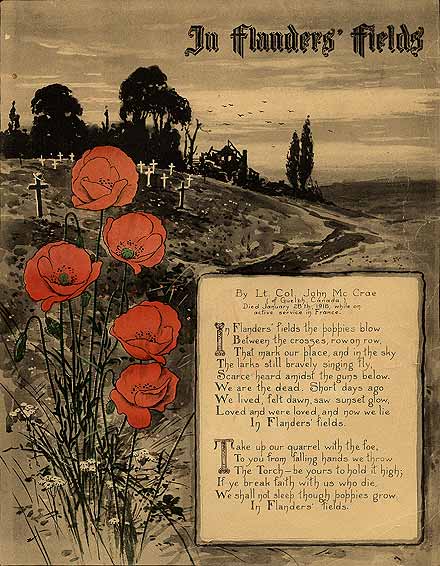
    On the other hand, I understand that not all parents will bring their kids to a cenotaph or watch the ceremony from Ottawa via television or the internet so those kids may end up seeing Remembrance Day as just another day off.  This argument is usually accompanied by statements such as “schools do so much for Remembrance Day”. Which used to be true but I’m not so sure anymore. I remember asking a friend’s grade 3 child who was dutifully practicing the words to “In Flanders’ Fields” why they were doing that poem. “For Remembrance Day” he said – which was a good start. I asked if they were doing anything other than memorizing a poem to recite. “No, the teacher says this is more than enough since we have the assembly too”.  I may have sighed audibly at that point. The kid was blindly memorizing words and there was no teaching about WHY the poem was important or even WHAT the poem was about. Of course I explained it but it bothers me that this wasn’t done in school – especially given that the child lived within an hour of Guelph, Ontario which is the birthplace of John McCrae, the author of In Flanders’ Fields.


    A 1920s copy of the poem In Flanders Fields with on a page with sketches of a battlefield, crosses, and red poppies
    Photo Courtesy Canadian War Museum

    I asked a friend who has taught elementary school for decades about what she was seeing in the schools for Remembrance day and how it compared to what I remembered. She said that overall there is a lot less being done for a few different reasons. One is time. Teachers are strapped for time and researching Remembrance Day activities takes time. Another reason is curriculum tie-ins. This is why things like reading a poem aloud is done instead of teaching the background to the poem. One ticks the boxes for the language arts curriculum, the other doesn’t tick a grade appropriate box for history or civics at the primary level – so when combined with the first reason these mean that kids are learning the poem but not the history behind it. The third reason she gave made me incredibly frustrated though. She told me there’s a political reason – parents complain when they teach too much around Remembrance Day. It turns out, some parents feel that teaching about Remembrance Day and even celebrating it at all is promoting militarism.

    Remembrance day does NOT promote militarism. In fact it promotes exactly the opposite. When we celebrate valour and courage on the battlefield we are not rejoicing in it. I have yet to meet a veteran (and I’ve talked to hundreds personally) who thinks that war is a good thing. Some will tell you that World War II was a noble war – it needed to happen to stop evil from triumphing, but they still wish it hadn’t been necessary in the first place. The same is true of military historians. We don’t celebrate war. We celebrate people – people who fought in wars yes, but people nonetheless. War is always tragic. War always hurts the innocent. We need to understand war if we want to live in peace. So not teaching about war will, ironically, prevent peace.

    %{include image.html url=“/wp-content/uploads/2012/10/poppy22.jpg” alt=“A poppy on a white background” description=“Poppy”}

    On November 11th, please take a moment to remember those who have served in the name of peace. Right now, more than ever, we as a nation (and as part of the global community) need to remember that war is not the solution to our differences.  If you are able, attend a service at the cenotaph and thank those who served with valour.

    %{include image.html url=“/wp-content/uploads/2016/11/coollogo_com-54974031.png” alt=“Stylized word Valour” description=“Valour”}

    Valour ( val·our ) noun

    1. Boldness or determination in facing grave danger – particularly in battle
    2. Heroic courage
    3. Bravery
  • Word Wednesday: A rewarding experience

    Word Wednesday: A rewarding experience

    It’s been a few busy weeks and sadly, my beloved Word Wednesday posts have paid the price. Today I deliberately sought out some time because I wanted to post about an amazing experience I had in the summer that led directly to an amazing experience I had last week – and I wanted to do it while the memory was still fresh in my mind.

    In August, I was invited to participate in an amazing influencer retreat – #LetsGoRama by the lovely ladies at SJ Consulting. I learned a lot but also had an amazing time just chilling by the pool with friends. The magic of that retreat still hasn’t worn off. I loved going to Casino Rama for concerts before the retreat – for me it’s the same amount of driving to go up to Rama or to go into Toronto, but one is a much more relaxing drive (and has free parking and only 5000 seats in the venue!) and the retreat introduced me to new experiences within the casino. I didn’t realize there was a saltwater pool, steam room, sauna, hot tub, or amazing exercise facility that is available to anyone who stays in the hotel or customers of the spa that is also located in the hotel.

    4 pictures of Casino Rama Resort:Clockwise from top left: the hotel lobby, a guest room, the pool, the amazing sculpture above the main lobby - a school of tin fish in a spiral
    Clockwise from top left: the hotel lobby, a guest room, the pool, the amazing sculpture above the main lobby

    I signed up for a Player’s Passport Card while at the conference – it’s a rewards card for the Casino and it’s free. You can earn points with it when playing on the electronic gaming machines (like slots or video poker), and you can earn free food, concert tickets, or even a night’s stay at the hotel.  I managed to earn a free night at the hotel that I could use on a non-weekend night, and the amazing PR person for the Casino offered all of the influencers at the retreat a pair of tickets to any concert in 2016. I’d already bought tickets for a few events that I was interested in, so I asked if the tickets could be for the Radio for Cardiology benefit concert featuring the Trews and 54-40. Not only was the concert featuring two bands I love, it benefited a cause close to my heart: getting a cardiac catheterization lab for Barrie’s Royal Victoria Hospital (RVH) so that everyone in Simcoe-Muskoka would be able to receive lifesaving treatment within the 90 minute standard. (I made a donation to the cause since I didn’t actually pay for the concert tickets.) I had already been tweeting and posting about this amazing concert and it was amazing when I was told that yes, I could use my free tickets for that event.

    I messaged my friend Crys and asked if she wanted to come with me and stay over the night before the concert. Crys agreed and we had a lovely 28 hour stay. We ate amazing food and neither Crys who has Celiac disease and is gluten free nor me who has multiple food allergies felt there was a lack of choice while eating in any of the 3 restaurants we ate at. I had also earned some dining credits so some of my food was covered. We spent some time at the casino itself, and the afternoon was spent relaxing (and talking shop) by the pool. Then it was time for dinner and the concert.

    2 guitarists, a bass player, a piano player, and a drummer on stage with multi coloured lights
    54-40 rocking out

    The concert was amazing. It started at 8pm with a local band – Code Blue – made up of doctors from RVH and they played a selection of cover songs that delighted the audience. Then came 54-40 and I was instantly transported back to my teenage years when I listened to a lot of Canadian music, particularly 54-40 and Great Big Sea. They played all of their hits, and the audience sang along to most of them. After a short break, the Trews took the stage. If you haven’t seen the Trews play live, you’re missing out. There are some bands that are just so amazing to listen to live and the Trews are one of those bands. Between the 3 bands and the two short intermissions, the concert lasted 3.5 hours! It was far better than I had imagined it would be.

    The Trews - 2 guitarists a bass player and a drummer, during Highway of Heroes. There is a projection behind them with the band name
    The Trews, during Highway of Heroes.

    All in all it was a great getaway and sorely needed for me. The fact that my hotel stay was covered as a guerdon – icing on the cake. Full confession, I’ve been trying to figure out how to use guerdon in a post for awhile now – it’s not a common word and although the definition is pretty easy to understand, it doesn’t fit easily into conversation. However, I like the way the word sounds. Guerdon means a reward or payment, and was first used in literature by Geoffrey Chaucer in the 14th Century. It is vastly underused today but was brought back to my mind when it was the Word of the Day on Merriam-Webster at the beginning of October.

    The derivation of guerdon is – wait for it – Latin, however there is Old French and old High German mixed in there for effect. The root words of the word are: Old French guerredon – reward or recompense, Old High German widarlon – recompense, and Medieval Latin donum – gift. So the word has a really neat etymology and I felt like I should share it.

    %{include image.html url=“/wp-content/uploads/2016/10/coollogo_com-45382240.png” alt=“Stylized word Guerdon” description=“Guerdon”}

    Guerdon guer·don noun

    1. A reward, recompense, or requital.
  • Word Wednesday – Autumnal thoughts

    Word Wednesday – Autumnal thoughts

    Fall has arrived and with it fall weather – which is awesome (with the exception of leaves – which aren’t so awesome when  you’re highly allergic to leaf mold like I am). Cooler days and cool nights mean I’m sleeping better and can actually walk the dog in the middle of the day when he prefers it without melting into a blob on the sidewalk. I quite enjoy fall. It’s not too hot, not generally too cool, there’s football to watch, playoff baseball in Toronto, and Thanksgiving at the family cottage to look forward to.

    We’ve done Thanksgiving at the cottage for years now. Even without mum, Dad and I wanted to keep up the tradition. It’s also a good weekend to get fall work done at the cottage, take in the dock and generally clean up the place. Dad will go up at least once more after Thanksgiving to clear leaves off the beach but Thanksgiving is generally my last trip up to the cottage for the season (this is partly due to the dog – he loves getting messy up there and it’s too cool to have to wash him).  We usually have a turkey dinner up there. It’s not that much harder to cook up there than it is to do at home – the stove is smaller and runs hot but as long as I remember that and adjust the oven temp accordingly, it’s pretty nice. I also really enjoy having Thanksgiving dinner while looking out over the lake and at the gorgeous fall colours.

    a forest of multi coloured trees seen from across a still lake
    I took this photo last year – and it wasn’t even at the height of the colours yet!

    I spend a lot of time over Thanksgiving taking pictures of leaves – I love looking at all the different colours. I’m incredibly thankful that I have the ability to go to cottage country and look at the gorgeous colours every fall. Of course there’s a lot of work to be done, but I can always find a few minutes to sit on the deck and quietly appreciate the foliage. I’m a little biased here, but I think Canadian Thanksgiving comes at the perfect time – right in the middle of the fall harvest, when we literally have a cornucopia of things to be thankful for. Which made me think about cornucopias and so they became my Word Wednesday word today.

    A wicker horn filled with gourds and pumpkin on a table with fake orange leaves around it
    A cornucopia.

    Cornucopia is a neat word – it hasn’t changed in meaning or usage at all over the years. The word comes from the Latin (surprise!) words cornu copiae – which literally mean “Horn of Plenty” – which is one of the definitions of cornucopia. The other meaning of cornucopia relates to the “plenty” aspect of the original meaning – a cornucopia of fall harvest vegetables simply means an abundance of them. So to all those who are celebrating Thanksgiving this weekend, I wish you a cornucopia of good food, good drinks, and good conversation with those who mean the most of you.

    Oh… and one more picture from last Thanksgiving because, leaves.

    A maple tree with yellow leaves and bright red flashes on them
    This tree is always my favourite – I love the contrast in the leaves.

    %{include image.html url=“/wp-content/uploads/2016/10/coollogo_com-219603899.png” alt=“stylized word Cornucopia” description=“Cornucopia”}

    Cornucopia   cor·nu·co·pia  noun

    1. A curved goat’s horn overflowing with fruit and ears of grain that is used as a decorative motif emblematic of abundance.
    2. An abundant supply of good things of a specified kind / an inexhaustible source.
  • Word Wednesday – too cute for words

    Word Wednesday – too cute for words

    I’ve got a secret. It’s something I don’t say out loud too often because when I do people react badly. Some gasp, some try to convince me that I’m crazy, and others look at me like I’ve suddenly grown a second head. You can stop reading now if you want, I understand. 

    Still with me? Okay then… here goes: I don’t love babies. But you work with kids” – is the initial reaction I hear most often. Yes I do… I work with kids – NOT babies. The other common reaction is “But you’re SO good with them, they love you”. This is true – I have been the ‘baby whisperer’ at several churches that I have attended over the years. I have a knack for getting little ones to calm down and go to sleep. Babies don’t generally scream for long with me – I can think of one infant over the past decade who I was unable to win over: my friend’s middle child. Her older sister loved Auntie Jenn while she was wary of pretty much everyone else outside of her immediate family. The youngest was pretty much okay with me from day one – even though he very much preferred mommy to everyone. The middle one, however, hated me. She howled, refused to sleep, and was generally inconsolable from the minute her parents left until the moment they came back.  I tried every trick in the book, but until she turned a year old, that kid was NOT a fan of Auntie Jenn. Now? She loves me – I get huge hugs, pretty pictures drawn for me, and she’s even cried before school one morning when I told her I wouldn’t still be there when she got back.

    It’s not that I don’t love my friend’s babies – but it’s because of their parents, not because I have an innate love for newborns. Once they are a few months old and are doing things? Bring ‘em on. Seriously – I love the mischief they get into once they’re mobile, and love the look that a toddler will give you when they’re clearly breaking the rules but are testing the line to see how much they can get away with. It’s just the first few months, before their personality really starts to show through, that I could take or leave. I do quite enjoy making baby blankets for those first few months, and will gladly hold a baby so that the mom can grab food, shower, or even just sit for a few minutes on her own; but I’m not the woman who wants to hold random babies at the store because she ’misses how it feels’. Granted I haven’t had one of my own, but I have helped raise one and have held more babies than I can count and my feelings haven’t changed – they’re cute, and fun to play with for a few minutes, but after that I’m done. I will, however answer the same question from a 2 year old 100 times without blinking. I’ll calmly deal with the tantrum throwing toddler and hand them back with a smile on my face. Maybe I just like a challenge. I know quite a few people who don’t like newborns because they’re too fragile. Except they’re not really – yes you have to pick them up carefully, and there are proper ways to hold them, but in general, if you leave them in the crib for a moment while you pee, you’re not going to do any lasting psychological damage.

    I did fall in love with my best friend’s kids pretty much immediately, but again… I didn’t spend a ton of time with either of them until they were a few months old and more able to interact. I’d also volunteer to entertain the older one so that she could get some ‘bonding time’ with the younger one. Brilliant eh? My best friend and her husband made a couple of really adorable babies. We had an the inside joke when someone would complement her on the adorable baby, “yeah, I returned the non adorable one”  (I’m fairly certain it wasn’t actually said out loud), then again knowing us, it may well have been.

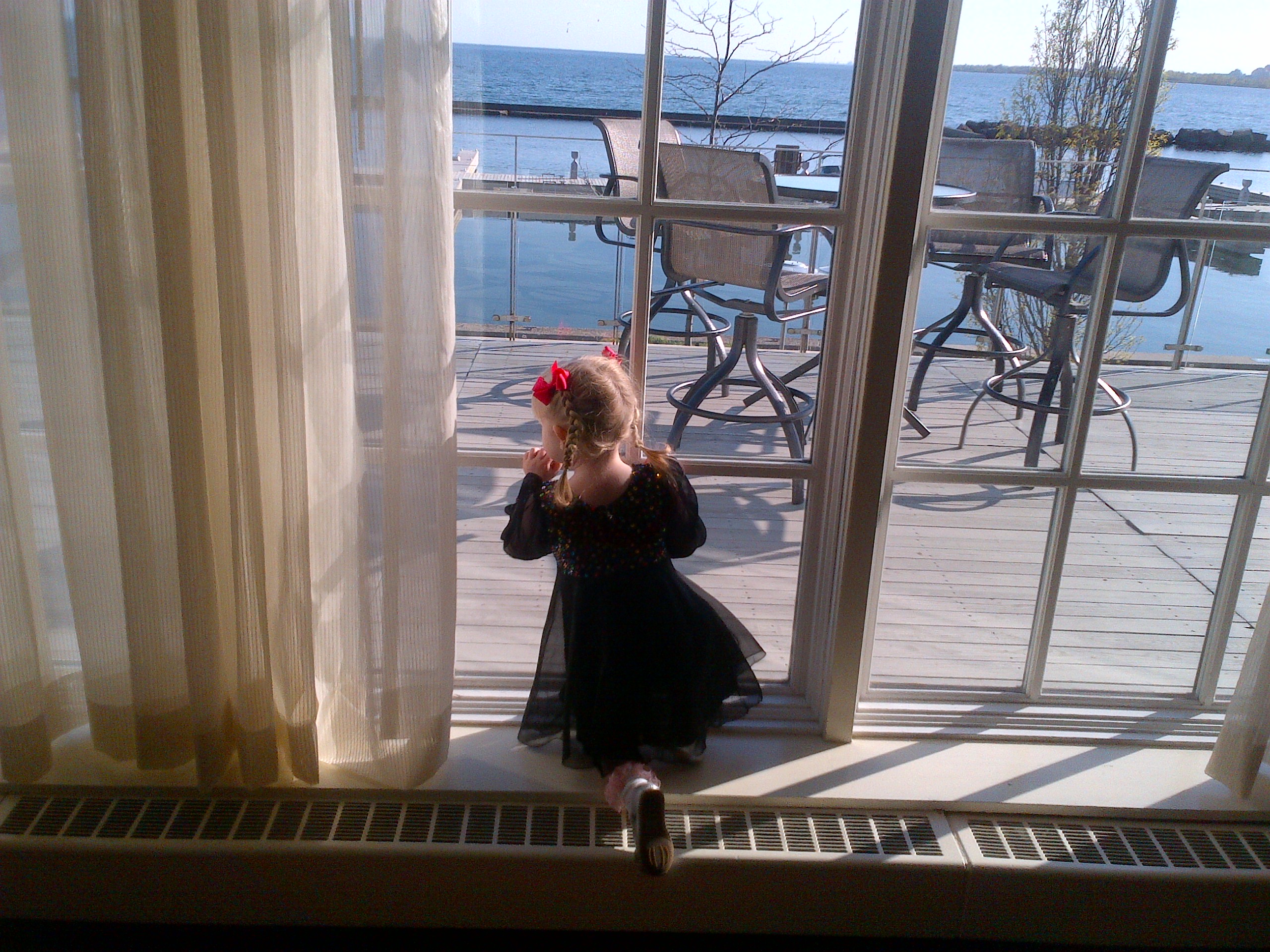
    A 2 year old girl with blonde hair in pigtails with red bows at the top and wearing a fancy black dress looks out a window
    One of my favourite pictures of the youngest… looking innocent, but plotting her escape.

    I fell even more in love once their personalities began to show through. The older one was a perfectionist from the start, always watching and learning. He had deep thoughts at two that I wasn’t prepared for – and still blows me away with the depth and breadth of his thinking, his thoughtfulness, and his truly kind spirit. His sister is what my mum would call spirited. I remember babysitting them once and in the 15 seconds it took me to help the older one find something, she was trying to scale the fridge. She has the smile of an angel, but woe to the person who underestimates her. Much like Mary Tyler Moore, the kid has spunk. Looking at them solidifies the nature / nurture debate in my mind – the kids were raised by the same parents in much the same environment, but the personalities are so very different. Where one is quietly contemplative the other is a fearless performer. Of course there were physical differences too – While the older one had a bit of baby fuzz on his head at birth, the little one came out practically needing a haircut. I remember one of the first words that came into my head when I saw her picture was “what a little moppet”.  I’m not sure why that word has been in my head lately, but it has been so it’s today’s Word Wednesday word.

    Moppet is more commonly used in England / Great Britain than it is here, and even then it’s predominantly only used by the older generation but I think it’s a great word. The word is from the 17th century -the Middle English word moppe meant little child or baby doll and -et is a diminutive suffix. There is a school of thought that moppe may have come from the Latin word mappa which meant napkin – hence the rag doll connotation. I’m not sure if I buy that, but it’s an interesting thought. 

    %{include image.html url=“/wp-content/uploads/2016/09/coollogo_com-169574418.png” alt=“Stylized word Moppet” description=“Moppet”}

    Moppet (mop·pet) Noun

    A small endearingly sweet child.


  • Word Wednesday – Para what?

    Word Wednesday – Para what?

    As I wrote in an August Word Wednesday Post, I love the Olympic and Paralympic games. I love the way entire countries rise up behind their athletes and how small acts of kindness between athletes make you realize that even in the heat of competition, people are inclined to help one another. One of the things that drives me absolutely crazy about the Paralympic games though is the way they’re treated in the media and by the general public. During the Olympics, I couldn’t log on to Twitter, Instagram, or Facebook without seeing #Olympics or #Canada or one of the Olympic filters on a profile picture. During the Paralympics, however, I have had to actively look to find people mentioning the games. I understand that there is some degree of “sports fatigue” – in that a lot of people who aren’t necessarily into sports watch the Olympics but aren’t actually all that interested beyond their favourite sports.  The 2 week wait between the Olympics end and the Paralympics begin also plays a role in diminished media attention and public appetite.  What I vehemently disagree with is that the Paralympic games are in any way or shape less important than the Olympic games. Paralympians are elite athletes – period. If you think that just because someone is physically disabled, they aren’t training just as hard or just as athletically gifted as an able bodied athlete, I challenge you to go to the Canadian Paralympic Team’s Paratough website and try one of the Paralympian workouts. I tried the swimming core workout 4 days ago, and my abs haven’t forgiven me yet!

    Before I get too far into  this, I should address the question I’ve been asked quite a few times on social media – why aren’t there athletes with autism or other intellectual disabilities in the Paralympics? There’s no really quick answer, but the best I can come up with is this: They were part of the Paralympics in 1996, 1998, and 2000, which is when the wheels came off. Several athletes who competed in the intellectually disabled categories during the Sydney Paralympics were proven to have cheated the classification system and were not actually intellectually disabled at all – the International Sports Federation for Persons with Intellectual Disability, which had been formed to represent elite athletes with intellectual disabilities hadn’t been doing the background checks and documentation checks on all of the athletes which created a loophole that was exploited by dishonest paralympic committees. After the scandal in 2000, the Intellectual Disabled category was removed from all Paralympic competition with some integration brought back with very tight oversight for the 2008 Summer Paralympic games in Beijing China and there are ID (intellectually disabled) classes in several Paralympic sports.  Still, the majority of intellectually disabled athletes compete in the Special Olympics World Games which happen in offset years to the Olympic and Paralympic games. The Special Olympics World Games are recognized by the International Olympic Committee as are the Deaflympics – which are actually older than the Paralympics and are exclusively for athletes with hearing impairments. The Deaflympics are distinct from the Paralympics and any other Para-sport organization because only members of the hearing impaired community can serve on the board for the The International Committee of Sports for the Deaf – who run the Deaflympics.

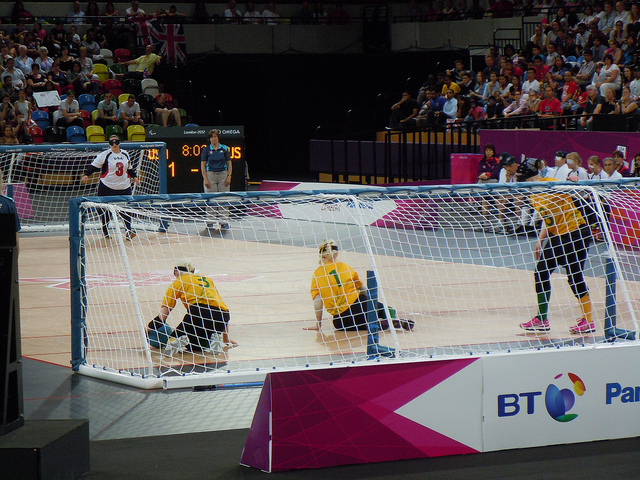
    So, the Paralympics are primarily for athletes with physical disabilities including visual impairments. The visually impaired categories in para-sport are determined by degree of vision loss and in some disciplines the need for a guide, with one sport – goalball – being exclusively for visually impaired athletes. If you haven’t seen goalball you should try to watch one of the matches via the CBC Sports website – it’s really cool. The game is played in total silence so that the bells inside the ball can be heard by the players. Athletes with partial vision compete with completely blind athletes because all players wear eyeshades that block out vision. The court has tactile markings to help players orient themselves – the lines on the court are marked by lengths of twine that are then taped over. A goal is scored by throwing the ball using a bowling motion into the opposing net – while the opposing team attempts to block it of course.  Goalball and Boccia are the two sports in the Paralympics that don’t have a Olympic counterpart. Boccia is a sport open to only physically disabled athletes with 4 classifications – 3 of which are for athletes with Cerebral Palsy. In Boccia, athletes throw coloured leather balls towards a white target ball (called a jack) on a long, narrow field of play that looks almost like a patch of grass but is smooth. The object is to be the closest to the jack after all 12 balls (6 per player or team) have been thrown. Boccia has been deemed to be similar to lawn bowling but I see it as more like lawn curling. I had a chance to try Boccia at a Para-sport day hosted by some local service organizations when I was younger. It was much harder than it looked, and I lost pretty soundly.

    Goalball at the London Paralympic games. There are 3 people in yellow 2 are sitting one is standing, all in front of a net. Across the court there is one person in white visible in front of their net.
    Goalball at the London Paralympic games.

    This week there has been a lot of media attention focused on the fact that the top 4 runners in the Men’s T13 1500m final all posted faster times than the Olympic Gold Medalist at that distance. The T13 classification is the highest level of functionality of visually impaired athletes so there were no prosthetic limbs or blades involved in the times.  This was the one time I saw quite a few posts about the Paralympics, usually full of shock that Paralympians could run that fast. I replied to every comment with the same question – why should a visual impairment make an athlete run slower? I wasn’t surprised that these men ran faster than the Olympians – they are still elite athletes after all. I think Wendy-Ann Clarke of CBC hit the nail on the head when she reminded everyone that every race at the Olympics and Paralympics is different, especially at a distance like 1500m where strategy plays a big role in race management. The goal at the Olympics and Paralympics is to get a medal – records are secondary. So the athletes are going as fast as they need to to win, but not necessarily as fast as they possibly can.  The gold medal winner at the Olympics, Matthew Centrowitz, controlled the race pace to one that gave him the biggest advantage – which was a slow first 2 laps and then a faster final lap – a tactic that would have forced his opponents to expend a lot of energy to try to pass him earlier in the race which would have drained their resources for later in the race when they needed to push. The T13 1500m final on the other hand had a racer, Bilel Hammami get off to a really fast start and the rest of the runners pushed to try to match it, resulting in a faster race overall.  The assumption that para-athletes are somehow inferior to able bodied athletes has been bothering me for the past few days and is ultimately what inspired this post. Paralympians and Olympians are the top athletes in their sports; of course some amazing times will be posted during the Paralympic games, but the focus should be on the performance in and of itself. Comparing Paralympic times to Olympic times makes it seem like the Olympics are somehow better than the Paralympics when they’re not. The Olympics, Paralympics, Special Olympics World Games, and the Deaflympics are all the preeminent sporting events for the athletes competing. The difference is merely in who competes not in the athletic ability of the competitors.

    %{include image.html url=“/wp-content/uploads/2016/09/Paralympic-or-Olympic.png” alt=“a gold, silver, and bronze medal with the text Paralympic or Olympic an equal accomplishment” description=“A gold medal is a gold medal”}

    All of this got me curious about the origin of the word Paralympic. The games were first contested in 1948 as the Stoke Mandeville Games named after the London treatment centre for spinal injuries. They were not officially named the Paralympics until 1988, but from 1960 on were informally called the Paralympics while formally known as the International Stoke Mandeville Games. The first games in 1948 were only for wheelchair athletes – and early literature refers to the games as the Paraplegic Olympics or Paralympics.  As more categories of physical disabilities were added, the Para in Paralympics was assumed to be the Greek prefix meaning beside. So the Paralympics  run alongside the Olympics. Now, the word Paralympics is recognized as a word in its own right, not as a portmanteau. 

    Paralympics ( Para·lym·pics)  Plural Noun

    1. An international competition for physically disabled athletes, associated with and held following the Summer and Winter Olympic games. 
  • Word Wednesday – Escape

    Word Wednesday – Escape

    Even though I work (at least partially) alongside the education system, I don’t really go “back to school”. Still, it’s a new beginning – and as the song says “every new beginning comes from some other beginning’s end”. So Labour Day has just passed, and summer is coming to a close and every store has Hallowe’en decorations up, except Costco who has decided to go one better (worse?) by having Christmas trees for sale since July. Pens and pencils and pretty books to write in are going on sale which makes me very happy and also means I should actually brave one of the stores sooner rather than later so that I don’t miss out on pretty things to write with or in being on sale. Still, I’m always a little sad at the end of summer, and wish it would hang on for a little longer before the leaves change.  The crisp, cool, morning air on the other hand, could start any time now. It currently feels like a sauna when I step out of my doorway, hot and very humid – another in a string of hot and humid days that seem to have characterized this summer here.

    I like to try to spend time at my cottage during the summer – but this year I also wanted to explore some of the areas around my cottage that I haven’t before. We take highway 11 to the cottage, starting at the bottom and continuing up to Bracebridge where we turn off and head east towards Haliburton. I’ve driven through Barrie and Orillia hundreds of times, and have even been to a dozen or so concerts at Casino Rama but had never really explored the venue beyond a quick bite to eat before a concert. When the lovely ladies behind SJ Consulting announced that there would be a retreat for Bloggers and Influencers at Casino Rama in August, I was excited.  Not only have I been curious about the casino, the hotel, and some of the other restaurants, but the ladies putting on the conference are some of my favourite people so I knew I had to apply.  I was fortunate enough to be chosen to attend, and have an amazing experience.

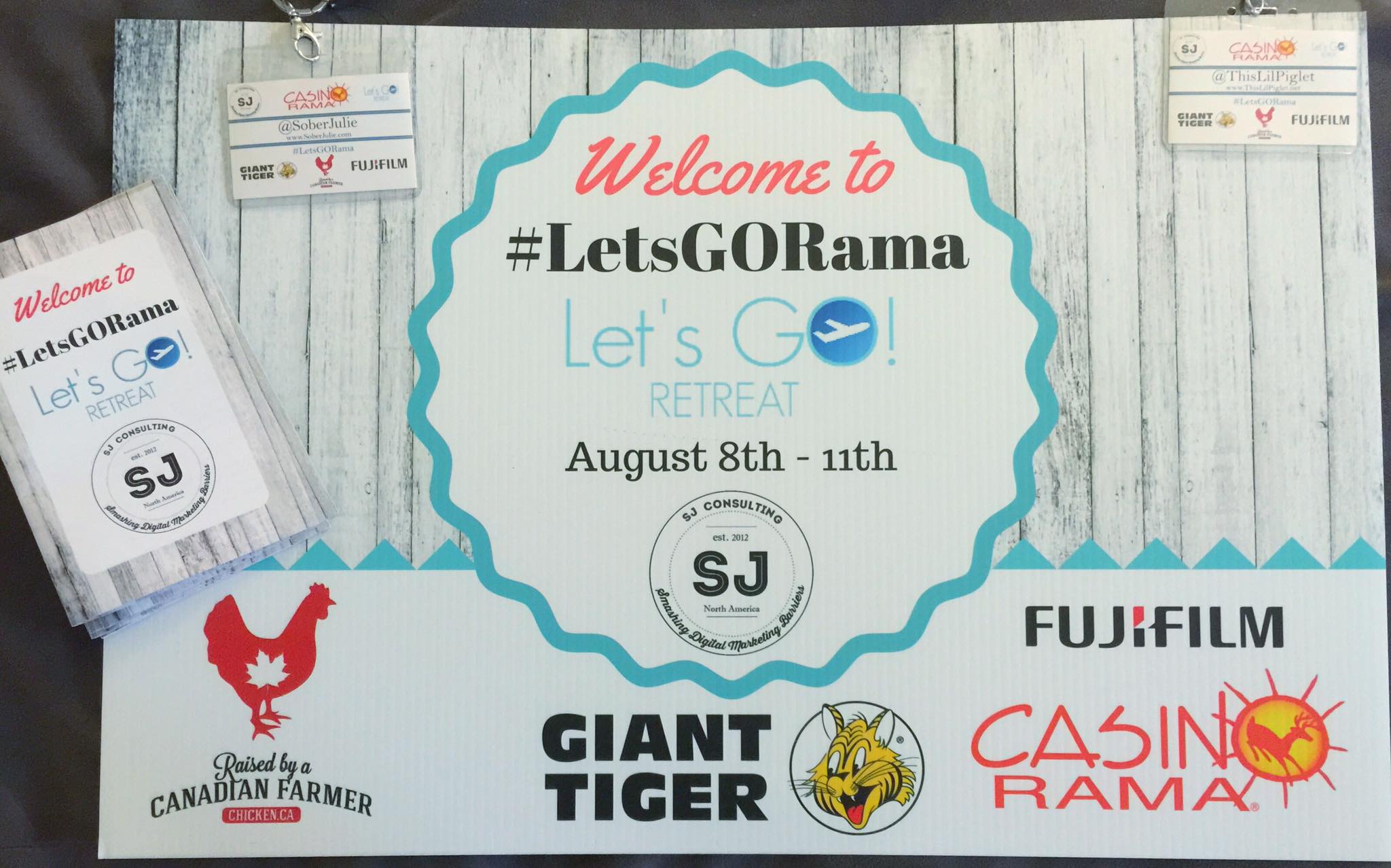
    A welcome board with the words Welcome to Let's Go Rama on a sign.
    Photo courtesy of Stacey Martin.

    I’m going to write a full on review of the amazing time I had at the #LetsGoRama retreat in another post (or maybe two) but the biggest takeaway I had from the retreat – and there were a lot of amazing things that I learned during the 3 days I was there, is that we all need a little escape every so often. The retreat was almost an un-conference – we did some deep dives into topics ranging from the future of influencer marketing to how to make a media kit in the mornings, but the afternoons and evenings were completely free. Some of us caught up on work, some of us networked, some of us went to the spa or pool, and some of us did all of the above. It was amazing and gave me a chance to recharge my batteries as needed instead of my usual conference protocol of coming home completely exhausted and not wanting to speak to anyone for at least 48 hours. As a social-introvert, I love being with people in small groups (and 40-50 is about my maximum so the conference was perfect for that), and for short bursts of time. I can do a whole day but I’d really rather not because I’m just so *done* by the end of it. Having the mornings be all about learning with everyone and the afternoons and evenings being time that I could spend as I chose was PERFECTION.  I need to escape groups of people – not because there’s anything inherently wrong with the group but because otherwise I become overwhelmed and stressed out and generally don’t enjoy myself.

    There were so many chances to escape and connect at the retreat. I’m going to have to dedicate a whole post to the amazing ways Casino Rama pampers their guests, and how I conquered a buffet despite my allergies, but for now I want to focus on my favourite place to escape – the pool.  The pool area of the hotel is free for the guests of the hotel, but anyone who books a spa treatment can also use the pool for the day. The pool itself is salt water – which I loved because it’s so much easier on my skin and bathing suit than a chlorine pool – and has a wall of windows on one side to the outdoor patio. Now, being fair skinned and not a fan of the heat, I didn’t spend a lot of time out on the patio for fear of turning into a tomato, however I noticed a lot of my compatriots quite enjoyed it. I’m part fish. I love swimming and pools so I spent my downtime in the water. I also spent some time in the eucalyptus steam room – which was heavenly. There is also a hot tub over by the pool but I’m not big on hot tubs so I didn’t test that out either. All told I spent about 2 hours in the pool and another 20 minutes in the steam room – split into 2 visits.  It’s worth going to the hotel at Casino Rama just for the pool.


    A swimming pool with loungers beside it and a wall of windows
    The pool – with the windows to the rooftop patio. Credit Ann Bacciaglia

    My favourite part of the whole pool experience though wasn’t the swimming with friends and floating leisurely in the pool, or even the mad giggles in the steam room with Sherri and Christine (I wish I could remember what was so funny, though it probably wouldn’t be as funny without the company or the setting). No, what made my inner swimming nerd incredibly happy was seeing this in the changing room.

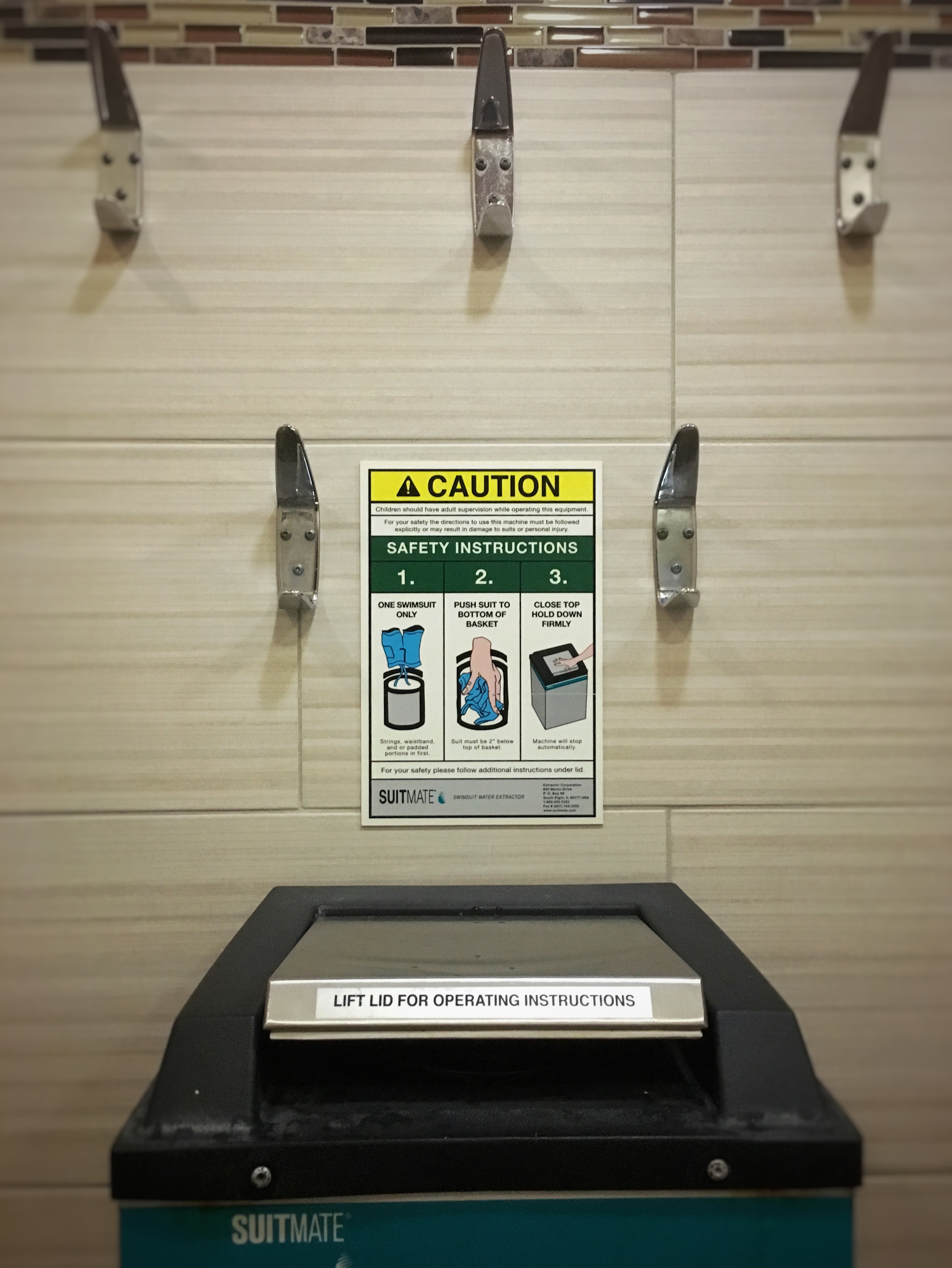
    A swimsuit dryer -which is a box on a wall with a metal lid and a poster that has instructions for using it.
    Image Courtesy of Casino Rama Resort


    For those who don’t know what this is or why I was so excited – it’s a swimsuit dryer. For me, nothing ruins my zen like realizing I haven’t brought a plastic bag to put my wet swimsuit in, and having said wet swimsuit drip all over my other stuff going back to my room (or home or wherever I’m going). I also wanted to go back in the pool later, and anyone who has tried to put on a wet bathing suit knows how much of a struggle that can be. With this magical little gadget, you just open up the lid, place the swimsuit inside (one at a time) and press the lid down firmly for about half a minute. The Suitmate spins all the water out of your swimsuit and poof – almost completely dry swimsuit in under a minute. Yeah, it’s not a big thing in the grand scheme of things, but it was just one more thing that signalled to me that the people at Casino Rama Resort got me. It made my escape that much better knowing I could have a swim on my last day and not have to take a wet swimsuit back with me. Sometimes the little things really do matter.

    There’s so much more I want to say about my escape at Casino Rama for the #LetsGoRama retreat, but I’m already running long and off on tangents so I’ll end here with a little history of the word escape. It’s another one with a Latin root (I know… I’m a creature of habit) – and dates from the 13th century. The root words are ex – meaning out, and cappa – meaning a head covering or cloak.  So to escape something is literally to get out from under it. I think that’s pretty cool.

    %{include image.html url=“/wp-content/uploads/2016/09/coollogo_com-88355138.png” alt=“Stylized text Escape” description=“Escape”}  

    Escape (es·cape)

    Verb

    1.  To break free from confinement or control.
    2.  To elude or get free from someone or something.
    3. To succeed in avoiding or eluding something dangerous, unpleasant, or undesirable. {Escaping serious harm}
    4. To fail to be noticed or remembered by (someone). {The word escapes me …}

    Noun

    1. An act of breaking free from confinement or control.
    2. A form of temporary distraction from reality or routine.