Blog

  • Word Wednesday – Para what?

    Word Wednesday – Para what?

    As I wrote in an August Word Wednesday Post, I love the Olympic and Paralympic games. I love the way entire countries rise up behind their athletes and how small acts of kindness between athletes make you realize that even in the heat of competition, people are inclined to help one another. One of the things that drives me absolutely crazy about the Paralympic games though is the way they’re treated in the media and by the general public. During the Olympics, I couldn’t log on to Twitter, Instagram, or Facebook without seeing #Olympics or #Canada or one of the Olympic filters on a profile picture. During the Paralympics, however, I have had to actively look to find people mentioning the games. I understand that there is some degree of “sports fatigue” – in that a lot of people who aren’t necessarily into sports watch the Olympics but aren’t actually all that interested beyond their favourite sports.  The 2 week wait between the Olympics end and the Paralympics begin also plays a role in diminished media attention and public appetite.  What I vehemently disagree with is that the Paralympic games are in any way or shape less important than the Olympic games. Paralympians are elite athletes – period. If you think that just because someone is physically disabled, they aren’t training just as hard or just as athletically gifted as an able bodied athlete, I challenge you to go to the Canadian Paralympic Team’s Paratough website and try one of the Paralympian workouts. I tried the swimming core workout 4 days ago, and my abs haven’t forgiven me yet!

    Before I get too far into  this, I should address the question I’ve been asked quite a few times on social media – why aren’t there athletes with autism or other intellectual disabilities in the Paralympics? There’s no really quick answer, but the best I can come up with is this: They were part of the Paralympics in 1996, 1998, and 2000, which is when the wheels came off. Several athletes who competed in the intellectually disabled categories during the Sydney Paralympics were proven to have cheated the classification system and were not actually intellectually disabled at all – the International Sports Federation for Persons with Intellectual Disability, which had been formed to represent elite athletes with intellectual disabilities hadn’t been doing the background checks and documentation checks on all of the athletes which created a loophole that was exploited by dishonest paralympic committees. After the scandal in 2000, the Intellectual Disabled category was removed from all Paralympic competition with some integration brought back with very tight oversight for the 2008 Summer Paralympic games in Beijing China and there are ID (intellectually disabled) classes in several Paralympic sports.  Still, the majority of intellectually disabled athletes compete in the Special Olympics World Games which happen in offset years to the Olympic and Paralympic games. The Special Olympics World Games are recognized by the International Olympic Committee as are the Deaflympics – which are actually older than the Paralympics and are exclusively for athletes with hearing impairments. The Deaflympics are distinct from the Paralympics and any other Para-sport organization because only members of the hearing impaired community can serve on the board for the The International Committee of Sports for the Deaf – who run the Deaflympics.

    So, the Paralympics are primarily for athletes with physical disabilities including visual impairments. The visually impaired categories in para-sport are determined by degree of vision loss and in some disciplines the need for a guide, with one sport – goalball – being exclusively for visually impaired athletes. If you haven’t seen goalball you should try to watch one of the matches via the CBC Sports website – it’s really cool. The game is played in total silence so that the bells inside the ball can be heard by the players. Athletes with partial vision compete with completely blind athletes because all players wear eyeshades that block out vision. The court has tactile markings to help players orient themselves – the lines on the court are marked by lengths of twine that are then taped over. A goal is scored by throwing the ball using a bowling motion into the opposing net – while the opposing team attempts to block it of course.  Goalball and Boccia are the two sports in the Paralympics that don’t have a Olympic counterpart. Boccia is a sport open to only physically disabled athletes with 4 classifications – 3 of which are for athletes with Cerebral Palsy. In Boccia, athletes throw coloured leather balls towards a white target ball (called a jack) on a long, narrow field of play that looks almost like a patch of grass but is smooth. The object is to be the closest to the jack after all 12 balls (6 per player or team) have been thrown. Boccia has been deemed to be similar to lawn bowling but I see it as more like lawn curling. I had a chance to try Boccia at a Para-sport day hosted by some local service organizations when I was younger. It was much harder than it looked, and I lost pretty soundly.
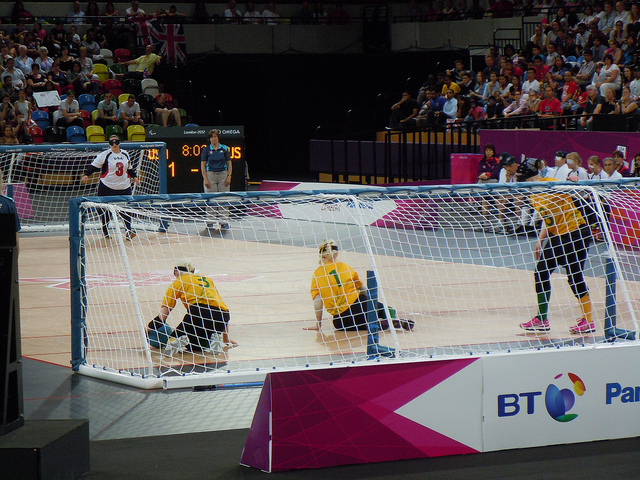
    Goalball at the London Paralympic games. There are 3 people in yellow 2 are sitting one is standing, all in front of a net. Across the court there is one person in white visible in front of their net.
    Goalball at the London Paralympic games.

    This week there has been a lot of media attention focused on the fact that the top 4 runners in the Men’s T13 1500m final all posted faster times than the Olympic Gold Medalist at that distance. The T13 classification is the highest level of functionality of visually impaired athletes so there were no prosthetic limbs or blades involved in the times.  This was the one time I saw quite a few posts about the Paralympics, usually full of shock that Paralympians could run that fast. I replied to every comment with the same question – why should a visual impairment make an athlete run slower? I wasn’t surprised that these men ran faster than the Olympians – they are still elite athletes after all. I think Wendy-Ann Clarke of CBC hit the nail on the head when she reminded everyone that every race at the Olympics and Paralympics is different, especially at a distance like 1500m where strategy plays a big role in race management. The goal at the Olympics and Paralympics is to get a medal – records are secondary. So the athletes are going as fast as they need to to win, but not necessarily as fast as they possibly can.  The gold medal winner at the Olympics, Matthew Centrowitz, controlled the race pace to one that gave him the biggest advantage – which was a slow first 2 laps and then a faster final lap – a tactic that would have forced his opponents to expend a lot of energy to try to pass him earlier in the race which would have drained their resources for later in the race when they needed to push. The T13 1500m final on the other hand had a racer, Bilel Hammami get off to a really fast start and the rest of the runners pushed to try to match it, resulting in a faster race overall.  The assumption that para-athletes are somehow inferior to able bodied athletes has been bothering me for the past few days and is ultimately what inspired this post. Paralympians and Olympians are the top athletes in their sports; of course some amazing times will be posted during the Paralympic games, but the focus should be on the performance in and of itself. Comparing Paralympic times to Olympic times makes it seem like the Olympics are somehow better than the Paralympics when they’re not. The Olympics, Paralympics, Special Olympics World Games, and the Deaflympics are all the preeminent sporting events for the athletes competing. The difference is merely in who competes not in the athletic ability of the competitors.

    %{include image.html url=“/wp-content/uploads/2016/09/Paralympic-or-Olympic.png” alt=“a gold, silver, and bronze medal with the text Paralympic or Olympic an equal accomplishment” description=“A gold medal is a gold medal”}

    All of this got me curious about the origin of the word Paralympic. The games were first contested in 1948 as the Stoke Mandeville Games named after the London treatment centre for spinal injuries. They were not officially named the Paralympics until 1988, but from 1960 on were informally called the Paralympics while formally known as the International Stoke Mandeville Games. The first games in 1948 were only for wheelchair athletes – and early literature refers to the games as the Paraplegic Olympics or Paralympics.  As more categories of physical disabilities were added, the Para in Paralympics was assumed to be the Greek prefix meaning beside. So the Paralympics  run alongside the Olympics. Now, the word Paralympics is recognized as a word in its own right, not as a portmanteau. 

    Paralympics ( Para·lym·pics)  Plural Noun

    1. An international competition for physically disabled athletes, associated with and held following the Summer and Winter Olympic games. 
  • Word Wednesday – Escape

    Word Wednesday – Escape

    Even though I work (at least partially) alongside the education system, I don’t really go “back to school”. Still, it’s a new beginning – and as the song says “every new beginning comes from some other beginning’s end”. So Labour Day has just passed, and summer is coming to a close and every store has Hallowe’en decorations up, except Costco who has decided to go one better (worse?) by having Christmas trees for sale since July. Pens and pencils and pretty books to write in are going on sale which makes me very happy and also means I should actually brave one of the stores sooner rather than later so that I don’t miss out on pretty things to write with or in being on sale. Still, I’m always a little sad at the end of summer, and wish it would hang on for a little longer before the leaves change.  The crisp, cool, morning air on the other hand, could start any time now. It currently feels like a sauna when I step out of my doorway, hot and very humid – another in a string of hot and humid days that seem to have characterized this summer here.

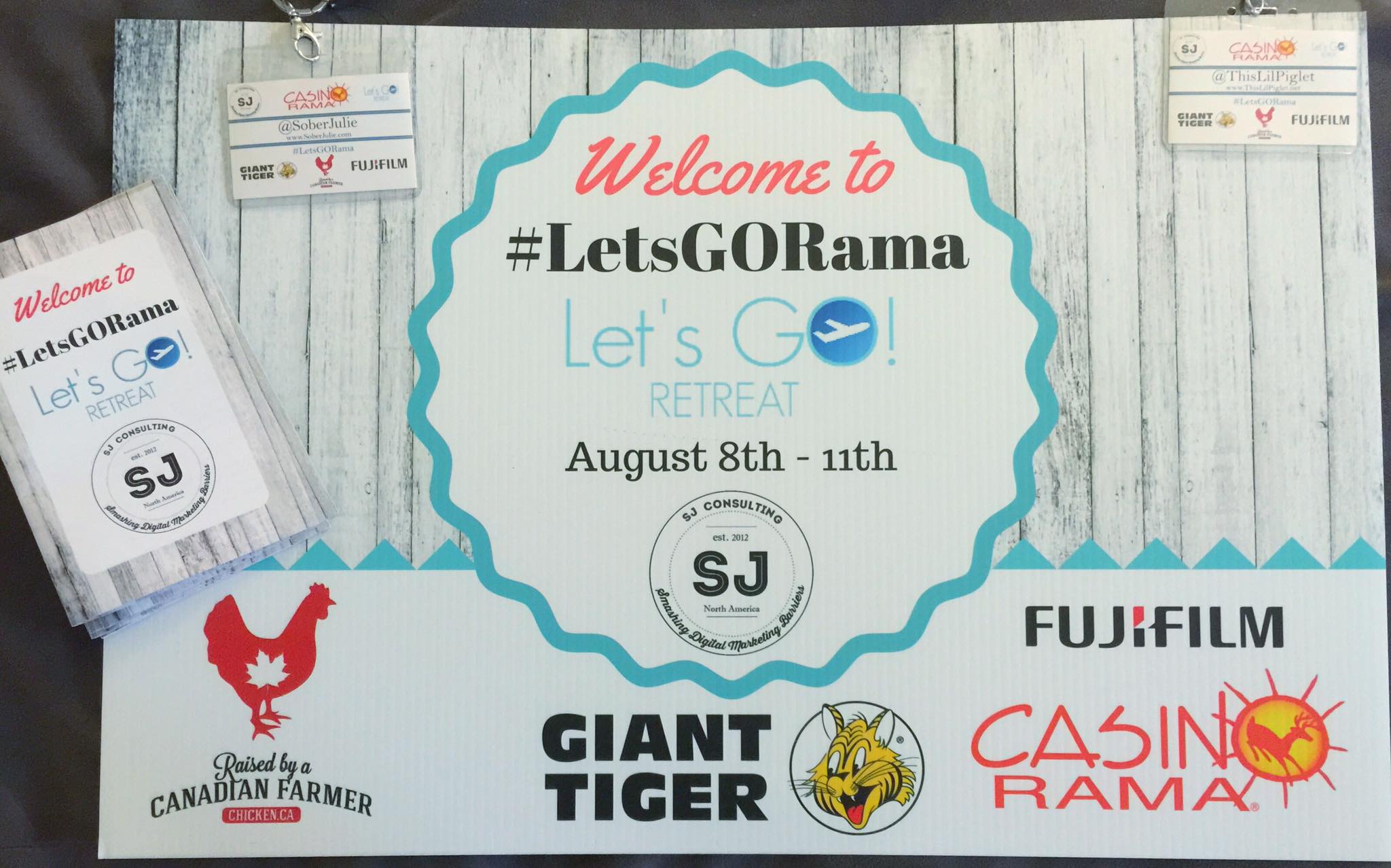
    I like to try to spend time at my cottage during the summer – but this year I also wanted to explore some of the areas around my cottage that I haven’t before. We take highway 11 to the cottage, starting at the bottom and continuing up to Bracebridge where we turn off and head east towards Haliburton. I’ve driven through Barrie and Orillia hundreds of times, and have even been to a dozen or so concerts at Casino Rama but had never really explored the venue beyond a quick bite to eat before a concert. When the lovely ladies behind SJ Consulting announced that there would be a retreat for Bloggers and Influencers at Casino Rama in August, I was excited.  Not only have I been curious about the casino, the hotel, and some of the other restaurants, but the ladies putting on the conference are some of my favourite people so I knew I had to apply.  I was fortunate enough to be chosen to attend, and have an amazing experience.

    A welcome board with the words Welcome to Let's Go Rama on a sign.
    Photo courtesy of Stacey Martin.

    I’m going to write a full on review of the amazing time I had at the #LetsGoRama retreat in another post (or maybe two) but the biggest takeaway I had from the retreat – and there were a lot of amazing things that I learned during the 3 days I was there, is that we all need a little escape every so often. The retreat was almost an un-conference – we did some deep dives into topics ranging from the future of influencer marketing to how to make a media kit in the mornings, but the afternoons and evenings were completely free. Some of us caught up on work, some of us networked, some of us went to the spa or pool, and some of us did all of the above. It was amazing and gave me a chance to recharge my batteries as needed instead of my usual conference protocol of coming home completely exhausted and not wanting to speak to anyone for at least 48 hours. As a social-introvert, I love being with people in small groups (and 40-50 is about my maximum so the conference was perfect for that), and for short bursts of time. I can do a whole day but I’d really rather not because I’m just so *done* by the end of it. Having the mornings be all about learning with everyone and the afternoons and evenings being time that I could spend as I chose was PERFECTION.  I need to escape groups of people – not because there’s anything inherently wrong with the group but because otherwise I become overwhelmed and stressed out and generally don’t enjoy myself.

    There were so many chances to escape and connect at the retreat. I’m going to have to dedicate a whole post to the amazing ways Casino Rama pampers their guests, and how I conquered a buffet despite my allergies, but for now I want to focus on my favourite place to escape – the pool.  The pool area of the hotel is free for the guests of the hotel, but anyone who books a spa treatment can also use the pool for the day. The pool itself is salt water – which I loved because it’s so much easier on my skin and bathing suit than a chlorine pool – and has a wall of windows on one side to the outdoor patio. Now, being fair skinned and not a fan of the heat, I didn’t spend a lot of time out on the patio for fear of turning into a tomato, however I noticed a lot of my compatriots quite enjoyed it. I’m part fish. I love swimming and pools so I spent my downtime in the water. I also spent some time in the eucalyptus steam room – which was heavenly. There is also a hot tub over by the pool but I’m not big on hot tubs so I didn’t test that out either. All told I spent about 2 hours in the pool and another 20 minutes in the steam room – split into 2 visits.  It’s worth going to the hotel at Casino Rama just for the pool.


    A swimming pool with loungers beside it and a wall of windows
    The pool – with the windows to the rooftop patio. Credit Ann Bacciaglia

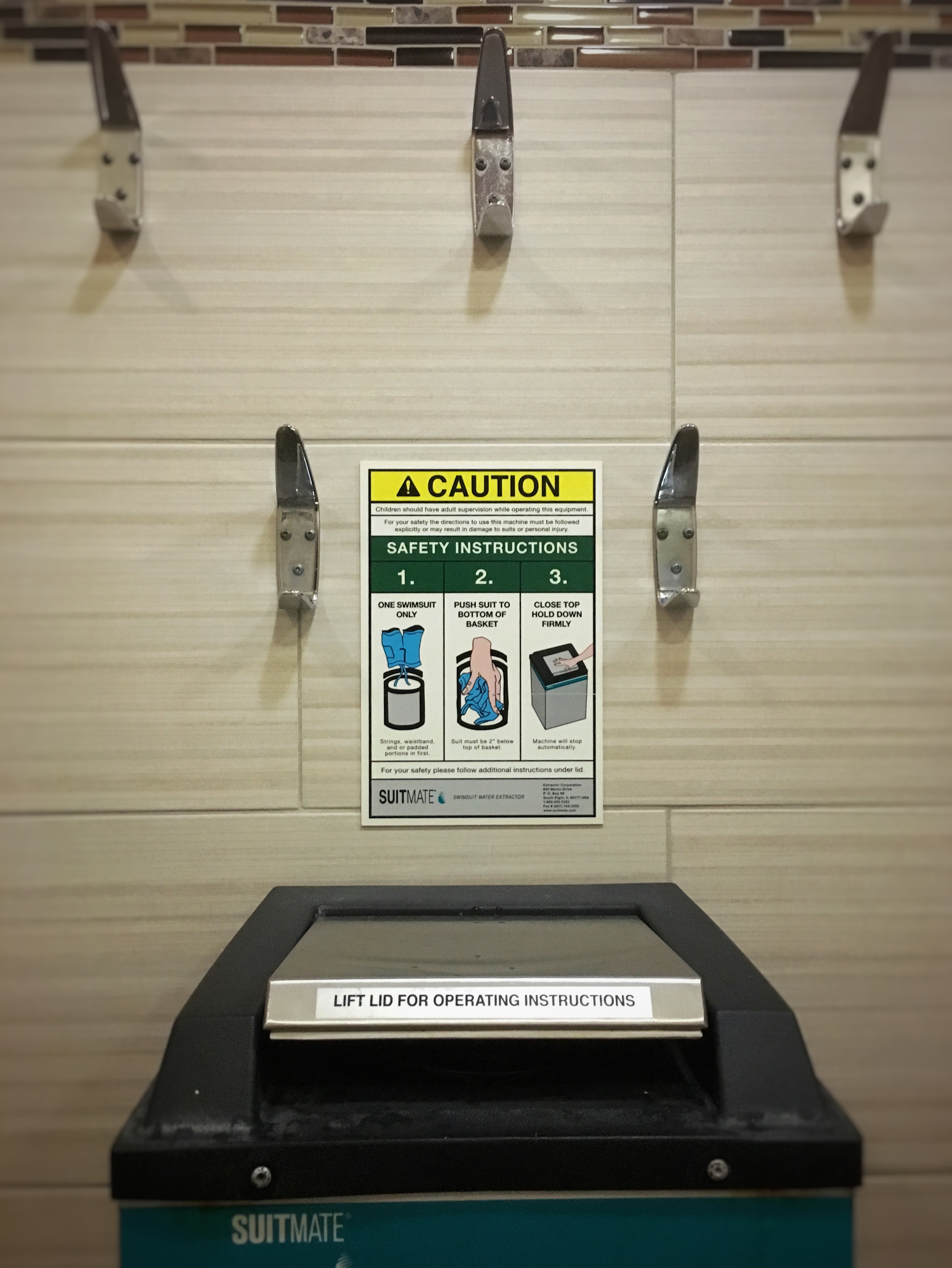
    My favourite part of the whole pool experience though wasn’t the swimming with friends and floating leisurely in the pool, or even the mad giggles in the steam room with Sherri and Christine (I wish I could remember what was so funny, though it probably wouldn’t be as funny without the company or the setting). No, what made my inner swimming nerd incredibly happy was seeing this in the changing room.

    A swimsuit dryer -which is a box on a wall with a metal lid and a poster that has instructions for using it.
    Image Courtesy of Casino Rama Resort


    For those who don’t know what this is or why I was so excited – it’s a swimsuit dryer. For me, nothing ruins my zen like realizing I haven’t brought a plastic bag to put my wet swimsuit in, and having said wet swimsuit drip all over my other stuff going back to my room (or home or wherever I’m going). I also wanted to go back in the pool later, and anyone who has tried to put on a wet bathing suit knows how much of a struggle that can be. With this magical little gadget, you just open up the lid, place the swimsuit inside (one at a time) and press the lid down firmly for about half a minute. The Suitmate spins all the water out of your swimsuit and poof – almost completely dry swimsuit in under a minute. Yeah, it’s not a big thing in the grand scheme of things, but it was just one more thing that signalled to me that the people at Casino Rama Resort got me. It made my escape that much better knowing I could have a swim on my last day and not have to take a wet swimsuit back with me. Sometimes the little things really do matter.

    There’s so much more I want to say about my escape at Casino Rama for the #LetsGoRama retreat, but I’m already running long and off on tangents so I’ll end here with a little history of the word escape. It’s another one with a Latin root (I know… I’m a creature of habit) – and dates from the 13th century. The root words are ex – meaning out, and cappa – meaning a head covering or cloak.  So to escape something is literally to get out from under it. I think that’s pretty cool.

    %{include image.html url=“/wp-content/uploads/2016/09/coollogo_com-88355138.png” alt=“Stylized text Escape” description=“Escape”}  

    Escape (es·cape)

    Verb

    1.  To break free from confinement or control.
    2.  To elude or get free from someone or something.
    3. To succeed in avoiding or eluding something dangerous, unpleasant, or undesirable. {Escaping serious harm}
    4. To fail to be noticed or remembered by (someone). {The word escapes me …}

    Noun

    1. An act of breaking free from confinement or control.
    2. A form of temporary distraction from reality or routine.


  • Word Wednesday – Self Care isn’t Selfish

    Word Wednesday – Self Care isn’t Selfish

    I’m a worrier by nature. For as long as I can remember I’ve been anxious about things such as fire, and plane crashes (though this one has pretty much disappeared), and a million other things. Over the years I’ve developed ways to assuage my worries, and sometimes my over-prepared nature has come in handy – I’m actually really great in a crisis because I’ve already played out all the outcomes in my head so all I do in the moment is act.  So while I may check a campfire a couple of extra times to make sure it’s *really* out, my worrywart nature doesn’t usually affect my daily life. However, in the last few years I have noticed that somehow I’ve become a stress sponge. Unconsciously, I absorb the worries and stresses of others and make them my own. It’s beyond being empathetic, and it’s definitely not good for my health, but I don’t seem to realize that I’m doing it until too late.

    The anxiety and stress were compounded by my fear of taking “me-time” worried that it would seem selfish – so I dragged my introvert self to events even when my tank was empty, agreed to babysit even when I desperately needed a night to myself, and tried to never say no to a request for help. Unsurprisingly, this wasn’t sustainable – and I wound up depressed and on the edge of a full on burnout, and then my mother passed away, and the grief nearly consumed me.

    While helping others is one of my tried and true coping skills, there are times when you just need to focus on yourself and I’ve been learning how to tell the difference over the past couple years. Music is one of my favourite ways to escape – put on some headphones and drown out the world. Reading also works, though people are much more tempted to interrupt me when I’m reading versus when I’ve got headphones one. Going for walks (with or without the dog) is a great stress reliever. Bike rides – especially now that I have a gel comfort seat  – are another great way to de-stress. Of course, board games are always a great way to chill with friends – but they’re also a social situation so that can be tricky as social situations often make me more stressed out.

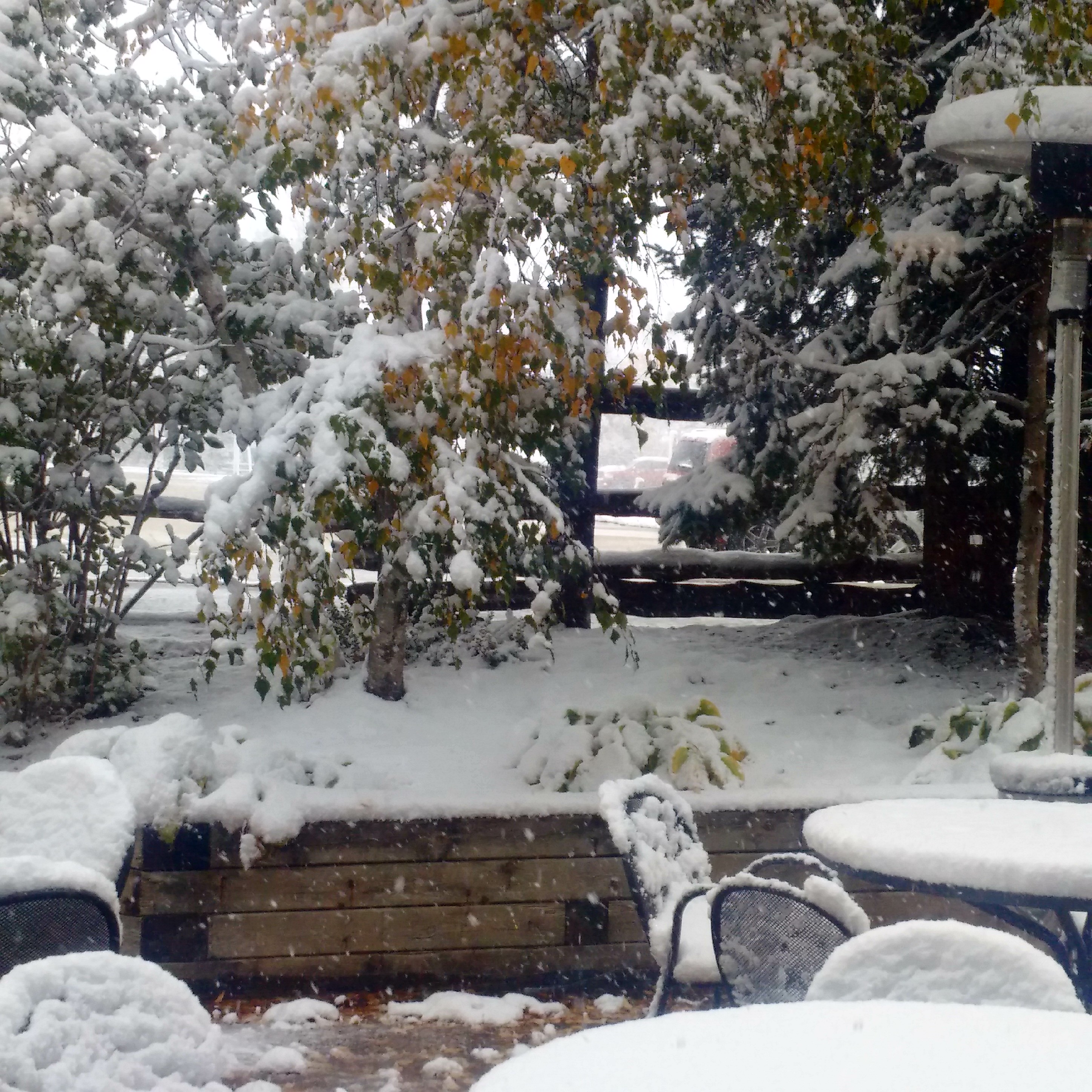
    This past fall, I had the opportunity to go to Blue Mountain Resort for the Blissdom Canada Social Media Conference. I hadn’t been to Blue Mountain in at least 20 years – and the facility was amazing and gorgeous. I don’t downhill ski, though I have plans to learn at some point – now that I’ve been assured there won’t be a repeat of the whole “skied right into the snow fence because I totally hadn’t learned how to stop yet” incident of 1990. The hotels on site are all gorgeous, the conference facilities were amazing, and the outdoor activities were top notch. I had great plans on the Sunday after the conference to do the Ridge Runner Mountain Coaster – but Mother Nature had other plans in mind. (I’m still so appreciative of the wonderful desk staff at the Blue Mountain Inn who lent me a snow brush so I could brush off my car to get home.)

    A patio covered in thick, heavy snow while there are still leaves on the  trees beside it
    Yeah that’s Snow in Mid-October.

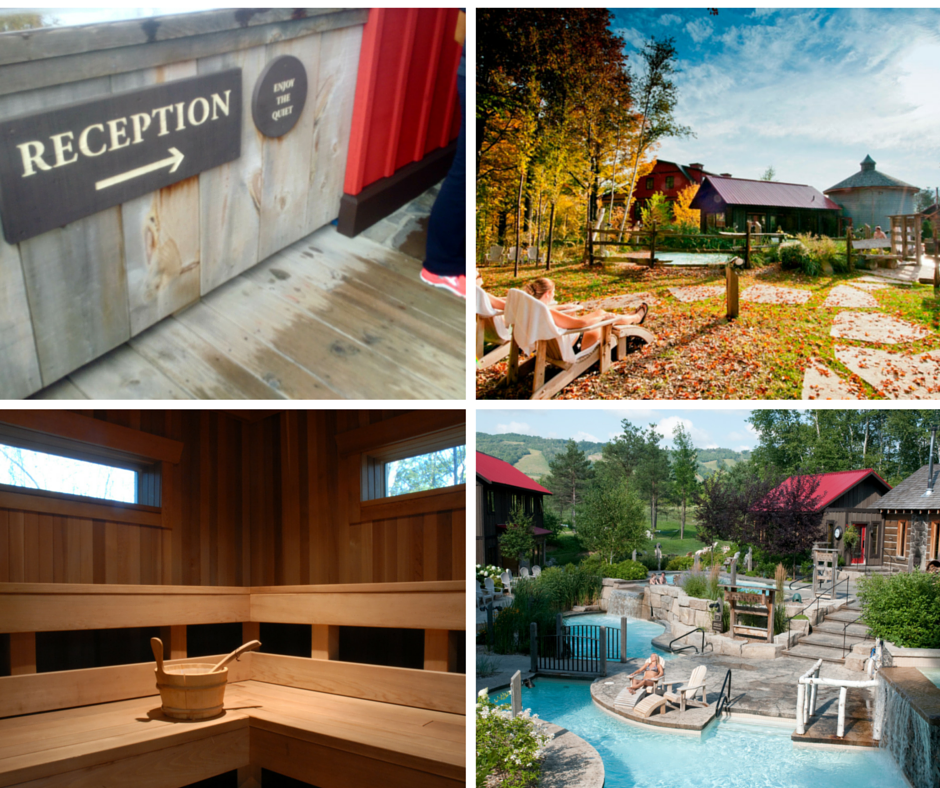
    A few days earlier in the conference we had spent an afternoon bonding with some of our fellow attendees at one of the many excursions both on and off site. I was extremely fortunate to get to experience Scandinave Spa at Blue Mountain. I have friends who go annually and who had raved about it but I didn’t quite understand what all the fuss was about. Having been, I now totally get it. Now I’m that person who won’t shut up about what an amazing experience Scandinavian Baths  are.  I only got a picture of the entrance because the baths themselves are a no photo zone (also a no talking zone – which was hard but worth it) but they were nice enough to give me a little USB card with amazing photos.

    4 pictures - top left a sign pointing towards reception, top right two people relax on sun loungers near a heated pool, bottom left the inside of a sauna with a bench and sauna bucket visible, bottom right an aerial view of a heated bath at Scandinave Blue Mountain
    The top left is the only one I can take credit for – all the rest are from Scandinave Blue Mountain.

    You start in the Finnish Sauna, Eucalyptus Steam Bath (room), or one of the 3 hot baths(I couldn’t do the hottest of the 3 but the other two were wonderful). The heat opens up your pores, heats up the body, and lets you sweat out impurities. After 10 or so minutes in the heat, you do a cold plunge (you probably cold stay longer but I didn’t) to close your pores in one of the cold pools, stand under the Nordic waterfall (brr), or take a cold shower. In the winter you can even roll in the snow (I’m not sure I’d want to try that). You follow the cold plunge up with relaxation – there are Muskoka chairs, fire pits, hammocks, and a gorgeous solarium – where you chill out for 10-15 minutes before doing the cycle again. I did the cycle 4 times during my visit and fell more in love with each rotation. The cold does take a bit of courage but knowing there’s a warm robe waiting for you is a huge help (either bring your own or rent one of their awesome fluffy robes). You’re also given 2 towels to dry off. It was drizzling the day I went but the towel / robe racks are covered so they stayed dry. I didn’t have time for a massage but I have it on good authority they’re amazing. It’s on the list for my next visit for sure.

    I left Scandinave completely relaxed – and considering I was presenting the following day at the conference, that’s saying something! I also swear it helped me kick the last vestiges of a cold to the curb. I loved every minute of my experience at the spa and am planning to go again next month near my birthday for the summer experience. Relaxation is a funny thing – you don’t realize just how tense you are until you relax a little. The word is Middle English via (surprise!) Latin in its origin:  re (expressing intensive force)  combined with laxus ‘lax, loose.’. So to relax is really to loosen up – literally.  I’ve been putting in a lot of hours at my computer in the last few months and a day of rest and relaxation up at the spa seems like the perfect antidote.

    Relax (re·lax) Verb

    1. To become or to cause (something) to become less tense, tight, or stiff.
    2. To stop feeling nervous, anxious, or worried.
    3. To spend time resting or doing something enjoyable especially after you have been doing work

    On that note, I’ve been working hard on this post and it’s time to relax!


    ~~~~Note: this post was not sponsored by Scandinave in any way  – I really do love it there!  ~~~~

  • Word Wednesday – Rocks and Hard Places

    Word Wednesday – Rocks and Hard Places

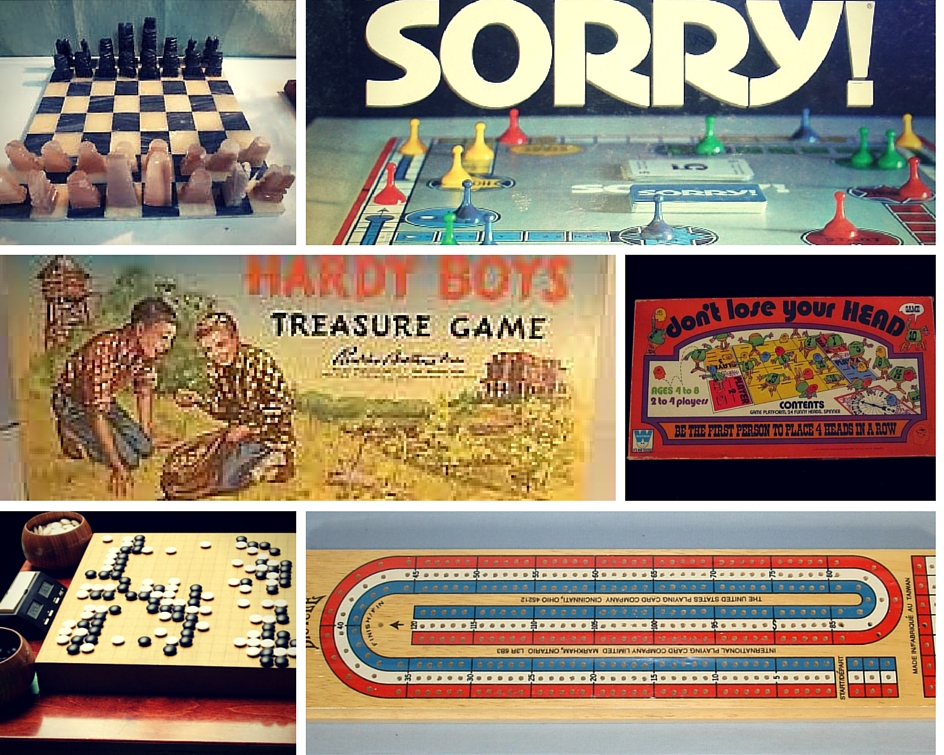
    Most of you already know that I have a slight  healthy obsession with board games. I love to play them with friends and I use them to teach social skills such as patience and turn taking when I work with kids and teens on the Autism spectrum. I remember spending a lot of rainy afternoons at the cottage as a kid playing games like the Hardy Boys Treasure Game,  Scrabble, Don’t Lose Your Head, and even Sorry! (which caused far more tears than smiles). I’ve since graduated to more strategic games that don’t rely purely on luck to win. I was taught to play chess when I was in grade three – mostly because I couldn’t keep my hands off the gorgeous chess set my parents had bought on vacation, and dad figured it was a good way to teach me to think a few steps ahead.

    Board games including chess, sorry, the hardy boys treasure game, don't lose your head, go, and cribbage.
    Some of my favourite childhood games

    I was by no means the next Bobby Fischer, but I got pretty good at the game throughout my childhood and teen years. Sure I had games where I got too cocky and underestimated my opponent and promptly had my rear end handed to me on a platter, but overall I was always learning and getting better. My grade six teacher introduced my class to the strategy game of Go – and for a few years I abandoned chess and played Go every chance I could, but by high school I was back to chess.

    There was a brief period of time where I didn’t play board games in early university – though my best friend is one heck of a cribbage player and we did play a lot of online cribbage. The crowd I hung out with didn’t really play board games and I was busy with school, football, and the newly discovered world of online gaming. Then I found friends who loved board games as much as I did, or even more and they introduced me to games I’d never heard of and some I’d heard of and never played. Sometimes there was a good reason for having not played them as I discovered when I lost an entire weekend to a mega game of Risk and another weekend to Axis and Allies. Those games take an amount of patience I just don’t possess most of the time.

    So I was launched into the world of strategy board games with offerings like Settlers of Catan, Carcassonne, Puerto Rico, Thurn and Taxis, and Ticket to Ride. My friends would often host board game afternoons or evenings and we’d start with a warm up game and move to the more pure strategy games afterwards. Every so often Jenga would come up and I’d be reminded of a word I first learned in the context of playing chess, but that is applicable to a lot of other games when you have to make a move even if it’s not in your best interest to do so: Zugzwang.

    %{include image.html url=“/wp-content/uploads/2016/06/coollogo_com-33313043.png” alt=“Stylized word Zugzwang” description=“Zugzwang”}

    The term zugzwang was first used in chess literature in Germany in the 1850s and was used in English referring to chess by the turn of the century. The concept, however, is far older than that having appeared in chess literature in the early 1600s. Zugzwang is a compound word, comprised of zug – meaning “move” and zwang – meaning “compulsion”. Zugzwang, then, is the compulsion to make a move even if it is to your detriment. Often the condition of zugzwang is such that the player will lose by making any of the possible moves. The word has escaped the chess world though, and can also be applied to those rock and a hard place scenarios where you’re damned if you do and damned if you don’t.

    What got me thinking of zugzwang this week wasn’t board gaming, but the situation at the Cincinnati Zoo where the Gorilla was killed by zookeepers after a young child got into the enclosure and the 400 lb gorilla was standing over him. The zookeepers were very much in a condition of zugzwang – no matter what they did they would have been wrong in the eyes of the public. Had the gorilla killed the boy, while zookeepers were waiting for tranquilizers to take effect they would have been criticized for taking too long. Had they attempted to rescue the boy and something gone wrong, they’d be criticized. If you’ve seen any of the coverage, you will know they are being criticized for shooting to kill. Total zugzwang. 

    Zugzwang (zug·zwang) noun

    A situation in which the obligation to make a move in one’s turn is a serious, often decisive, disadvantage.


  • Word Wednesday – Courage – My Word

    Word Wednesday – Courage – My Word

    This isn’t the post I intended to write this week, or the post I imagined I would write on this word. Things change, however, and though I may be completely freaked out by change, it still happens. So I adapted, and am writing a slightly different Word Wednesday post.

    This week, one of the bands I have grown up with announced that their lead singer, Gord Downie, has terminal brain cancer and that the studio album and supporting tour will be their last.  Judging by my Facebook feed, I am not the only one saddened by the news. Part of the nostalgia is due to the fact that I literally grew up with The Hip on the radio. Their first big album, Up to Here, came out in 1987 – I was an impressionable grade-schooler at the time and anything that got airtime on stations my parents listened to had a big impact on my musical preferences. There’s a reason that a lot of the music I love was made before I was born – I blame dad and his affinity towards classic rock for my love of The Beatles, Jethro Tull, Neil Young and Crazy Horse, The Guess Who, The Doors, Jimi Hendrix, The Rolling Stones, Led Zeppelin, and The Band. My adoration of The Monkees is entirely the fault of Much Music for re-running their television show in the after school slot when I was a kid and Davey Jones’ adorable grin capturing my young heart. I was also in love with New Kids on the Block around the same time so take from that what you will.  As I’ve grown older, my musical tastes have turned towards the East and West Coasts – with Great Big Sea and Spirit of the West respectively taking a place in my heart.  I also love Blue Rodeo, Rush, The Tea Party, Barenaked Ladies, and The Trews – proving that the Canadian Content rules for radio play have definitely worked on me – it’s hard to become a fan of bands you don’t hear on the radio, or at least it is for someone my age who grew up before streaming content was a thing.  (I’m sure I’ve missed some bands here but you get the idea.)

    %{include image.html url=“/wp-content/uploads/2016/05/DSC08266-3.jpg” alt=“A small round metal disc with the word courage stamped into it and a small red maple leaf charm above the word hangs on a log” description=“Courage Stamped tag”}

    The Tragically Hip became the soundtrack to my formative years – songs like New Orleans is Sinking, 38 years old, Fifty Mission Cap, Wheat Kings, Ahead by a Century, and Bobcaygeon were played at parties, at the cottage, and just hanging out with my friends. I learned to drive listening to these songs on the radio, I got into a huge argument with my first boyfriend over the significance of Bill Barilko, and I’ve been known to time trips to Bobcaygeon so that I leave at 9:15.  I’ve seen The Tragically Hip live a few times (nowhere near as many as Great Big Sea but it’s widely acknowledged that I *may* have a slight obsession with them) and they have never disappointed me. I’m going to be trying for tickets for this last tour because I want the chance to say goodbye, to thank them for all the memories, and because I think that music as a shared experience is one of the most primal ways we can connect with others.  I deliberately left out one of my favourite songs by the Tragically Hip when I listed them at the beginning of the paragraph – the one that has been quoted a lot since the news of Downie’s cancer became public – Courage (For Hugh Maclennan). Indeed, I think it does take courage to announce a goodbye tour that is actually a goodbye tour and not just because the band is going their separate ways.

    %{include image.html url=“/wp-content/uploads/2016/05/Courage.png” alt=“Print out of the lyrics to Courage by the Tragically Hip” description=“Courage”}

    The word courage is one I’ve been planning to feature for a while and though I hadn’t planned on using the song as part the explanation, it works well. I’ve long been fascinated by the root of the word courage and the connection to the French word for heart – coeur. Etymologically speaking, this is because it was believed that the heart was the centre of all emotions and thus courage came from the heart. Indeed, there is a longstanding belief that music and the heart are interconnected – Beethoven believed that music should “strike fire in the heart”. The word courage comes to us from Middle English (denoting the heart as the seat of feelings): from Old French corage, from Latin cor ’heart’.

    %{include image.html url=“/wp-content/uploads/2016/05/coollogo_com-69068518.png” alt=“Stylized word Courage” description=“Courage”}

    Courage ( cour·age) noun

    1. The ability to do something that frightens one.
    2. Strength in the face of pain or grief.

    Today, it is the second definition that strikes me – to be strong in the face of pain or grief. Yes, music fans are losing an icon, but the members of the Tragically Hip have been together for over 30 years and are losing their front man, their friend, and their most recognizable member. To be facing this loss and still announcing a cross-Canada tour takes courage indeed.


    Update: Last night – October 17th, 2017, we lost Gord Downie. I say we because over the course of the day it became apparent that this was a national loss. The flag on the Peace Tower in Ottawa is at half mast until the funeral or memorial service, RIP Gord was trending on Twitter all day, and I spent most of the day listening to the Hip on repeat. I did get tickets to that final tour, and on August 10th 2016, I headed down to the Air Canada Centre with my friend Crys. We had dinner and whisky at the Irish Embassy, toasted Gord, and enjoyed a night full of glorious music. Memories were made and more than a few tears were shed. One of the coolest moments was the on the ball spotlight work during Fifty Mission Cap – when the lines “They didn’t win another until 1962 / The year he was discovered” came up, the banner for the 1962 Stanley Cup win was illuminated. It was a little thing but as a Leafs fan, it was pretty cool. The whole night was magical, and I will forever have it in my head. CBC aired the final concert of the tour live on August 20th, Dad’s birthday. We took the big tv up to the cottage, and hosted a group of friends for a viewing party on the lake- another uniquely Canadian moment courtesy of the Hip. So although I mourn Gord’s passing, my sadness is mixed with gratitude for everything he gave Canadian music fans.  He who walks with the stars is now forever a part of the constellations that reveal themselves one star at a time.


  • Word Wednesday – Fire

    Word Wednesday – Fire

    I have a love – hate relationship with fire. On one hand, I’m a Girl Guide, so I love nothing more than to sit around a campfire telling stories, singing songs, and roasting marshmallows, spider dogs, and the occasional sour key (don’t ask – it was a dare). On the other hand, fire terrifies me. Like wake up at night sweating with my heart racing terrified. It’s always been like that. There is no specific event that triggered it, but I’ve always been very aware that while we like to think fire is an element that can be controlled, it can’t be – not all the time. As a result, I’m meticulous about fire safety and making sure a campfire or a cooking fire is well and truly out before I go on and do anything else. Even then I’ve been known to sneak out of my tent to double and triple check that it’s out and nothing is smoldering. My family teases me all the time about this habit, but it’s either that or not sleep all night because I’m obsessing over whether or not the fire is out. I take solace in the fact that almost all of my family is terrified of heights (both parents included) but I’m fine – the only thing I don’t like is someone else rocking the gondola or the suspension bridge but being up there? No issues other than the occasional bit of ear pain caused by the wonky tubes and not liking pressure changes. I also have a fear of dock spiders but that comes from a specific incident and I’ve become much better over the years with that fear.

    Fire is a force of nature that is just so unpredictable. Water is too when you think about it but I took years and years of swimming lessons, wear a life jacket, and control my exposure to it when it’s very cold to limit my risk. There are some ways to mitigate the risk of fire – like having working smoke detectors (yes, lots), a fire extinguisher in the kitchen (yep), and a fire escape plan (always), but when it comes down to it, fire feels less controlled than water.  It could also be an exposure thing – I grew up around water – we had a backyard, fenced in pool in the house I grew up in and we’ve had a family cottage on a lake – so learning water safety and how to swim was a non negotiable in the house. I’m happiest in or on the water and always have been. As a kid my parents joked that I was part fish because they would have to drag me out of the water for meals or bedtime. Fire was present, and I was taught fire safety in Girl Guides from a young age but it never felt like a safe thing. This is all despite my godfather being a firefighter and teaching me lots of cool things about fire. Hence the love-hate relationship – I’m fascinated by it, am great at building them, and enjoy small campfires, while at the same time worrying that it will become out of control and burn down all that I hold dear.

    So when I heard from a friend who lives in Fort McMurray about the wildfires burning near there on the weekend I was worried. I told her to be safe and to keep an eye on it since wildfires are by their very nature, unpredictable. A sudden shift in the wind (especially in northern Alberta where the landscape is flatter and winds can appear out of nowhere) and things could go from “I’ve got this” to “UH-OH” in a hurry. Which is exactly what happened on Tuesday. A shift and increase in wind activity drove the fire from the outskirts of town into town and threatened all of the homes, businesses, and people in the city.  Fort McMurray is an oil-town – most of the people there work in the oil industry directly or indirectly. The town has grown a lot in the past 20 years since I first visited, and now it seems destined to shrink due to the fire. When I heard that the whole town had been evacuated, I started creeping the social media feeds of my friends who are in the area, making sure they were safe. They all left with nothing but the clothes they were wearing, whatever they could grab in 2 minutes, and each other. All of the people I know managed to get their pets out, but not everyone did – and that breaks my heart. I have learned that the SPCA has set up a way for pet owners forced to leave their furry friends behind to let them know and that they’d do whatever possible to keep the animals safe, which makes me feel a bit better.  I have worried about this kind of scenario so many times that I have a bag packed under my bed of stuff to grab if this sort of thing happened. I have been debating taking it apart but I think I’ll keep it awhile longer.  The evacuees drove or sat in gridlock for hours upon hours last night before reaching either an Oil Sands employee camp to the north or the city of Edmonton to the south. The hospital had been evacuated earlier in the day and the patients moved to other facilities within the province. As of right now, the people are safe even if their homes aren’t. As I’ve heard over and over today, houses can be rebuilt, people can’t. 1600 structures have been affected at last count and since the fire has resisted all efforts at control, that number will grow.

    It’s a horrible situation and I feel so helpless sitting here in Ontario watching from afar. So I did what I could – I donated to the Red Cross Alberta Fires Appeal – it’s super easy, you get a tax receipt for a charitable donation, and works well on mobile too. You can also donated $5 by texting the word REDCROSS to 30333 (Canada only I think) and following the prompts.  In a situation like this, money is the best option because nobody knows what is going to be needed and the logistics of shipping donations can take a lot of time and effort which would be better served helping people directly. If you are in a financial position to donate any amount, please do.

    A picture taken through the windshield of a truck with a wildfire surrounding the vehicle. Text reads Alberta wildfire appeal
    Image: Red Cross Fire Appeal

    Word Wednesday word – Fire. I’ve been thinking of using this word for a while because it is an interesting word from an etymology standpoint, and if I’m already going to have nightmares about fires because of the news, looking up information about the word isn’t going to do any more harm. Fire comes from the Old English word  fȳr  – which is the noun form of  fȳrian  meaning to supply with material for a fire.  Fyrian is related to the Dutch word vuur, the Norse word fūrr, and the German word Feuer all of which have been around since before 900AD which is as far back as most etymologists trace modern languages. Indeed the world fire is one of the oldest in the English language.


    As I write this, the fire is still burning, nobody knows when or how it will be put out. All we can do is hope, pray, and trust that the Fire fighters from across Alberta, Canada, and from other countries are doing everything they can to save as much of the town as possible. Then the long, slow process of healing and rebuilding can begin.

    %{include image.html url=“/wp-content/uploads/2016/05/coollogo_com-250064681.png” alt=“Stylized word Fire” description=“Fire”}

    Fire (fī(-ə)r) Noun

    1.  A state, process, or instance of combustion in which fuel or other material is ignited and combined with oxygen, giving off light, heat, and flame.
    2.  A burning mass of material, as on a hearth or in a furnace.
    3. The destructive burning of a building, town, forest, etc.; conflagration.
    4. Heat used for cooking, especially the lighted burner of a stove.
    5. Flashing light; luminous appearance.
    6. Brilliance, as of a gem.
  • How my BlackBerry Passport Equals Mobile Freedom

    How my BlackBerry Passport Equals Mobile Freedom

    It’s no secret that I love my BlackBerry devices. I have a BlackBerry in my hand for a good 60% of the day.  One of the things I love most about BlackBerry is how easy it makes it to work on the go. I wrote about my Blackberry Classic  and how much I loved it and the difficulties in choosing a case for it. I’ve found the same thing with my BlackBerry Passport. I love the Passport even more than the Classic. At first I thought it was going to be too big. I looked down at the device in the box and thought “I’ll probably be using the Classic again within a month”. Well, I was wrong. So very wrong. The Classic has found a new home in the hands of my dad, and the Passport is mine, all mine. I mentioned with regards to the Classic how much I had missed the physical keyboard even though I had loved my Z30 with all my heart. Well the Passport takes the keyboard experience to a whole new level. It just feels right.  The screen width on the Passport makes reading text a breeze – the wider screen allows more characters which reduces scrolling (and makes me a happier reader). Contrary to what I thought before I had a Passport, the Passport does fit in my pants pocket, and in my purse, so it goes pretty much everywhere I go. I have a BlackBerry hard shell case on it 90% of the time and a Folio case with a credit card slot the rest of the time (It’s an aftermarket one, but needs improvements if it was going to be a daily driver).

    Last fall, I talked about the Blissdom Canada Social Media Conference and how I presented a micro-session there. What I didn’t say was that I did most of the planning for that session on my BlackBerry Passport. I didn’t want to have to carry my laptop around for the day, or make the trek back across Blue Mountain Resort to drop it back in my room. Instead I used Docs to go, and planned out my entire presentation on my mobile device. I travel 1-2 days a week and work remotely. Lately I’ve been doing all the work I need with just my BlackBerry Passport. I have a list of clients and projects on the go in BlackBerry Remember – I love how easy it is to add notes to items or mark items as finished and how I can flag email messages and attach them to the task list so that I’m not constantly going back and forth to check details from an email. I currently have 14 projects on the go and they’re all lined up neatly within the Remember app. In May, I’m going to be speaking at ROAM – another Social Media event – this time in Vancouver. My travel arrangements are in BlackBerry Travel – including confirmation numbers, hotel phone numbers, and event details. If someone asks me where I’ll be on one of the days when I’m in Vancouver, all I have to do is open BlackBerry Travel and all the information is right there.  I’m not taking my laptop to ROAM either. Having attended a number of conferences in the last 12 months and presented at one, I’m confident that my BlackBerry Passport will be all I need to work on the go.

    Working remotely via the BlackBerry Passport is awesome. One of the things that I love most about working from my BlackBerry is that unlike some other phones where you can only edit or view a document on the go, my BlackBerry Passport allows me to start a new document or spreadsheet, so I can start on a new project before I get back to my computer.  Given that the vast majority of my work is done in either Excel or Word, the ability to start documents is a must. There are so many little things to love about my Passport too – The Hub, for example. I’ve written about my love of the Hub before but it’s at a new level now that I’m emailing attachments almost daily. I love that I can search through email attachments directly from the hub while I’m on the phone with a client – there’s no lost time, which is good since I have very little to spare these days.  I love the way my Passport looks too – fashion isn’t a deal-breaker for me but it’s nice when function and fashion meld together so seamlessly.

    %{include image.html url=“/wp-content/uploads/2016/04/IMG_20150515_162425_edit.jpg” alt=“A BlackBerry Passport – a square shaped cellphone with a physical keyboard in a box” description=“I think this is one of the coolest looking phones out there.”}

    My Passport battery gets me through the work day – and I’ve been told I’m exceptionally hard on battery life due to the number of high drain apps I like to run at the same time. I use Facebook a lot for business these days, and while the loss of the dedicated Facebook app was hard on me, I actually enjoy the mobile browser experience more in terms of the capabilities to manage my pages. I’ve been off of Twitter lately due to some ugliness there, but check in via Blaq or the native Twitter app daily even if I’m not tweeting as much. I’m hoping that the problem has been solved by my recent blocking spree, and will be back to using Twitter to talk about the things I love.  Instagram – while there isn’t a native client for Instagram, there is a great app called Igrann that gives me all the access I need to take amazing photos and share them with the world. I love how easy it is to edit pictures in the native BlackBerry photo editor and a huge bonus is the 1:1 ratio that is the default on the Passport – making all my pictures perfect for Instagram without cropping (Yes, I know cropping is pretty simple but hey…saving time and effort is awesome). The Passport camera is amazing and I love taking effortless panorama shots.

    A panoramic view of the football field inside skydome taken from the 200 levels. There are players warming up on field and fans in the stands.
    Panorama picture from the last Argos game at the Rogers Centre. I love how panorama mode allowed me to capture everything in one shot.

    I use BlackBerry Messenger to set up meetings more than I use email now. I’ve convinced quite a few of my clients to try out BBM for Android or Iphone (those that aren’t already on BlackBerry devices) and love how easy it is to chat, add pictures, and even send works in progress back and forth over BBM. I could do that over text message I guess, but then I’m using MMS which can be expensive for some people, while BBM works over wifi.  I’m not a heavy email user – I probably send 25 a day and receive about 100 that I need to read, but I use my BlackBerry Passport about 95% of the time when I’m sending or reading emails. It’s just that much more convenient.  I also use my car’s Bluetooth connection and have the BlackBerry Assistant read emails to me if I’m driving when an important email comes in.

    Recently one of my friends joked that BlackBerry devices seem to be an extension of me – whether it was my Z30, my Passport, or my Classic, they seem like natural extensions of my body. I choose to take that as a compliment. We are well suited for each other – BlackBerry devices enable me to keep my busy life organized and allow me to work wherever I find myself as long as I have a signal. I couldn’t imagine trying to do what I do without a BlackBerry in my hand – I’m pretty sure it would be theoretically possible, but I know it wouldn’t be anywhere near as enjoyable. Have questions? Feel free to leave them below or find me on Social Media – I’m always willing to help #TeamBlackBerry.  Oh and this post? I wrote it entirely on my Passport – all 1300 words.


  • Word Wednesday – A Royal Occasion

    Word Wednesday – A Royal Occasion

    Birthdays are always special, and milestone birthdays even more so. I’ve been fortunate enough in my life to work with a lot of senior citizens and I’ve found that contrary to popular belief, they almost unilaterally want to celebrate their birthdays. One would think that at 75, 80, or even 90, that birthdays would be just another day but some of the biggest birthday parties I’ve been to have been for those who have celebrated the most birthdays. On April 21, Queen Elizabeth II turns 90 years old and the celebrations are already underway. Being the reigning British Monarch, the Queen gets a second birthday every year and this year it’s a three day event on June 10th through 12th where pubs will be open 2 hours later than usual Friday and Saturday evenings and culminating in a big street party hosted by the Queen on the 12th.

    Why do Kings and Queens of England get two birthdays you ask? (Go on, ask…I’ll wait) It’s exactly why you might expect – because someone wanted to and they make the rules. The someone in this case was King George II, and the year was 1748. King George II was born in November and while November in England isn’t quite as snowy as here in Canada, it’s still damp and chilly and the King didn’t want his subjects (or himself) to catch a cold while celebrating him so he combined his birthday with his annual spring military review and voila, a tradition was born. In 1901, King Edward VII standardized the Trooping of the Colour as a June event when the weather was the most likely to be cooperative and ever since the “Official” birthday of the reigning Monarch (if the actual birthday was in a colder month) has been celebrated in June. According to historian Carolyn Harris, Trooping the Colour (where all the regiments gathered and displayed their flags to aid the soldiers in recognizing their colours in battle) dates back to the Restoration of Charles II in 1660.

    Technically the Queen has more than just the two birthdays – and for that you can thank (or blame) Canada. In 1845, the (relatively) new province of Canada declared Queen Victoria’s birthday a public holiday. May 24 became a statuatory holiday when Canada became a sovereign nation in 1867, and stayed as a holiday as long as Queen Victoria reigned. When she died at the age of  81 in 1901, Canada decided to honour the role Queen Victoria had played in confederation by making the Monday before May 24 (or May 24th when it is a Monday) “Victoria Day” – a holiday that Canadians look forward to as the unofficial start of summer. When Queen Elizabeth ascended the throne in 1952, Canada declared that Victoria Day would be used to celebrate the reigning monarch’s official birthday in Canada. So this year, the Queen has a birthday in April, May, and June.

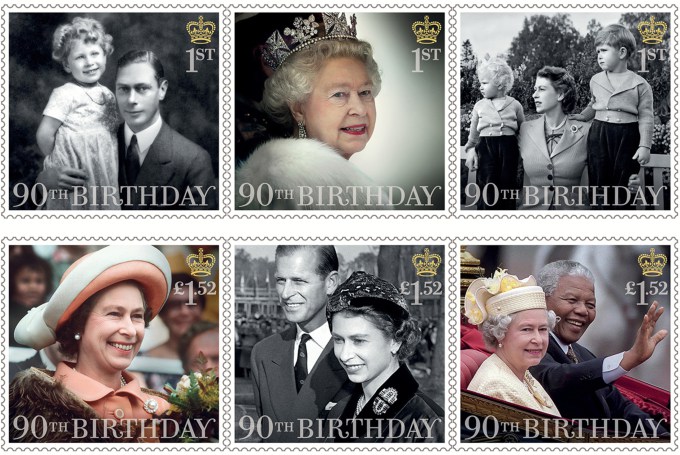
    6 stamps showing Queen Elizabeth II at various stages of her reign.
    Postage Stamps released by the Royal Mail in honour of Queen Elizabeth II’s 90th Birthday.


    All of this talk about birthdays and royalty got me wondering about the word royal. I know that Regina and Rex are Latin words for King and Queen respectively, but I wasn’t sure about the etymology of royal. It turns out, that royal has the same latin stem. Royal comes to us from late Middle English, which was derived from Old French roial, coming from Latin regalis ‘regal.’ Regalis came from the stem reg- the same as Rex (king) – from the Latin word regere which means to rule. So the royal family is definitely meant to rule, symply by their name. Wishing Her Majesty a very happy 90th birthday and many more to come. She has served 12 prime ministers and counting and is the longest reigning monarch in British History.

    %{include image.html url=“/wp-content/uploads/2016/04/coollogo_com-4042448.png” alt=“Stylized word Royal” description=“Royal”}

    Royal ( roy·al )

    Adjective

    1. Of or relating to a king, queen, or other sovereign: royal power; a royal palace.

    2. Descended from or related to a king or line of kings: a royal prince.

    3. Noting or having the rank of a king or queen.

    4. Established or chartered by or existing under the patronage of a sovereign: a royal society.

    5.(initial capital letter) serving or subject to a king, queen, or other sovereign.

    6. Proceeding from or performed by a sovereign: a royal warrant.

    7. Appropriate to or befitting a sovereign; magnificent; stately: royal splendor.

    Noun

    1.  Nautical. A sail set on a royal mast

    2Informal. A royal person; member of the royalty of any country.

    3. Usually, Royals. Chiefly British. a member of England’s royal family.

    4. A size of printing paper, 20 × 25 inches (51 × 64 cm).

    5. A size of writing paper, 19 × 24 inches (48 × 61 cm).

    6. Numismatics. Any of various former coins, as the real or ryal.

  • Word Wednesday – Not Just Anything

    Word Wednesday – Not “Just” Anything

    This isn’t my usual etymological Word Wednesday post, but is a post about a word and it is Wednesday, and I created Word Wednesday and am free to switch it up as I choose. 🙂 I am an introvert, though I can play the part of an extrovert when needed. At my core, I am happiest when alone. I tend to think up witty retorts far better on paper (or on screen) than in conversation. Which is really why I’m writing this post. Last week, I had a conversation with an acquaintance who asked what I did for a living. I told her I worked with kids who have autism but that my primary source of income is my writing and editing business. “Oh, you’re just a writer” she replied “that’s the usual fallback for people who don’t know what they’re good at right? Because everybody can write”.  I smiled politely, because by the time I’d processed the fact that she’d just completely dismissed my craft, she was already prattling on about some other subject.  Having had a few days to stew on the matter, here’s my response.

    I’m not “just” anything. The word just when used as a modifier is awful. It diminishes and belittles the subject. Nobody is only one thing, nor can anyone be defined by one attribute. It seems that the word seems to be applied to those of us in the creative class more than those who have chosen more traditional or prestigious careers. I have heard friends referred to as “just graphic designers” as if being a graphic designer required no talent – a fact which I know not to be true. I’ve never heard a surgeon referred to as “just a surgeon” so why is it okay to call someone “just a housewife” or “just a writer”? It’s not. Yes, I realize surgeons do intensive years of schooling and work experience but that doesn’t necessarily equate to their job being better or more valuable to society.  Without writers, who would have written the textbooks that the surgeon studied from? That’s not to say that writing is more important than any other career; in my mind, whatever job a person does, is important. What I don’t like is when people diminish themselves or others by saying another person’s work is “just x” or that they are  “just a y”. We are all more than we appear, and we are all valuable.

    %{include image.html url=“/wp-content/uploads/2016/04/Blackbird.jpg” alt=“An old fashioned typewriter. Text reads True alchemists do not change lead into gold; they change the world into words. William H Gass” description=“This quote lives rent free in my head”}

    Which brings me to the part of the statement from my acquaintance that really gets my proverbial goat. “Because everybody can write”. My years of being a graduate teaching assistant tells me that no, not everyone can write. Despite the literacy test implemented for grade 10 students over fifteen years ago, many people cannot craft a strong sentence or write a post that is coherent and clear. Which is where my talents come in to play. Whether it is writing things from scratch or making someone else’s words shine, I have a way with words and the knowledge of how they work best together. I am a lot of things but “just” anything isn’t one of them.

    So, the next time you are tempted to use the word “just” to describe someone else’s career / life choices / belief system stop, and choose a word that affirms their choice, not one that makes them feel inferior. It’s not up to you to put a value on their career choice, and this may come as a shock to you but the other person most likely doesn’t really care what you think anyway. I know I don’t.


  • Word Wednesday: Nothing if Not Persistent

    Word Wednesday: Nothing if Not Persistent

    For those who know me off-line, it comes as no surprise that I characterize myself as persistent and mildly stubborn. It’s not that I don’t like change, it’s that I need time to get used to the idea and adequately prepare myself. I will never be the type of person who heads off on a vacation with nothing more than an airline ticket and a dream. There are times when I really want to be that kind of person, but even the idea of doing that stresses me out to no end. My best friend is moving soon, and will be without a place to call home for two weeks. She has 2 kids, works for herself, and has a husband who commutes and can work long hours. The idea of not having a firm place to call home for just me fills me with anxiety, yet she is unflappable. I know this wasn’t the plan, but it’s just how things worked out with the closing date on their house and the one they’re moving into. She took it all in stride – I envy that quality – I’d be freaking out. I wish I could be so trusting that everything will work out but I’m an obsessive planner.

    Which means when things I’ve been planning and counting on fall through, I can be a bit of a mess. This week has been bad for that. I’ve had plans cancelled at the last minute, I’ve had a big freelance job put on hold indefinitely because of circumstances beyond my control, and I’ve had a few things pop up that need to be dealt with “right away”, which forces me to alter other plans to get things done. Yet, as stress filled as I am right now, I persevere. I do it mostly out of stubbornness and because I don’t know what else to do. I continue to work freelance because it gives me a quality of life I enjoy and because I really like having the ability to work from home or the cottage or wherever I have an internet connection. Sometimes it means working until midnight and on weekends to get stuff done, but it means I can do things like spend a couple of days with my best friend’s kids over March Break, so it’s a fair trade in my opinion. This month marks the end of my first official year of doing freelance work, and I’ve had a lot of success but also my share of failures.

    %{include image.html url=“/wp-content/uploads/2016/03/you-are-lovely.png” alt=“A woman sits on a log looking out from a mountaintop” description=“I made it.”}

    I was talking with friends over the weekend about perseverance, and how both perseverance and resilience are skills that need to be taught at a young age in order for kids to internalize them. Kids need to know that it’s okay to fail, it’s okay to not be good at everything, and that sometimes if you really want something you have to work hard for it and try different approaches along the way.  I think that we need to force kids out of their comfort zone and teach them that failure IS an option. It WILL happen to everyone at some point in life, and it’s how we act in the moments following failure that shows our true character.  I’m not saying that I’m comfortable with failing, in fact I hate it when I fail at something, but I don’t let the failures stop me. I keep going. I persevere. I use the failure as motivation to do better next time. So today’s Word Wednesday word is persevere.

    %{include image.html url=“/wp-content/uploads/2016/03/coollogo_com-175281398.png” alt=“Stylized word persevere” description=“Persevere”}

    The origins of persevere are late Middle English: from Old French perseverer, from Latin perseverare ‘abide by strictly,’ from perseverus ‘very strict,’ from per- ‘thoroughly’ + severus ‘severe.’

    Persevere – per·se·vere verb

    1. To persist in anything undertaken; maintain a purpose in spite ofdifficulty, obstacles, or discouragement; continue steadfastly.

    2. To persist in speech, interrogation, argument, etc.; insist.