Tag: words

  • Word Wednesday Holi-daze

    Word Wednesday Holi-daze

    As of today, there is one month left until Christmas, and only 12 days left until the beginning of Hanukkah. Tomorrow is US Thanksgiving and the traditional start to the holiday sales season happens Friday with the retail event known as Black Friday. Most of the people celebrate something in and around December / January so it’s a busy time of year. Between family events, social events, work related events, and school concerts my December calendar is looking very full indeed.

    I have to admit that the holidays are much harder now since the death of my mum. She loved Christmas and the house would be bursting at the seams with decorations, music, baking, and presents (one year we had 3 trees – big one in the living room, small one in the family room, and a child / pet proof one in the basement). Dad on the other hand, has leaned more towards the Grinch side of the spectrum. He never begrudged mum all her decorations but we both knew if left to his own devices, there would be a lot less Christmas in the house. I’m somewhere in the middle. I like Christmas and love finding the perfect gift for friends and family members, setting up my nativity scene, and enjoy putting up the tree, but aside from that? I’m not big on decking the halls. Last year it was about  10 days before Christmas when we finally got the tree up (and that was because we had company coming over). I’m not sure when it’s going up this year.
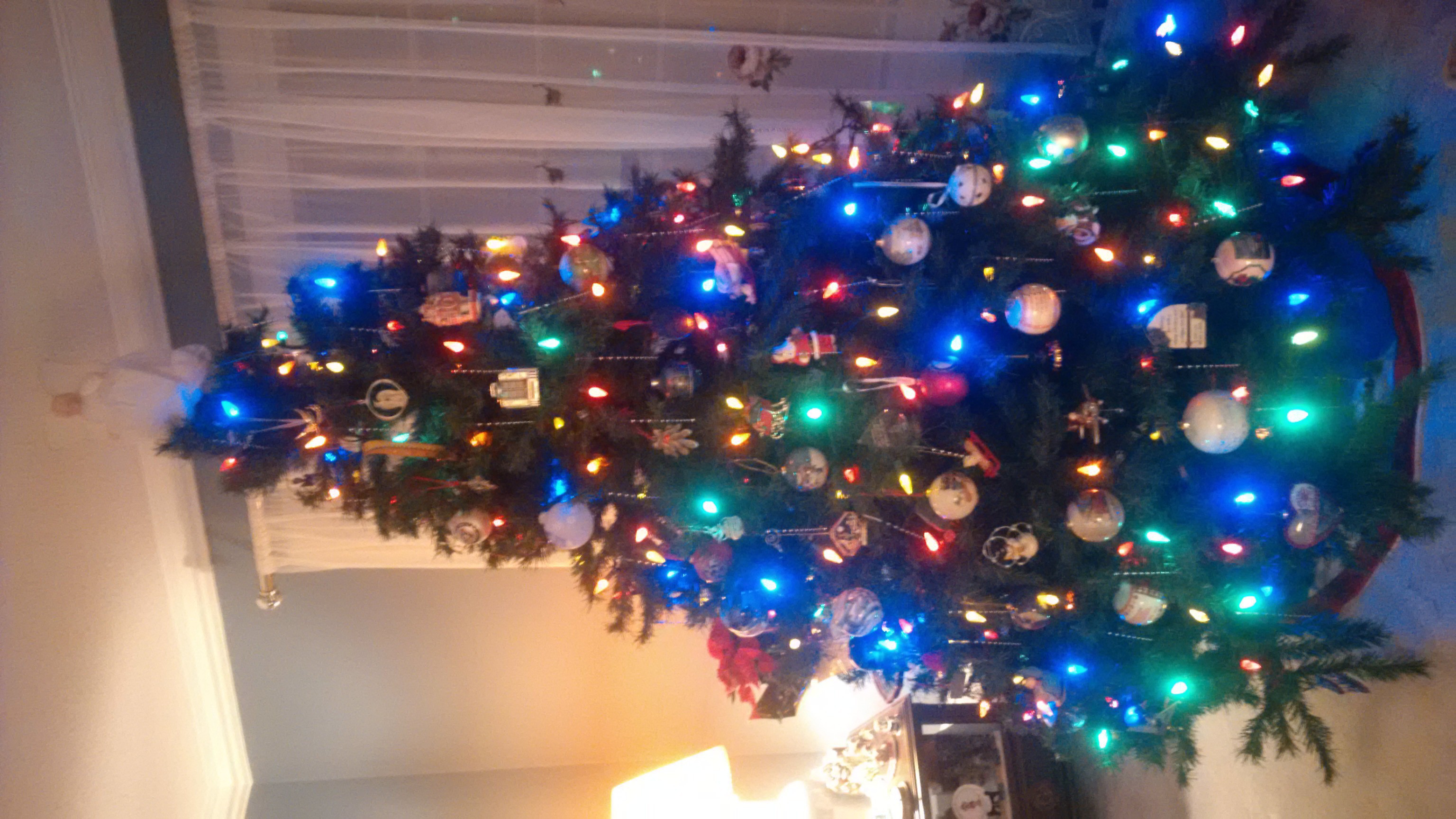
    A decorated Christmas tree with multi coloured lights and an angel on top
    The Christmas tree last year


    I have a tradition of getting all the kids in my life (and there are a lot of them) who I buy presents for, books for Christmas. It’s much easier to keep track of reading levels than it is to figure out who likes Littlest Pet Shop vs Barbie vs Transformers vs Hot Wheels. I do that for birthdays – they’re (thankfully) spread out though the year. I get some books used (but in great condition) and some new – helps the budget and the earth. I find 2-3 books per kid and double check with mom and  or dad to make sure they don’t already have it, then I put a post-it note with the kid’s name on it and wrap them in a marathon session. The bonus is that books are far easier to wrap than most toys – straight edges and they’re generally flat.  This is about 2/3 of the total books for this year:

    Around 30 picture books and early readers with a few young adult novels lie in a pile on the floor
    At least they’re small and stack nicely

    All of this has me thinking about holidays and when holidays aren’t actually holidays. We celebrate 2 Thanksgivings here, although I only cook turkey for one. The US Thanksgiving is a social event with 6 or 7 people dropping by all afternoon and evening to hang out and watch football (starting, of course, with my beloved Detroit Lions game at 12:30). So it’s a holiday here, even if its’ not an official holiday in Canada. Today’s Word Wednesday, in celebration of all of this, is holiday. Holiday is defined as a day of festivity or recreation when no work is done. So I guess neither Thanksgiving counts as a holiday in my house – we’re doing outside work on Canadian Thanksgiving and I work before and during the games on US Thanksgiving. The word holiday comes from the Old English halidaeg which translates to ‘holy day’, reflecting that early holidays were religious observances.

    Holiday (hol·i·day) noun

    1. A day fixed by law or custom on which ordinary business is suspendedin commemoration of some event or in honor of some person.
    2. Any day of exemption from work (distinguished from working day ).
    3. a religious feast day; holy day. 

    Now, if you’ll excuse me, I need to get ready for tomorrow’s holiday. 

     

  • Word Wednesday – chaotic edition

    Word Wednesday – chaotic edition

    I’m not sure if this happens to everyone but every time I head to a conference, like the fabulous Blissdom Canada Conference, I return to utter chaos. It’s not necessarily the house (though it wasn’t as orderly as I’d left it), it’s more that my life seems to be tossed upside down by the new things I learn at the conference. 

    I want to implement things right away so that I don’t forget them. At the same time, I don’t want to jump into changes too quickly so I spend a lot of time thinking over (and overthinking) everything. I come home full of amazing ideas and wanting to keep up with all of the new friends I made. This being the digital age, that means a lot of time spent online. Given my ADHD squirrel tendencies, online time tends to devolve quickly into a never ending Facebook spiral with the occasional Youtube or Reddit interlude. Chaos, I tell you, chaos.

    4 panel comic. Panel 1: a stick figure asks What do we want? Panel 2: a group of stick figures answer A cure for ADHD Panel 3: the lone stick figure asks when do we want it? Panel 4: the group of stick figures answers Squirrel
    Meme based on the original Hyperbole and a Half meme

    Inspired by all of this, today’s word Wednesday word is chaos. Chaos comes to us via 14th Century France , taking the word from Latin. The Romans, as they were wont to do, took the word directly from the Greeks. The Greek word in question was khaos which means: abyss, that which gapes wide open, [something that] is vast and empty. The modern definition of chaos, meaning utter confusion, came into being circa the 16th century and comes from a theological interpretation. The Vulgate version of the book of Genesis (circa 1530) used the word chaos to mean “the void at the beginning of creation”.

    Stylized version of the word chaos
    Chaos

    It was the Roman poet Ovid who gave us our current meaning of chaos in his epic, Metamorphoses, when he juxtaposed Khaos with Kosmos – the ordered universe. So the modern meaning of chaos came to be orderless confusion. Which pretty much sums up my life right now. Orderless confusion and plenty of brain squirrels.

    Chaos (cha·os) noun

    1.  Complete confusion and disorder : a state in which behaviour and events are not controlled by anything
    2. The state of the universe before there was any order and before stars and planets were formed

    Hopefully I’ll restore order to my little piece of chaos soon. Until then, I’ll be out chasing the squirrels.

  • Word Wednesday – with a twist!

    Word Wednesday – with a twist!

    In case you haven’t guessed I’m pretty passionate about my work with kids who have autism. This means that I occasionally get pulled into some of the Autism wars. I firmly believe that there are very few black and white situations in life, and even fewer in the world of autism. There’s a saying that if you’ve met one person with autism, then you’ve met one person with autism.  Which is all well and good except it really doesn’t only apply to people with autism. Every person is different, and one-size-fits-all thinking should really be called one-size-really-fits-none.  

    Recently one of the kids I work with was told that he needs to stop calling himself “autistic” and use person first language, saying, “I am a person who has autism”. I understand why person-first language is great and why it should be the default when dealing with people you haven’t met. However, when someone who HAS autism, declares a preference for the term “autistic”, who are we to judge? This is a conscious decision made by the person most affected by the language and I, for one, will support his choice as well as his right to change his mind if he wishes to in the future.

    The one thing I am very ardent about is the fact that I don’t see autism as a disease that needs to be cured. In fact, I don’t see it as a disease at all. I am a strong believer in the neurodiversity paradigm and the belief that autism is part of the natural neurological variance found in humans. The neurodiversity paradigm, has 3 main tenets: 1) that neurodiversity is a natural and valuable form of human diversity; 2) that the idea that there is one “correct” form of neurocognative functioning is an artificial construct and is no more helpful to society than the idea that there is one “correct” form of gender or ethnicity;  and 3) that the social dynamics relating to neurodiversity are no different than the social dynamics of other forms of human diversity (ethnicity, culture, gender), including and especially that this diversity, if embraced, can be a source of creative potential.

    I believe that people with autism should be welcomed into society and that we shouldn’t be trying to change them to become more like neurologically “typical” people.  That isn’t to say that I believe we should abandon all programming and services for people with autism, because I believe that as they are neurological outliers on the bell curve, the world isn’t geared towards them and so there are some skills that need to be learned in order to have life be less frustrating for them and for those who care about them.  In honour of this belief, today’s Word Wednesday word is neurodiversity.


    Stylized word Neurodiversity
    Neurodiversity

    The neurodiversity movement is relatively young, about 20 or so years old. The term was coined by an Australian social scientist who was on the autism spectrum, and has become more and more widespread as time goes on. The movement encompasses more than just the autism community now – other neurological differences such as learning disabilities (LD), obsessive-compulsive disorder (OCD), attention deficit hyperactivity disorder (ADHD), and bipolarity are part of the neurodiversity movement. I think part of the reason I like the neurodiversity movement so much is because I’ve always considered myself neurologically diverse – I have a learning disability, ADHD, and was identified as gifted in school – the triple threat of neurological differences. So I’m clearly in the neurodivergent camp.

    The word is a compound word – comprised of the prefix neuro – which is from the Greek word neuron – which means nerve and is used in medicine to refer to things relating to the brain. The word diversity comes from the Latin word diversus – meaning separate, opposite, or different.


    Neurodiversity (neur-o-di-ver-si-ty) noun

    The infinite variation in neurocognative functioning in the human species.


  • Word Wednesday – Not so extra-terrestrial.

    Word Wednesday – Not so extra-terrestrial.

    I spent a lot of time this summer with my eyes turned towards the skies. Unlike last summer where it seemed to rain every time I went up to the cottage, and a lot of the time at home (which put a serious damper on the amount of time I could spend stargazing), this summer had less evening / nighttime rain. Mosquitoes aside, there wasn’t anything keeping me from going out on the dock and just staring up at the night sky. While I wouldn’t consider myself an astronomer, I do have a healthy appreciation of the heavens and love learning more about space (and not just from Doctor Who, although that’s pretty awesome too). Speaking of The Doctor, this week’s Word Wednesday post would not apply to anyone from the planet of Gallifrey.

    The word that came to mind (mostly because I heard it on an episode of Antiques Roadshow referring to the astronomical tool, when I was trying to figure out what word I should use for this week’s post, is tellurian. The word tellurian has two meanings, one of which is an old astronomical device that I know of as a tellurion but can also be spelled tellurian (at least according to both the Antiques Roadshow and Wikipedia). I’m keeping with the more traditional meaning: a noun meaning “an inhabitant of the earth” (now does the Doctor Who reference make more sense? Probably not, unless you’re a Whovian like me).

    stylized word Tellurian
    Tellurian

    Once again, unsurprisingly, this word comes to English via Latin. Though unlike some recent words it is a pretty direct link. The Latin root word is tellus which means “earth”. Interestingly I can’t come up with any other words with the same root, which is unusual for a Latin root. (That’s not to say that there aren’t. If you know of any, please let me know in the comments!) To use it in a sentence: While The Doctor is an alien, his companions have traditionally been tellurian in their origins. Though once they are in the TARDIS are they still able to be described as tellurian? They’re not really inhabiting the earth when they’re off exploring time and space except for all the times they explore earth in another time period. Maybe semi-tellurian should be a thing? While I go ponder that, I’ll leave you with the traditional definition and pronunciation guide.along with a picture of the Earth, taken from space (but sadly, not from the TARDIS). Happy stargazing fellow tellurians.

    The Earth as seen from space
    Home Sweet Home

    Tellurian (te-loo r-ee-uh n) noun

    An inhabitant of the earth.

    adjective

    Of or characteristic of the earth or its inhabitants, terrestrial.

  • Word Wednesday – An old word that has new life in the Internet Age

    Word Wednesday – An old word that has new life in the Internet Age

    It’s been an interesting week here. Had an amazing time out with friends Friday, went up to the cottage on Saturday, and returned Tuesday. Oh… and last Wednesday I watched the ESPYs (ESPN Awards) to see Caitlyn Jenner get the Arthur Ashe Courage Award and unwittingly stepped on an internet landmine when I tweeted that I thought she looked great and that I thought she deserved the award. A few people took umbrage at my choice of pronoun and decided to tell me all about how it is a crime against nature and / or God – both privately via DM or in a Twitter conversation. I disagree wholeheartedly, and think that views like that are exactly why she deserved the Arthur Ashe Courage Award. Bruce Jenner could have easily faded into obscurity, becoming a footnote in Olympic history, but chose to make the metamorphosis into Caitlyn Jenner public. She knew there would be backlash, and a lot of it, yet chose to do it anyway. To me, that is what courage is all about.  She is using her celebrity to raise awareness and I applaud her for that. As she said last Wednesday night, “If you want to call me names, make jokes, doubt my intentions, go ahead, because the reality is, I can take it, but for the thousands of kids out there coming to terms with who they really are, they shouldn’t have to take it”.

    Caitlyn Jenner at the mic at the ESPY awards. She is wearing a long white dress and smiling
    Caitlyn Jenner at the mic at the ESPYs


    It seems like some people on the Internet took the first part of that sentence as a challenge. I broke the first rule of the internet last Thursday when I read comments about the award. Wow. Huge mistake on my part. I was simultaneously flabbergasted and disgusted with many commentators. Comments ranged from “Jenner is an ‘it’ not a ‘she’”,  to “Bruce Jenner was the one who won the medals, Caitlyn Jenner is a nobody”, and even to “if you say you were born as a woman in a man’s body, you are accusing your Creator of making a mistake. Only depravity and ignorance can bring someone to THAT conclusion!”. I understand that there are people who don’t agree with Ms. Jenner’s choices – the good news is, nobody is forcing them to become transgender. Nobody forced any of these commentators to watch Caitlyn Jenner get the award. I’m fairly certain it wasn’t a surprise to anyone that she was getting the award, so if they were that bothered by her choice, then why watch it in the first place? There were some commentators bashing their heads against brick walls and trying to refute the worst of the comments, but they were very much outnumbered by people who make the case for bringing back this week’s Word Wednesday word: Anonymuncule.

    %{include image.html url=“/wp-content/uploads/2015/07/coollogo_com-102555277.png” alt=“stylized word Anonymuncule” description=“Anonymuncule”}

    This word was coined in the 19th century, but I think it should be revisited and brought back into common usage today. The word means: An Insignificant, Anonymous Writer.  It’s a compound word, made up of anonymoyus – not identified by name, and homunculus – little man (used in the maturity context instead of the physical one in this case). I think it’s a great word for the Internet age – who amongst us has not encountered anonymuncules online? People who hide behind the anonymity the world wide web gives them and pass judgement. Yes, we could call them a troll but I’m not sure that’s fair to trolls. The classic Internet definition of troll (as in not the ugly creature living under a bridge) courtesy of dictionary.com is “to post inflammatory or inappropriate messages or comments on the Internet, especially a message board, for the purpose of upsetting other users and provoking a response”. So to me, there is a difference between an anonymuncule and a troll in that the latter is deliberately being provocative while the former may not be trying to start a fight, but just stating an uninformed view.  I think I’m going to start using anonymuncule whenever I need a good word for someone on the internet.


    Anonymuncule: (anon·y·mun·cule) Noun

    an insignificant anonymous writer


    I’m going to put in a usage, lest you think I made up this word…

    Who, after all, that I should write of him, is this scribbling anonymuncule in grand old Massachusetts who scrawls and screams so glibly about what he cannot understand? ~ From Miscellanies  by Oscar Wilde.

    So I guess, maybe, that sometimes breaking the first rule of the Internet (Don’t read the comments), isn’t the worst thing ever – not when you get to learn a fun word like anonymuncule. 

  • Word Wednesday – VI

    Word Wednesday – VI

    Well, I had to turn to the internet to help find a word for this week. I still have my list but none of them felt right today. Sometimes that’s just the way words work, at least for me. So I went on a word hunt to remind me of neat words I liked that I don’t see used very often. I was reading a thread on Reddit about words to use when playing Scrabble – particularly when you have a lot of vowels in hand. That’s when the idea came to me.

    It’s not a word I’ve ever played in Scrabble but it is a word I’ve loved because it’s the shortest word possible with ALL the vowels (a,e,i,o,u,y) in  alphabetical order. There are other words with the 5 main vowels in order – but I wanted to include the often neglected y in my word. As a note, the shortest word that contains all of the vowels in alphabetical order (excluding y) is aerious which means “airy”.  There are other words that contain the 5 vowels in alphabetical order but I’ll let you find them for yourself. It behooves me right now to stop with the Perendination (yeah, I couldn’t resist that set up) and get down to brass tacks to reveal today’s word without further ado.

    %{include image.html url=“/wp-content/uploads/2015/07/coollogo_com-145231298.png” alt=“Stylized word Facetiously” description=“Facetiously”}

    Today’s word is facetiously, meaning “lacking serious intent” or “concerning something non essential” and “not meant to be taken seriously or literally”.  As in “the man facetiously said that he was the Queen of England”. In recent years, the word has taken on a tone that deviates a little from this definition – one of deliberately inappropriate humour about a subject. Take this e-card from someecards as an example:

    %{include image.html url=“/wp-content/uploads/2015/07/facetious.png” alt=“A knight on a horse with the text I wasn’t being rude, just facetiously condescending” description=“This made me laugh”}

    It’s a fun word to have in your back pocket and I’m sure one day it will come in handy when I’m playing Scrabble. I’m back to the Latin origins with this one, though it’s via French. It’s one of my favourite Latin roots too – Facetus – an adjective meaning witty, elegant, fine, or courteous. From Facetus we jump to the noun facetia meaning jest, witticism, or humourous remark. That’s it for the Latin, but French gave us facétieux meaning “a joke”. From there it wasn’t a huge jump for the English to coin facetiously in the late 1500s.  (What can I say? I have a thing for old words)

    Facetiously: (fuh–see-shuh s ly) Adverb

    i) Meant to be humourous or funny – not meant to be taken seriously

    ii) In a manner that threats serious issues with deliberately inappropriate humour.


    So the next time you feel like being deliberately silly on a serious issue, go ahead – you’ll be treating it facetiously! (Of course there are some issues that shouldn’t be treated facetiously, but I trust you will know where to draw the line.

  • Word Wednesday 5th edition

    Word Wednesday 5th edition

    Another Word Wednesday is upon us, and this time my problem is picking which word I want to do – I had 3 words lined up and then I read Alexander McCall Smith’s book The Sunday Philosophy Club and I picked up 5 or 6 new words whilst reading. I am always pleasantly surprised when a book in a new series not only gives me great entertainment but also challenges my vocabulary.  I’ve put sticky notes in the book for when I come around to needing more fodder for this feature. I’m also going to review the book on here at some point because it wasn’t what I expected, and yet it was more than I expected. 

    Plus the book cover looks really cool.

    The cover of the book The Sunday Philosophy Club by Alexander McCall Smith There are drawings of a man doing a handstand, a crossword puzzle book, and a teapot on the front
    The cover combines elements of the book

    The best thing about a novel set in Edinburgh is that you can imagine the characters speaking in a lovely Scottish accent. In fact I haven’t stopped thinking in a Scottish accent since I finished the book. Today’s Word Wednesday word sounds really awesome with a Scottish accent. In fact I can hear the main character, Isabel Dalhousie saying the word. So without further perendination on my part, today’s word is behoove. It behooves  met to note that it is appropriate that I picked a word that is Old English in its origins instead of Latin or Greek.

    %{include image.html url=“/wp-content/uploads/2015/07/coollogo_com-191502642.png” alt=“Stylized word Behoove” description=“Behoove”}

    Behoove comes from the Old English word behoof which means use, advantage, or benefit. Behoof is one of those wonderful Old English words that comes from stealing bits and pieces of other languages – in this case Dutch, Middle High German, and German. The origins are as follows: Dutch behoef, Middle High German bihuof “useful thing,” German Behuf “advantage, or benefit”. The first known use of the word was before the year 1200, so it’s definitely Old English. I find behoove a fun word to say in either a fake (and really bad) Scottish accent or in my regular un-accented voice. I should note, that the word rhymes with move or prove and not with rove or grove as is commonly thought. It makes me feel regal to use the word, “it behooves one to wave to the Queen when one is in London”.  I’m going to try and insinuate behoove into my everyday conversations as often as possible. 

    Behoove (bih-hoov) Verb (transitive and intransitive) 

    i) (transitive) To be necessary, proper, or advantageous. 

    ii) (intransitive) To be necessary, fit, or proper. 


  • Word Wednesday Part IV

    Word Wednesday Part IV

    So I’m feeling a bit of pressure here. I’m told that the fourth installment of a series should be the best. Many of my geeky friends argue that the fourth Star Wars (Episode IV: A New Hope, which was actually the first one released… so now I’m not sure if it fits my point) is the best one[Yes, I know, some of you beg to differ]. The fourth Harry Potter book (Goblet of Fire for those keeping track at home) was a change of pace from the first three, marking not only the era of longer books but also a darker tone to the series, and is definitely a favourite of mine.  If something is going to continue on, the fourth installment needs to be great. Plus, having missed last week due to some website moving /hosting issues and a few life events, the fourth installment falls on Canada Day. Well let’s hope I hit it out of the ballpark with this week’s word.

    I mentioned this word on my Facebook page last week and one of my friends, Laureen (who, incidentally, has a great blog over at Tempered With Kindness) was very much in support of me using this word for my Word Wednesday post. Even though it’s technically 2 years too early. On the other hand. it’s good to know about this nice and early-like so we can all be prepared when the event happens right? Yep. That’s what I’m going to go with. In 2017, Canada will be celebrating it’s sesquicentennial, meaning the country will be turning 150 years old; so today’s Word Wednesday is sesquicentennial.


    Stylized word sesquicentennial
    The word just rolls off the tongue

    Sesquicentennial – I love the way the word sounds. Six syllable words have a way of rolling off the tongue that makes them amongst my favourite words to say (see also the word amongst which, despite what WordPress seems to think, is a legitimate word). The ‘squ’ trigraph (a phoneme with 3 letters that make a single sound) is one of the word sounds I find really easy on the ears. So any word that has 6 syllables and the ‘squ’ trigraph is doubly awesome.

    As a note, sesquicentennial is relatively young as a word – though the components are old. The word comes from combining the Latin words sesqui, which means one and a half times, and centennial, which comes from the the Latin word for 100 (centum). Putting them together we get sesquicentennial meaning the 150th anniversary of an event. According to the Mirriam-Webster dictionary, the first known use of sesquicentennial was in 1880 for the city of Baltimore’s 150th anniversary.

    Canada’s sesquicentennial  celebration is going to be awesome, with lots of events already being planned. I remember the celebrations for the 125th anniversary of the creation of Canada, and the sesquicentennial  celebrations promise to be bigger. Maybe not as big as the centennial in 1967, because there’s no Expo ’67 like event going on and I’m not sure if the provinces are going to create ear-worm like songs (Ontari-ari- ario anyone?) for the sesquicentennial but it’s going to be a great party.

    Sesquicentennial (ses-kwi-sen-ten-ee-uh l) Noun  – A 150th anniversary or its celebration.

    I’d be remiss if I didn’t include a few quintessentially Canadian pictures in honour of the day.


    The CN Tower lit up in our National colours red and white
    The CN Tower lit up in our National colours
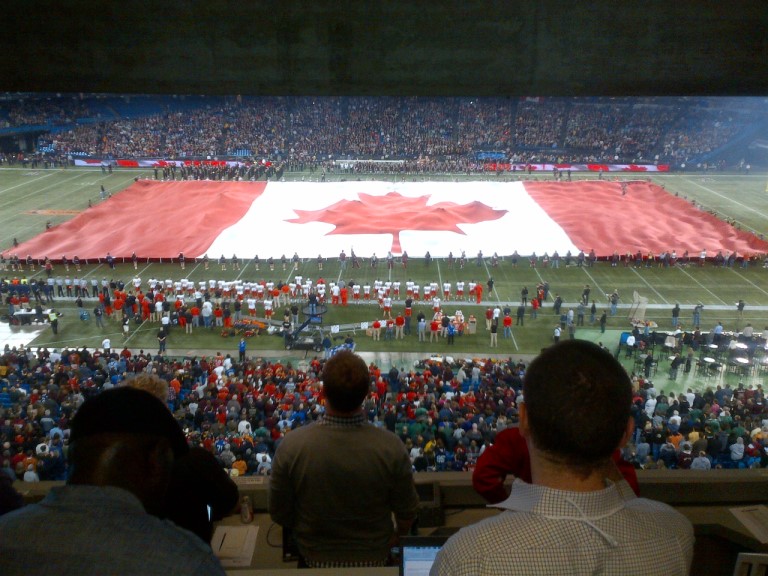
    A giant Canadian flag that takes up most of a football field.
    The giant Canadian flag that was unfurled on the field at the 100th Grey Cup game in Toronto.
    A loon swimming on the lake
    A loon swimming on the lake


  • #WordWednesday: The sequel

    #WordWednesday: The sequel

    Okay, So it’s looking like this may stick. At least for the next little while. Today’s word is one that I love using and as many of my friends will attest, I have been known to seek out occasions to use this word. Granted, sometimes I have had to shoehorn in in but it’s such a fun word, it’s totally worth the effort. You might say that playing with words is my thing. It’s my happy place, something I do for my own personal enjoyment.

    In other words, playing around on the linguistic jungle gym is my bailiwick.

    Stylized word Bailiwick
    Today’s Word Wednesday is Bailiwick

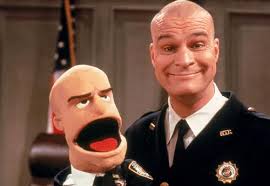
    There are plenty of synonyms I could use, wheelhouse, domain, even ‘thing’ – as in ‘it’s my thing’ but bailiwick just sounds so cool.  It rolls off the tongue. I was surprised to learn that the word bailiwick isn’t as old as I thought it was – it’s late middle English so not exactly new but not a Latin based word either. It does have a secondary meaning (which used to be the primary meaning) which is the one that it literally translates to. The original meaning of bailiwick was “an area under the supervision of a bailiff (this could be a mayor, sheriff, or other official instead of the bailiff we think of today – though I still picture Bull from Night Court whenever I hear that word).” The origin of the word is partly French – the word bailie refers to the official who was ordered to supervise an area.

    a bald man in a court officer's uniform holds up a puppet.
    Not this kind of bailiff…

    In France, this area was called a bailliage but the English never liked to steal a word outright, they always made a few changes. When they adopted the use of the word bailie, they added the word wik to the end. Wik in middle English meant village (it’s also the root word for a town name like Greenwich – literally ‘green village’) so bailiwick became the area or village that fell under the supervision of the bailie.  Surprisingly, there are still a few official bailiwicks left in the United Kingdom today – the islands of Jersey and Guernsey are legally bailiwicks. 

    With only two bailiwicks of the traditional sense left, it is the new meaning that has me using this word whenever I can. The modern definition of bailiwick is a person’s “specific sphere of interest, or area of expertise”. So, really, writing, and more specifically, grammar is my bailiwick. What’s yours?

    Bailiwick – (bai·li·wick ) Noun

    i) A person’s specific sphere of interest or area of expertise.

    ii) The area in which a bailiff has jurisdiction.

  • #WordWednesday

    #WordWednesday

    Okay, So I know that #WordlessWednesday is a thing, but I’m a writer by trade and I love using the perfect word for the situation so I’m going to try to do some #WordWednesday posts where I talk about a word and how it is used and / or misused. Maybe it will be a regular thing or maybe it will happen once a month.  I’m not sure – but I love words and I love learning more about my favourite words.

    Some of the words, I’ll choose because of the way they sound, others because I like the usage, others because I’ve stumbled across them and either had to look them up or work out the meaning for myself. This one I think I first learned while perusing (another fun word), Wordsmith.com ’s Word of the Day archives a few years ago.

    Stylized word Perendinate
    Today’s #WordWednesday word is perendinate

    Okay, so I’m a total Latin geek – I took it in high school and in university simply because I love learning new words and Latin is a great basis for that – and any word that makes me think back to those Latin root words is going to make my day. I remembered when we learned that in Latin, cras means tomorrow.  Suddenly the word procrastinate made a lot more sense – it literally means to put off until tomorrow. Which is all well and good, but what if you want to put something off until the day AFTER tomorrow? Surely there’s no English word for that right?  Except there is! You guessed it, that word that means to put something off until the day after tomorrow is perendinate.  The Latin root of this word is obviously dies or day. From there we get perendie which means “on the day after tomorrow” and ta-da – to perendinate is the action (verb form) of this, which means to put something off until the day after tomorrow.

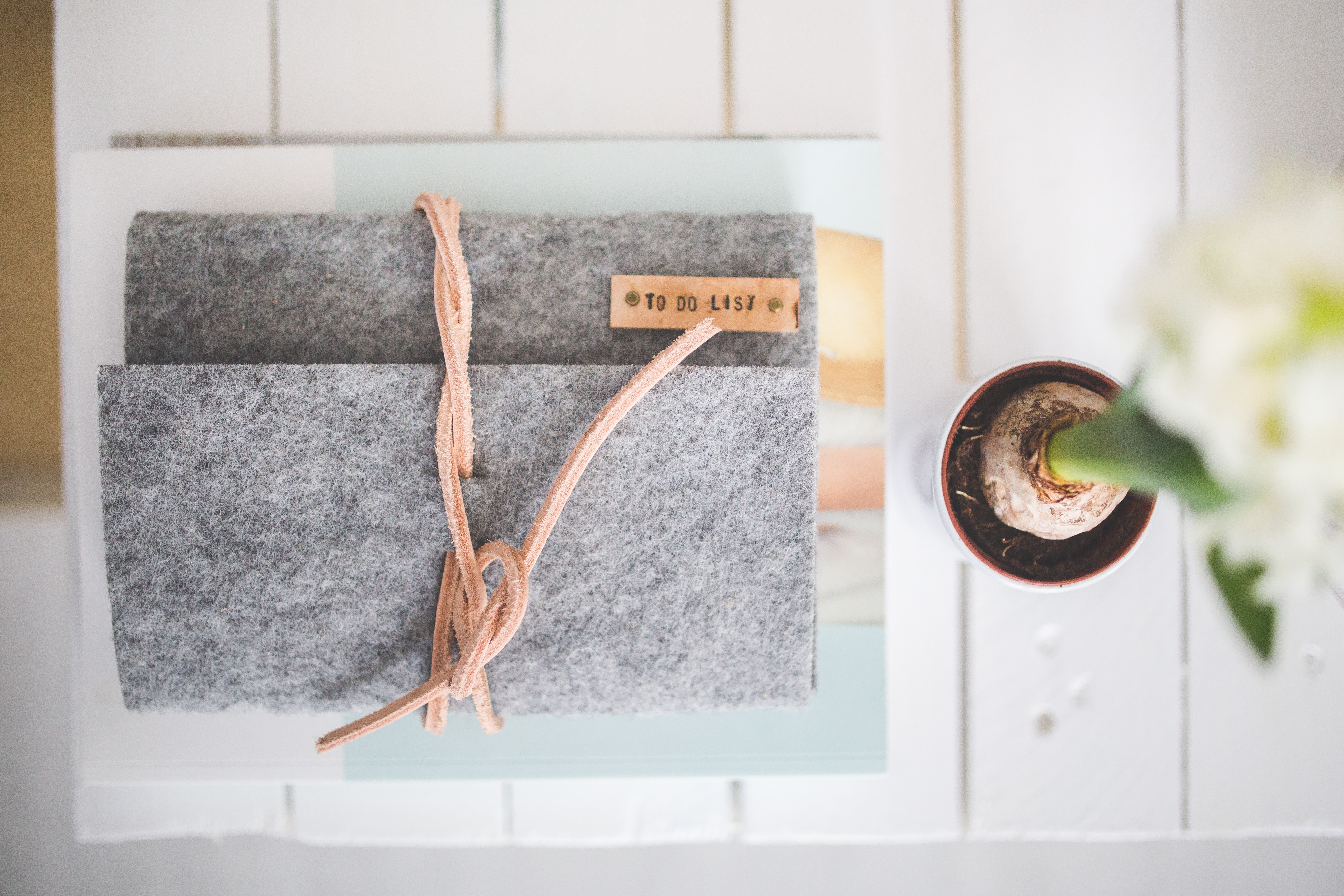
    a grey felt journal with the words to do list on it
    What’s on your to-do list?

    So, to butcher an old proverb, never procrastinate when you could perendinate instead.

    Perendinate – (puh-REN-di-nayt) Verb. To put off until the day after tomorrow.

    There you go. Now use it wisely and impress your friends and family.