Blog

  • A Month of Heartache

    A Month of Heartache

    I used to love May.  It meant the school year was almost over, the days were still getting longer, the weather was (usually) getting warmer, and it meant I could plan a fun Mother’s Day gift for my mum. I love shopping for just the right gift for a person and mum was no exception. I would stand in the card store and read all the cards and pick out exactly the right one, find or make a gift, and then wait eagerly for Mother’s Day to arrive so I could give it to her. When mum died a year and a half ago, I knew Christmas and her Birthday would be hard, but I didn’t think about the hardest month – aka the one before Mother’s Day. This will be my second Mother’s Day without mum and though dad and I have settled into what I like to call a “new normal”, Mother’s Day is harder this year than last year.  Last year it had only been 6 months since mum died – I was still in shock, it didn’t feel real yet. The Mother’s Day ads didn’t bring the same gut punch that they have this year.

    It started right after Easter – the messages in my inbox took on a decidedly maternal tone. E-mail after e-mail encouraged to get a head start on finding the perfect gift for my mum. It seems like Mother’s Day has become an all-encompassing holiday. Every company has an angle on the day and how to make it special using their products. I get it. Nobody wants to be the jerk who doesn’t get their mom something for Mother’s Day. For those of us still actively grieving, however, these emails are another reminder of what we have lost.

    The television and radio ads – for diamonds, for florists, for dinners out are relentless. I’m sure my listening preferences have something to do with it – I favour sports talk or classic rock radio stations. I’m barely in their demographics so I hear a lot of ads that are completely meaningless to me (the weight loss for men clinic ads come to mind here). I know that a study in the May 2013 Reader’s Digest shows that men spend more than women on Mother’s Day gifts, so by listening to radio stations that are geared towards men, I’m going to hear more reminders of Mother’s Day.  But every commercial break?  It’s made me listen to CDs instead of the radio in the car and PVR TV shows so I can scan through the commercials.

    Then there are the flyers.  Even Home Hardware has a Mother’s Day theme to their ads. Canadian Tire, as always, has an entire flyer dedicated to Mother’s Day (but curiously focused one the kitchenware and garden department instead of the hardware or sports departments – I know I’d rather have a drill than another frying pan!). Even the grocery stores are all about Mother’s Day – both in store and in their flyers.

    Yesterday I went into town to do some volunteering – which usually lifts my mood.  The place where I volunteer is also the place mum volunteered so there are a lot of memories associated with it. Normally, I take comfort in those memories and enjoy helping my community in the same place mum did.  Yesterday, not so much. A customer came up to me and started talking about mum, which usually makes me smile but she just kept going on and on and it made me miss her even more. I excused myself at the first opportunity and went into the back and had a good cry. The signs by the roadside on the way home advertising flowers, chocolates, dinner, and brunch for Mother’s Day didn’t help me forget the awkward encounter either.

    Facebook, Twitter, and Instagram have all been filled with photos and statuses about Mother’s Day – be it wish lists, not so subtle hints, or sponsored ads from companies who are trying to sell Mother’s Day “experiences” or gifts.  Each one I see is a reminder that I no longer have someone to buy a gift for, or someone to call and talk to. I lost track of how many times I’ve shut down a social app this week and been crying. It’s not that I begrudge my friends their happiness with their mothers, it’s that it makes me miss mine so much more.

    The good news is that Mother’s Day fades into oblivion quickly.  One more week and it’s gone. I’m in a position that many of my friends who have lost their mothers are not in.  I’m not a mother, so I’m not looking forward to what my kids are doing that day.  There really is no upside to Mother’s Day for me. Last year I tried to remember all the good times, but it’s too soon for that right now. Rather than being comforting, those memories are making me feel the loss even more acutely.  So for the next week, I’m limiting my time on social media and batch deleting emails about Mother’s Day. I’m planning a day with my dad, tending to the gardens she enjoyed so much, and trying to move on as best I can with a mum shaped hole in my heart.


    a Lilac bloom hangs from a branch.
    This is from last year – mum missed the lilac we had at our old house so 6 years ago I bought her a lilac bush for Mother’s Day. It never really bloomed until after she passed away.
  • So, Your Child is Having a Meltdown

    So, Your Child is Having a Meltdown

    As someone who works with kids on the spectrum, I’ve witnessed my fair share of meltdowns.  As I said in my sensory 101 post, a meltdown is not a tantrum.  A tantrum happens when a child wants something (a toy, candy, attention) and is not getting it. In contrast, a meltdown occurs when a child is overstimulated and cannot handle all of the stimuli in their environment.  A child throwing a tantrum is attempting to change your behaviour, a child in the midst of a meltdown cannot change his.  It’s all well and good to have this distinction in mind when things are going (relatively) smoothly, but when your child is the one having a meltdown it can be hard to remember they’re not trying to manipulate you.  Here are some tips to help you survive your kid having a meltdown.

    1. An Ounce of Prevention Can be a Godsend. Children don’t melt down out of the blue.  There are usually warning signs. Every child has a different set of signals but some common ones are: increased agitation, rocking, crying, getting louder, repeating the same words over and over, appearing to ignore you (not responding to questions), or not wanting to be touched. The best case scenario here is that you see the meltdown coming and use a prearranged verbal or non verbal signal to usher your child to a safe and calming spot, use stress reduction techniques like deep breathing or meditation, or tactile stress relievers like a Sensory Ball, Massage Roller, or a Weighted Lap Pad. All of these sensory tools can help calm a child and prevent a meltdown before it starts. (As a note, you will need to work on the signals when a meltdown is not imminent – and as my friend Melissa points out, the language needs to be consistent across home, school, and relatives – anywhere the child will be. The more consistency in the language and actions, the more likely they will work when they need to.)

    If you can’t manage to avoid the meltdown (and you won’t always be able to), here are some tips for when you’re in the eye of the storm.

    2. Stay Calm.  As your child gets louder, you may find yourself getting louder to be heard over them. This adds to the sensory stimuli and can prolong a meltdown.  Any talking should be done in a calm, measured voice. Though it is unlikely that your child will remember anything you say or do while they are having a meltdown so if it’s important, wait.

    3. Make Sure Your Child Is Safe – A child in the middle of a meltdown is not aware of her surroundings – she may accidentally injure herself. If possible, try to shepherd the child into a safer space – out of the kitchen where there are sharp knives for example.

    4. Remove any stimuli you can from the environment. This can include siblings, music, scents, new fabrics, loud toys, or anything else you thing might be overloading your child’s senses. If it is possible, remove your child from the environment – if you are in a store, go back to your car and have a “time in” – sit with your child to ensure they are safe (see number 3 above), or carry your child to a safe room (usually their bedroom) that is free of the stimuli that is causing the meltdown.

    5. Add in a calming stimulus. Depending on your kid, this could be an essential oil blend, a calming music mix on an ipod or other personal music player, a flashlight, a calming bottle, or a favourite toy to hug. It usually takes some trial and error, and again consistency is key – duplicates of whatever works need to be sent to school and triplicates kept on hand at home in case of loss.

    a 500ml coke bottle filled with water and glitter
    My homemade calming bottle

    5. Hug it out – Although it seems counter-intuitive, sometimes more stimulation in the form of a tight hug can help alleviate a meltdown. Many kids on the spectrum benefit from deep pressure so a tight hug or some time in a Giant Pea Pod can be a huge help. A Dynamic Movement BodySox can be just the right amount of pressure, but check reviews carefully, sometimes saving a few dollars results in getting a product that rips on the first use.

    6. Remember – It’s Not About You. It can be hard to remember that your child isn’t doing this on purpose. Some days it feels like you just can’t take any more. Hopefully you have a support network you can call on to take the kids for an hour or two so that you can sit and have a coffee. It’s important for parents with kids on the spectrum to get some alone time. Not that it’s not important for all parents, but it has a way of slipping though the cracks for parents of special needs kids. If you don’t have friends or family who are able to watch your children, look into respite care. It will help you unwind and decompress which will in turn help your relationship with your child.

    A stuffed turquoise platypuys.
    This small stuffed Perry the Platypus is one of the most requested stuffies in my calming bag.

    Once a meltdown starts, it’s not easy to stop it but hopefully these tips make it a little more manageable.

  • Book Review – No Relation by Terry Fallis

    Book Review – No Relation by Terry Fallis

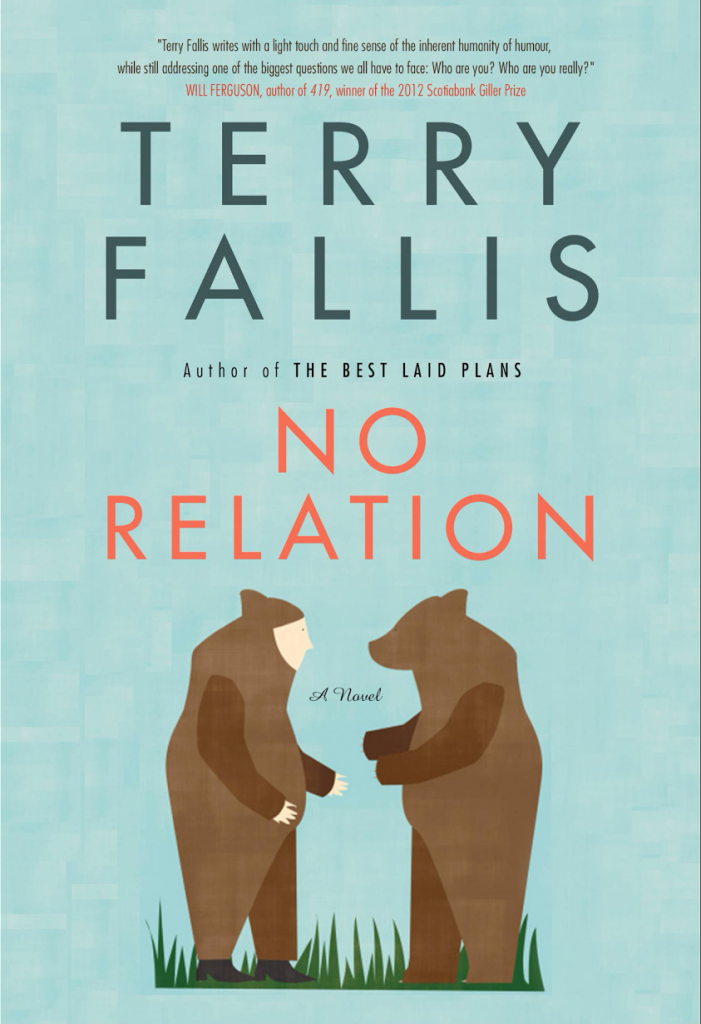
    “What’s in a name?” Juliet famously queried. “That which we call a rose, would smell as sweet” were it called something else, she noted as she contemplated the trouble that was caused by her true love having the last name of her family’s sworn rival.  In his latest novel, Terry Fallis has taken that question to the next level and the result is the hilariously funny book, No Relation. No Relation is Fallis’ fourth book – and the third I’ve read (I have Up and Down on my nightstand – queued up for reading when I finish my current book). As a political junkie, I adored The Best Laid Plans and its sequel The High Road. They were laugh out loud funny, and I was a little concerned about whether the smart and poignant political satire would transfer into a book that wasn’t at all political.

    No-Relation-Cover-701x1024
    You can watch the book trailer for No Relation here https://youtu.be/CUPO1FKetmY

    I needn’t have worried. No Relation is not only as funny as Fallis’ earlier works, it packs the same emotional punches too.  You can’t help but feel for the protagonist, Earnest Hemmingway; in the span of the first few chapters he loses his job, his wallet, and his long time girlfriend. At this point I figured the book was going to be one of those uplifting stories about how he bounced back and made his life awesome again, which, in a way it was, but the devil is in the details and when you have a famous name, things aren’t quite as easy as they seem. Things are particularly hard for Earnest, who, by the way, cannot stand the writing of his famous namesake. Take replacing your driver’s licence – a giant pain for anyone, but it enters 4th circle of hell proportions for Earnest when the nice (or not so nice) bureaucrats at the DMV don’t believe him when he gives his name, which leads to an epic scene and ends with Earnest not only not getting a replacement but his outburst going viral on YouTube. I laughed so hard I cried while reading that chapter.

    Earnest, or Hem as he prefers for obvious reasons, eventually does get his driver’s licence replaced, but the incident at the DMV sparks something in him and he sets out to find other people who share his fate by having a famous name. Enter the Name Fame group. Mario Andretti (who can’t pass his driving test), Mahatma Gandhi, Diana Ross, Jackie Kennedy, Clark Kent, Peter Parker,James Moriarty Marie Antoinette (who owns a bakery) and other New Yorkers with famous monikers who bear – No Relation to their famous namesakes. They form a support group to help each other through the trials and tribulations that come with having a name that everyone knows (even if you have the wrong face to go with the name).

    The name fame group sets out to help Hem with his writer’s block (yes, Earnest Hemmingway decides to pursue his goal of writing a novel when he is laid off -which is exactly what I expect out of a Terry Fallis character) and hilarity ensues. Add all of this to the subplot of Earnest’s father (who is also named Earnest Hemmingway) wanting Hem to take over the family underwear business – a business Hem wants absolutely nothing to do with, and you have the makings of a book that is not only uproariously funny, but also deeply touching.

    No Relation is available for e-readers and trade paperback with a fabulous deckled edging (those are the awesome ruffled edges found on some trade paperback books and I’m a huge fan) from Amazon.ca (You can click on the link to check out the book – it has the cool Amazon preview thing where you can look inside the book). The book is also available as a podcast – I listened to the book after I’d finished reading it as Fallis reads it himself and does all the different voices which alone make it worth listening to. I adore audiobooks but I’m weird in that I always want to read the physical book in addition to (and if possible before) listening to an audio book. Maybe this is why I rarely run out of things to read. If you’re in need of a good laugh, and who isn’t these days, pick up a copy of No Relation. I should mention that the book is also on the short list for the 2015 Stephen Leacock Memorial Medal for Humour. I’ve read 3 of the other short listed books and I’d vote for No Relationif I was on the panel. The others were funny but not laugh-until-your-sides-hurt-and-your-family-looks-at-you-like-you’ve-lost-your-mind funny. No Relation is as funny as Fallis’ political humour books and is a must read for fans of smart Canadian literature.

  • Summer is coming – is camp in your plans?

    Summer is coming – is camp in your plans?

    I know it seems like march break was only yesterday, but it’s time to start thinking of warmer things – sunshine, warmth, and summer camp! As a kid, I loved summer camp (most of the time) and one way my job changes during the summer is that instead of providing school support to kids on the spectrum, I help them adjust and thrive at day camp.

    %{include image.html url=“/wp-content/uploads/2015/04/preservation-clipart-daycamplogo.jpg” alt=“drawing of a wooden sign with the words day camp” description=““}

    Most kids benefit from day camp, but it can be hard to choose the right one, especially if your child is not independent yet.  There are some general questions to ask yourself though, that can make choosing a camp a little easier.

    1) Consider your child’s needs.

    Is your child verbal?  Will he (I’m using “he” because it’s easier just to pick a pronoun) speak to unfamiliar adults? Is he capable of letting an adult / grown up (camp counselor) know if he needs to use the bathroom?  Will he eat lunch without someone sitting there and reminding him? Does he need 1 on 1 support to function in the school environment? If so, you may need to look into getting 1 on 1 support for camp.  Some camps do this for a fee, while others include it in the cost of camp. Still others allow you to send your own support person for free to camp. If your child is at a stage where he only needs support in a few activities, there is also the possibility of pairing him up with one of the teenage Leaders in Training (LITs) for those activities. Be honest when assessing your child’s needs.  Over or underestimating their independence will make for a very unhappy camper.

    2) Does an activity your child already participates in do a summer camp?

    Many activities such as Girl Guides, Boy Scouts, Martial Arts, and music lessons often run full week summer day camps (or even overnight camps), with the same instructors or at least other familiar faces.  Plus it’s an activity your child presumably enjoys already so there’s a high interest value there.  The level of assistance available for kids with special needs varies with different organizations so you need to check what is available and make sure it fits your needs (see number 1 above).

    3) What are your child’s interests?

    While there are still some traditional “day camps” around that have a little bit of everything, there are lots of specialized camps that may be a better fit for your child. Is your child really into lego?  There are specialty camps for that. Does your child have a dramatic streak? Look into theater camps where budding thespians can get their fill of the stage.  These camps may not have as much experience with special needs kiddos but they will usually work with you to create a great experience.

    4) Are there any subsidies / grants available to help pay for an aide or defray the cost of camp? 

    Camp isn’t cheap and good camps can be even more expensive.  Check with the camp to see if they have any camperships that can help with the costs.  If you need to send a support worker with your child, some community groups offer grants to help cover the cost. Ask everywhere – the worst that can happen is that someone says no. You may need to apply early for these so check as soon as you start looking at camps.

    Camp is a big part of the childhood experience, and one that every child can take part in if the right combination of camp and support is found.  Once you’ve found the right camp, then the real fun begins.

  • Board games I like for kids on the Spectrum.

    Board games I like for kids on the Spectrum.

    Last week I blogged about how I use <a href=“https://jennannis.com/its-my-turn-the-challenges-of-turn-taking-with-kids-who-have-asd/” title=““It’s MY TURN” – The challenges of turn taking with kids who have ASD”>board games to help teach turn taking skills to kids with ASD. I’ve been asked what games I recommend and while I have some general guidelines and games that I always try out, not every game will be a hit with every kid.  I mentioned last time that Chutes and Ladders can be tricky as there is an element of chance in it, but it doesn’t have any text to read (a great thing in a kid’s game) and some kids really love the game. Some games come in character variant like Dora the Explorer or Transformers so that they engage kids’ interest. If you can find a game the child is interested in, that’s half the battle right there – they’ve bought in.  So, what games do I have in my stash for kids with ASD? It’s probably not what you’d expect.

    I love to start with Guess Who? for kids who already have verbal skills because it helps them learn to ask questions as well as being a very visually based game. As a bonus, the faces also have expressions on them so you can re-use the board for teaching emotions. The game is really easy to learn and if there are any issues with which questions to ask, you can provide a list or give them some suggestions. Guess Who isn’t noisy – the loudest noise it makes is when the “wrong” pictures are flipped down – and if you do it quietly, it mitigates that nicely. There are versions without the faces – with animals or Disney characters so depending on what you want you can get a different version, though I prefer the original with the faces.

    For kids whose verbal skills aren’t quite advanced enough, or for younger children, Lucky Ducks by Milton Bradley is a great beginner game. There are 12 ducks each with symbols on their undersides. The first person to find 3 ducks with matching symbols wins. It’s simple but still a lot of fun. Another great option for kids who can’t yet read is the ever-popular Candy Land. Candy Land is easy to play, requires no reading, just matching of colours and pictures. As a note, I recommend the “classic” version of the game over the newer “bookshelf” style as the game board is sturdier and the spinner works better.
    <

    A great introduction to basic strategy games is the ever popular Connect 4. I played this game a lot as a kid, it was fun and fairly quick but it taught some important lessons on strategy. Do you go for the win and leave yourself possibly exposed? It’s all a balancing act and Connect 4 does it well. The original game pieces (not so much the knock offs or travel versions) have textures around the edges that make them easier to pick up for kids with fine motor issues.  The game is a little noisy, especially at game end when all the plastic pieces are released but playing on a placemat or tablecloth dampens the sound considerably.

    My all time favourite games to start with though, are Co-operative games. There are dozens of games to choose from, so you can pick one that works with the interests of the child. They all have one thing in common – all players work as a team to win the game.  This is great for two reasons. Firstly, it eliminates some of the competitiveness of the game and helps kids focus on playing together instead of as opponents. Secondly, it helps encourage good turn taking skills because what other players do on their turn directly impacts your turn so there is incentive to pay attention even when it is not your turn to move. As an added bonus, many of these games teach extra skills – Harvest Time, for example teaches kids about the seasons and how crops grow through spring and summer and are harvested in fall before winter. These games are geared towards everybody winning, but be aware that everybody can lose as well. When that happens, I usually start a discussion about what we might have done differently to win the game and then test out the theory by re-playing the game. (The answer to “what could we have done differently to win the game?” is always “helped each other more” – another nice feature of the games.) The Co-operative games are great because they engage the kids but aren’t so annoying that adults don’t want to play them repeatedly.

    As a rule, I stay away from games like Perfection because when the timer goes off and the pieces are launched, it can be loud and frightening for some kids, also some of the pieces go flying and are hard to find! Hungry Hungry Hippos is very fast paced which is good, but it’s also really noisy with all the marbles on the plastic tray, which can be really hard on some sensory kiddos. The family favourite game Uno comes in many variants so you can pick a character variant that your kid is into. For beginners, there are different character editions of My First Uno, such as which feature larger cards and pictures to help with pattern recognition (for example, all 6s have the same character on them so the players can match the numbers OR the pictures). There are less cards so the deck has to be shuffled more with the My First Uno games, but they’re a good introduction to the game. My only warning with Uno as a whole, is that if you’re just introducing turn taking games, hold off on this one awhile. The reverse direction cards can throw newly minted turn takers for a loop. The skip a turn feature can also lead to some crankiness so it’s better to wait a bit before introducing Uno.

    For older kids who love to find patterns, you can’t beat the classic card game Set. Set was one of my favourite indoor recess games, and I own a copy now and still love playing it. To create a ‘set’, a player must locate three cards in which each of the four features is either all the same on each card or all different on each card, when looked at individually. The four features are, symbol (oval, squiggle or diamond), color (red, purple or green), number (one, two or three) or shading (solid, striped or open). You can play the game on your own, in turns, or competitively which makes it a great game to grow on. I usually recommend it for ages 10 and up but have played with younger kids who can understand the rules of how to make a set, and have enough of a tolerance for frustration that they can spend the time needed to look for the set in the cards laid out.

    These are my top go-to games when I’m working on turn taking or just enjoying the social aspect of games. I tend to stay away from noisy games, games that need batteries, and games with long turn times until the habit of gaming is firmly established. I don’t have any games specifically made for people with ASD, such as ones that directly teach social skills, mostly because I don’t think you always need to get specialized equipment, and it’s good to expose kids to games they may see in the classroom or at a friend’s house. Do you have any favourite family games at your house? I’d love to know what they are. I wrote about my favourite games right now in a post here.

  • Why can’t we all just get along?

    Why can’t we all just get along?

    April 2nd is WAAD – which stands for either World Autism Awareness day or World Autism Acceptance Day depending on who you ask.  My Facebook, Twitter, and RSS feeds were full of posts saying either “Light it up Blue” or “Don’t Light it up Blue, Walk in Red instead” or “wear rainbows for acceptance”. It seems there is a schism in the Autism community, and I’m here to plant myself firmly on the fence. I fully understand that Autism Speaks (who started the light it up blue campaign) has some very troubling policies / research interests.  I do not agree with funding anti-vaccination research (particularly in the past 5 years when the link between vaccines and autism was already scientifically debunked). I strongly dislike how they portray autism as something deserving of our pity, and their characterization of people with autism as miserable or that having a child with autism leaves you living a “life of despair” as Autism Speaks co-founder Suzanne Wright wrote in 2013. It’s not okay that Autism Speaks doesn’t have anyone in the senior leadership of the organization who actually HAS autism. It’s tragic that the organization is so blinded by the negatives of having a child, friend, or loved one with autism that they cannot see some of the positives that autism can bring – such as a different way of looking at the world.

    My biggest issue though, is that Autism Speaks sees autism as only a disability that needs to be “cured” instead of a part of what constitutes the identity of someone with autism.  They spend a lot of money trying to cure something which, in my humble opinion, does not need to be cured. In my work, I strive to find ways to help the kids I work with live, thrive, and succeed in a world that is sometimes set up against them. I try to empower them to be able to be independent, to ask for help when necessary, and to gain the skills that are needed to be able to live a happy and productive life. I do not attempt to cure anyone.  Nor do I think that all ‘autistic’ behaviours are something that need to be eradicated. When I discussed sensory issues in an earlier post, I did so because many sensory issues are a negative experience for the person who is dealing with them.  I wanted to bring awareness to some of the sensory issues that people with autism and sensory processing disorder face, and give suggestions that can help those living with sensory issues have one less obstacle in their life.

    All of that doesn’t mean I don’t think some good has come out of the awareness campaign that Autism Speaks started. If even one person has chosen to learn more about autism because of the light it up blue campaign, then I think it’s great. To all the people who say “we’ve had 10 years of awareness, people are aware of autism”, I’d like to respectfully disagree. In my experience, many people aren’t aware of autism beyond the word itself.  They don’t understand it, and what isn’t understood is feared, or worse, made fun of. Yes, the light it up blue campaign was spearheaded by Autism Speaks and buying the official merchandise does help fund the organization. So I don’t buy the official merchandise. You can be in favour of awareness and acceptance without giving money to Autism Speaks. You can wear blue and not support Autism Speaks. You can choose to wear blue because it has become associated with autism awareness.

    Which brings me to the other groups, the “walk in red for autism acceptance” and the “rainbows for acceptance” groups.  I love that people want to move from awareness to acceptance. What I dislike, however, is the idea that it has to be one or the other. That you have to pick a side.  I understand, acknowledge, and share many of the concerns that the Autism self-advocacy network have with Autism Speaks but I don’t think it is an all or nothing deal. Yes we need to move towards the acceptance of autism as part of the spectrum of neurodiversity. Yes we need to encourage people who haven’t had much contact with people who have autism to reach out and not judge. Yes acceptance is much more than just being aware, it is something you actually have to work at doing. But there is no reason that acceptance and awareness cannot coexist.

    On April 2nd I wore a blue shirt with a sticker that said “ask me why I’m wearing blue”. It gave me the chance to talk about autism and raise real awareness about it. I also wore my red running shoes and a rainbow bracelet.  Why?  Because with all of this infighting in the autism community, I feel that we are losing sight of what really matters.  We are spending so much time and energy fighting with each other when we should be a community, and united to fight those who would discriminate against people who have autism. The autism community is strongest when we band together and present a united front instead of multiple voices asking for the same things for different reasons.  Let’s stop all the infighting and focus on what really matters – improving the quality of life for those who live with autism and those who care for and about them.  If you want to donate your time and / or money, do some research and find a group that aligns with your beliefs – maybe a local chapter of the Autism Association, the Geneva Centre for Autism, or an organization like the Special Olympics. If you know a parent with a child who has autism, a friendly smile or an invite for coffee can go a long way too.

    To me, this is what autism awareness and acceptance month is all about.  This is my friend’s son Jacob.  He loves Spiderman and building towers out of blocks. He likes playing in the ocean.  He adores his siblings and dotes on the family cat.  He also has autism, and while it does not define him, it does mean that he needs some extra help negotiating the world and that his parents needed some extra support so they they could understand him.  Let’s not get so caught up in our own fights that we forget what is really important here: people.

    A small boy in blue PJs holds out a cat
    Image courtesy of Paula Collrin
    A young boy in blue pants and a blue top swings a cardboard tube like a sword
    Image courtesy of Paula Collrin
    A young boy in a blue rashguard and swim trunks stands in shallow water on a beach
    Image courtesy of Paula Collrin

    ** note ** All comments are moderated so for the people who felt it necessary to reply with vulgar language or with threats – they will not appear.  You are allowed to respectfully disagree, however personal attacks will not be tolerated.

  • Board Games I Love

    Board Games I Love

    I admit it, I’m a board game fanatic.  Luckily I have a great group of friends who also love playing board games and we get together 1-2 nights a month to play.  I own a lot of games myself, and though there is some duplication in collections (Many of us own Settlers of Catan for ourselves, along with Dominion and Carcassonne) I’d say that between all of us we have at least 500 unique games / add ons to games / variants of games. That’s a LOT of choices – though some get played very rarely (I’m looking at you Risk and Axis and Allies). Board games are my favourite choice for a night out with friends since it’s social without being in a loud restaurant or at a movie and I don’t have to have pre-read a book like at book club. I’m going to list my current 5 favourite games – though the list changes frequently as I discover new games or rediscover games I had forgotten about – with a bit of a description of the game and my thoughts on playability.

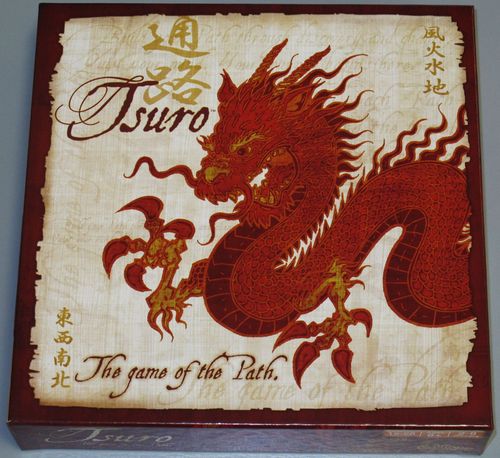
    5) Tsuro

    A square board game box with a large dragon on it. Text reads Tsuro The Game of the Path
    The rules are simple but winning is not

    I was only introduced to this wonderful game recently, and while I don’t own it, it’s definitely on my list! The game is really quick (averaging 15-20 minutes) and a great “appetizer” in front of longer games or one to play while waiting on people to show up. The premise is simple -each player has a token and a tile in front of them. You create the board as you go along, with each person playing one tile per turn. Your token moves along the path you are creating.  The goal of the game is to be the last one still on the board – tiles can move you off the board, at which point you are out. As the game progresses, your token may be affected by other players who want to knock your token off the board. The game is gorgeous to look at and elegant in its simplicity. It can have anywhere between 2-8 players and the recommended age is 8 years and up. I highly recommend it.

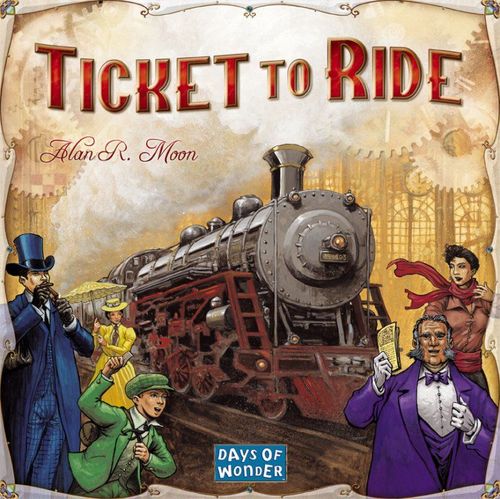
    4) Ticket To Ride

    A square box with a steam locomotive engine and drawings of people from the early 1900s. Text reads Ticket to Ride
    There are many variants to this game

    I was introduced to Ticket to Ride by friends soon after the European map came out in 2005. It was a lot of fun to play and I really liked that it was a strategy game that could be learned in about 15 minutes and played in 30-45 minutes. While several of my friends prefer the European map because it has stations that allow you to connect your trains through cities that would otherwise be inaccessible because others have played there, I love the North American map because it doesn’t have stations.  You really need to plan your strategy. The object of the game is to collect and play matching train cards to claim railway routes between cities. Trains of differing lengths have different point values. You can also score points by finishing destination tickets (connecting 2 distant cities by trains), and there are bonus points for longest route.  The game play is very simple with only 3 possible actions each turn (drawing train cards, playing a set of train cards to claim a route, or drawing more destination tickets) so the game pace is very quick.  Ticket to Ride is for 2-5 players ages 8 and up.  It’s lots of fun and is considered a “gateway” game to introduce people to tabletop gaming.

    3) Qwirkle

    A square box with black tiles featuring symbols in a variety of colours on it. Text reads Qwirkle
    I own both the large size and the travel size versions of this game

    Qwirkle falls into the category of what I would describe as deceptively tricky games.  The premise is really simple: match tiles either by colour or by shape. There are 108 tiles total – 3 sets of 6 different shapes in 6 different colours.  The catch is that you must play your tiles in a line and that the lines cannot contain duplicates and must contain a tile that matches either the shape or colour of the line you are joining.  You get a point for each tile in the line(s) that you play, and a bonus of 6 points for completing a set of 6.  The tricky part comes in the strategy – do you play your tile knowing that your opponents may be able to finish the line of 6? Do you wait and hope you draw the needed tile? Will someone else block the space you need? It can be really hard to pre-plan moves because the board changes with each player’s turn.  Qwirkle is for 2-4 players aged 6 and up. I’ve played it with both kids and adults and everyone enjoys this game – especially since it takes between 30-45 minutes for a game.

    2) 7 Wonders

    A square box with images of the 7 wonders of the ancient world on it. Text reads 7 Wonders
    This game is definitely more complex but I love it

    This game isn’t considered to be an introductory game, though there’s no real reason it couldn’t be.  It’s fairly complex but once you’ve played it through, it has a high replay value. 7 Wonders is essentially a card development game – you build cards to either help you now or help you later. The game has 3 stages and each stage has different cards in it (and they tend to go up in cost as well as point value). The object is to have the most points and there are tons of different ways to gain points. You have a deck of cards to begin the stage and then choose one card to build immediately and pass the rest on to your neighbour (on left or right depending on the stage).  You can also bury your card to build a part of your wonder (which usually gives points at the end of the game). That’s where the strategy comes in – which card do you build / bury knowing that all the rest are going to your opponent. (Cards move around after every turn and you display what you built immediately so you know approximately how you are doing in relation to the other players). It is very possible to overthink the game or try too many strategies and fail at all of them. It’s also possible to have no real strategy at the beginning and still win. I’ve done both. 7 Wonders takes between 10 and 15 minutes to set up and between 30-45 minutes to play depending on how long each person takes to decide what they are doing each turn.  You can play with 2-7 players (I’ve never tried 2 player) and the recommended ages are 10 and up. If you take the time to learn to play, it’s a great game to pull out with friends.

    1) Bananagrams

    A banana shaped yellow cloth bag with a zipper at the top and the word Banagrams on it
    The bag is part of the appeal here

    I’m a word geek. I loved scrabble but finding people to play against me was always hard.  I also didn’t like having to have a board and the restrictions the board imposed on gameplay or having to wait for the other players to play before I could enter my next word. Enter Bananagrams. In Bananagrams, each player works independently to create a crossword grid of words using letters from their own pile.  Everyone starts with the same number of letters, and when one person has used up all their letters, each player picks up an additional tile from the joint pool. When there are no tiles left to pick up, the person who uses all their tiles first is the winner. It seems easy but you only have your own words to build off of, and there are no letter values so being stuck with a Q and no U or a Z just makes it harder to play instead of giving you extra points. That said, it’s a fantastic mental challenge and lots of fun for 1-8 players to play at the same time. A game can last as short as 10 minutes depending on the speed at which players can use their letters. The game is best for ages 7 and up as you do need to be able to spell enough words to make use of the tiles.   It’s a fun and very portable game that can be played pretty much anywhere.

    So those are my 5 favourite games right now. Tell me in the comments what games your family enjoys!

  • Book Review – Somewhere in France by Jennifer Robson

    Book Review – Somewhere in France by Jennifer Robson

    I’m a historian, and as such, I’m generally leery of reading historical fiction set in the time period I studied – World War One.  Small inaccuracies can drive me crazy.  Especially ones that I consider to be lazy – when the author didn’t do his or her research and messed up dates or places. Or when they have a character write a letter from France and their loved one in England gets it within days.  That rarely happens now, it sure as heck didn’t happen with a war going on and mail being censored.  When I saw the cover of Somewhere in France, I was intrigued. I have friends who really enjoyed the book and I wanted to love it but I was afraid it wouldn’t live up to the high expectations I have for World War One historical fiction. I needn’t have worried.  Jennifer Robson has set the new bar for the genre. From the first page I was captivated and unable to put the book down until I had finished. (Total time elapsed – 2.3 hours.) I then went out the next morning and bought the sequel, After The War Is Over, and proceeded to devour it. Then I re-read Somewhere in France.  Re-reading a book isn’t all that uncommon for me, but re-reading a book less than a week after I first read the book? Now *that* was a first.

    The cover of the book Somewhere in France by Jennifer Robson. A woman dressed in a blue dress that evokes the 1910s looks  out over a sepia toned image of a French street from the same era
    The cover art is absolutely gorgeous.

    I made an instant connection with the character of Lilly Ashford. I loved her spunk, and her unwillingness to do what others (mostly her parents) wanted her to do with her life and instead follow her heart. I adored the fact that the life she was running away from is the life many of us think we would want – that of an upper class gentlewoman. I may have connected first with Lilly, but every single character in the book was well written.  I felt connected to all of them. Edward, Robbie, Charlotte – each character stole a piece of my heart, I wanted to know everything about them.  I wanted them to be real.

    For a historian, the best part about Somewhere In France is the rich detail that is woven into the narrative. The characters were figments of the imagination but the setting was real.  There really was a Women’s Army Auxiliary Corps (WAAC), and the jobs described in the book such as ambulance driver (Lilly’s chosen vocation), catering (I love the positive spin the Brits put on “mess hall duty”), clerical, and motor transport were actual jobs filled by women during the war in an effort to free up men for front line service.

    The plot moved along at just the right pace, and the side plot with Edward (Lilly’s Brother), kept me on the edge of my seat until the last page.  The ending was perfect, and left me wanting more, which is why I went out and picked up the sequel After The War Is Over.  I would recommend this book to anyone who wants a great piece of fiction that is steeped in the truth. The book doesn’t sugar coat the war, or leave out the tough parts in favour of a love story – it blends the two together perfectly.

    The mini essay “Women Ambulance Drivers in the Great War” which appeared at the end of my copy of the novel went a long way to explaining why I adored the book. Jennifer Robson wasn’t content in finding a single source to prove that there were female drivers in clearing hospitals near the front lines, she dug and dug until she unearthed multiple sources. Truly an author after my own heart.

    My recommendation for Somewhere in France is this: go out and get this book immediately.  Read it, and prepare to have your heart stolen.

  • Sensory 102

    Sensory 102

    Earlier this week, I wrote about the two most common sensory issues that affect children with Autism Spectrum Disorder (ASD) – sensitivity to clothing and to food textures.There are other sensitivities that affect children on the spectrum. Sensory issues can and do affect every sense.

    I was remiss in not mentioning oversensitivity to noise in the last post as it is one of the most common sensory issues and affects more than just children on the spectrum. It isn’t just loud or unexpected issues that can cause problems. One of the kids I work with, once told me that the humming of the fluorescent lights in his classroom can make it very hard for him to concentrate. He explained that he always hears the humming and can see the tiny flickers that are almost imperceptible to his neurotypical classmates. The energy he expends trying to tune out these distractions is energy he doesn’t have to use on his schoolwork or on social interactions, and leaves him drained at the end of the day. He had gone through the first 7 years of his school career before anyone thought to ask him if there were any parts of his classroom that made it harder for him to do work. Children with ASD do not typically volunteer extra information even when it is in their best interest to do so and had this question not been asked, the problem of the “noisy lights” as he calls them, would likely have never been addressed.  Luckily, he had a very understanding teacher who has brought in some floor lamps and tries to use natural light whenever possible so the “noisy lights” can stay off.

    Everyday noises that most of us take for granted and easily tune out such as the humming of the refrigerator or the whirr of the furnace fan can be unwelcome intrusions into the life of a child with sensory issues. Unexpected noises can derail an entire day.  Last week I was in a big box store and there was a little guy who was having what I recognized as a sensory overload meltdown. Note: a meltdown may look like a tantrum from the outside but whereas a tantrum usually results from a child not getting his or her way, a meltdown is a child’s uncontrollable response to overwhelming stimuli.  His mother was at the end of her rope, so I stepped in and asked if I could help (Yeah, I do this a lot – I hate seeing a child in distress). She agreed so I knelt down and asked the child if it was too loud. He said “yes it is” -we were standing about 4 aisles away from the electronics department where every TV was showing something different and someone had turned some of the volumes up it was too loud even for me. I went off in search of an employee and asked them to please turn down the overall volume  and asked if a few of the sets could be turned off and he readily agreed.  I went back to my new little friend and explained that next time, he should use his words to tell an adult if it is too noisy. He thanked me, and his mother told me that he had autism and “never talked to anyone outside of family” before talking to me.  (I hear that a lot too – I’m not sure why I can get kids to open up but it’s a gift I’m thankful for every day.)  For me the noise in the store was irritating, but it wasn’t stopping me from functioning. For a kid with ASD, who is unable to tune out the noise, it becomes all encompassing and they cannot function until the noise is reduced or eliminated.  However, it often takes someone asking directly if the situation is a problem as children with ASD don’t usually volunteer that kind of information.

    The sound volume icon - a speaker with 3 radiating bars -indicating full volume
    Check volume levels!

    Loud and unexpected noises can be a source of distress for a child with ASD.  To begin with, as a group, children with ASD do not tolerate the unexpected well.  Routine helps them make sense of their world, so unexpected noises that disrupt that routine are upsetting. Fire drills, car alarms, doorbells, and even phone calls are all noises that can interrupt and disrupt the daily routine.  Sometimes there is an easy fix – one of the children I work with was constantly upset by the doorbell.  His parents changed the standard doorbell for one of the ones with a customizable chime – and allowed him input of what the sound should be.  He chose one that was quieter but still loud enough to be heard and the problem was solved.  Sometimes it takes a lot of trial and error to discover the problem and to figure out a solution, be persistent and you will be rewarded. My friend Lisa notes that children who have sensory issues with loud noises often do not have issues being noisy themselves. This can be due in part to the fact that they don’t hear themselves at the same volume others do or are unable to successfully modulate their voices to the situation. However their own excess noise can contribute to their overall stress and usually causes siblings or classmates to raise their voices in return which can lead to a meltdown.

    Smells are another sensory issue that can affect children with ASD.  For some children a scent that others find quite pleasant can be quite upsetting. One child I know has an intense reaction to the smell of vanilla.  He dislikes it greatly and will cry inconsolably if he catches the scent in a store.  He was out with his parents running errands and a bottle of vanilla had been broken in the aisle of the grocery store.  He was so distraught that he had to leave the store in order to calm down.  For a child with sensory issues, sometimes the only recourse is to remove them from the situation.  Some scents can be avoided, and others can be gradually introduced in order to desensitize the child to them.  It may be worth investigating, if a child has a negative reaction to a friend or relative, whether they have a signature scent.  Sometimes the familiar scent of a relative is not comforting to a child with ASD. Unscented laundry detergents and soaps can go a long way to making life more comfortable for a child with olfactory sensory issues. Beware of cleaning agents with strong or even unusual scents – if your child is showing signs of distress after the house has been cleaned, ask them if the smells bother them. It may be that the smells of the cleaning agents are bothering them.

    An often neglected sense when discussing sensory issues is sight.  Conventional wisdom has had nurseries, bedrooms, and classrooms brightly decorated with lots of stimulation for developing minds.  Some children, however, including those on the autism spectrum, cannot process that much visual input and thus become overstimulated in such environments.  This is not to say that there cannot be decoration but make sure the child is not having to filter out unnecessary visual information to get to the important stuff.  Daily schedules should be free from extra adornments, and fonts should be simple and not overly ornate.  Even classroom bulletin boards should be free of extraneous information.  A couple of posters on a bedroom wall may be too much for one child but may be fine for another – see what works best for the individual child.

    Not all sensory issues are easy to identify.  It can take a lot of trial and error to find the right combination to work for each child. The rewards can be worth all the effort though. When a child with autism is comfortable in his surroundings, and not being overstimulated, they are better able to cope with their world, and live in ours.

  • Sensory 101

    Sensory 101

    One of the hardest things for many parents to understand about their child with Autism is their sensory issues. I’m writing from my experience, which is with kids who have ASD.  Sensory issues can come on their own, as part of Sensory Processing Disorder, or with another condition such as ADHD.

    If you don’t have a sensory issue, it can be very hard to understand why you child is refusing to put on the shirt grandma gave him for Christmas because it “doesn’t feel right”.  Often, parents chalk these tantrums up to behaviour or defiance, but as I explained in an earlier post, behaviour is how some children with ASD communicate that there is a problem. I have some sensory issues myself, but I also have the words to be able to explain why something is bothering me. I primarily have issues with fabrics, foods, and some sounds, so I’ve got it easy.  As an adult, I am able to avoid most of the things that drive me crazy, and as a child I was lucky to have parents who cared only that I was wearing clothes but didn’t care if i wouldn’t wear corduroy, or would only wear corduroy.

    Many parents try to make mornings less of a hassle by picking out (or having their children pick out) clothes the night before. While it is a good idea in theory, it can fail horribly in practice for a sensory kid (or grownup) because sometimes something that didn’t bother them yesterday does today.  They aren’t being intentionally difficult; they really cannot handle the stimulation those clothes provide on that day.  It should be noted, too, that in teens and adults hormones and hormone fluctuations can affect sensitivities so they literally can change day to day.

    The seams on clothing can be a constant irritant.  Sometimes I am able to filter it out and ignore it but sometimes it’s like a sunburn – my skin feels different and wrong and I can’t concentrate on anything until the situation is fixed.  I need to change clothes.  I have pairs of diabetic socks because they don’t have rough seams and they are non binding – the elastic at the top of socks is awful.   The fabrics themselves may rub the wrong way – and which fabrics bother me may change.  I lived in jeans in high school – I had 4 or 5 pairs and wore them more days than not.  Then I got to university and couldn’t stand the way denim felt on me. My favourite jeans sat neglected in my closet until partway through 4th year when suddenly, denim was okay again.  Clothes that haven’t had fabric softener (I use bounce unscented sheets because I’m allergic to a lot of scents and I am a static magnet) drive me around the bend. They are stiff and scratchy and if I have to wear them, I may look like I’m listening but really I’m just counting the hours until I can change.

    cartoon drawing of blue and green flip flops
    Nope. Just Nope.

    Flip Flops. Oh my god. I have tried to get into the spirit of summer and don flip flops at the cottage. My record so far is 6 minutes before they were ripped off my feet and tossed aside.  The only thing that goes through my head the entire time I am wearing flip flops is “There is something between my toes.  Why is there something between my toes?  The something between my toes must go away” On a constant loop.  I cannot carry on a conversation in flip flops, I can barely remember my name because I cannot tune out the sensory input coming from the little piece of plastic between my toes. Then there’s the characteristic sound that flip flops make.  It’s distracting enough when it comes from other people, but when I’m the one making it?  I’d stand still except then I still have something between my toes.  I can avoid flip flops but many kids with sensory issues have that level of input coming from everything they wear. Yes some clothes are worse than others, and over time, one can can learn to tune out some of the input but when it’s coming from everything all of the time?  It requires a tremendous amount of energy to do anything after tuning out the sensory distractions.

    There are clothing manufacturers out there who make clothes specifically for children and adults with Autism or Sensory Processing Disorder. They feature flat seams that are far less irritating than regular seams, some seamless designs. printed on labels, and soft fabrics.  They are expensive but can be a lifesaver if your child is really struggling.  Some regular clothing stores incorporate some sensory friendly elements in their clothing – Joe Fresh has some clothes with printed labels instead of tags and flat seams. I love Smartknit socks – not only are they seamless but they have no heels so they are easy to put on and fit growing feet for longer.  They also make seamless underwear and undershirts.

    With food, it often isn’t the taste that I cannot handle (though occasionally it is – the taste / smell of root beer drives me crazy) but the texture.  Certain food textures are more upsetting than others. I am well aware of how awesome chia seeds are for your health.  I can totally appreciate that adding them to chocolate pudding makes it somewhat healthier, but I cannot handle the texture of chia seeds. You can lie to me and tell me it’s plain pudding but it’s not a preference thing, I will feel the jelly-like seeds on my tongue and, because I was raised to be polite, I will swallow one bite and politely refuse any more.  Many kids can’t force themselves to swallow it.  I do not advocate trying to trick children with sensory issues into eating foods they dislike because they will know, and then they will be suspicious of any new food.  There are therapies, usually provided by an Occupational Therapist, specifically designed to help children whose sensitivity to food texture prevents them from being able to eat a healthy diet, but the majority of sensory kids have texture families they cannot stand but are fine with others.

    This doesn’t mean you shouldn’t introduce new foods, but don’t insist on a child with sensory issues swallowing the new food. If you can, ask them why they don’t like it.  Tastes can take time to develop, sometimes it takes a number of reintroductions before one acquires the taste for something. Textures, are another story – aversions to textures are unlikely to change as a result of repeated introductions. That’s not to say they can’t change, but it’s more of an internal change and not something that can be forced.

    Another food texture issue that is common is a refusal to try a food in an altered state.  Apples may be a favourite food, but apple crisp makes crunchy apples soft and that isn’t right.  Toasting marshmallows gives the outside a crunchy texture when marshmallows are supposed to be soft.  A child may like mashed potatoes but refuse to eat baked potatoes because the texture isn’t what they expect. Different textures can mean that even if a child likes the food, they cannot tolerate the altered state.  Smoothies can be a tricky sensory combination as some fruits like strawberries have tiny seeds that don’t get fully blended. Smoothies are also a combination of flavours and many kids (and adults) on the spectrum do not like flavours to mix.

    Figuring out what the sensory issue is can be a bit like solving a mystery. If a child is non verbal, it can be harder to identify the cause of the problem but not impossible.  You basically need to approach the situation like a detective – is anything new? If so, try reverting back and see if the behaviour stops.  Are there irritating tags? Take them out (use a seam ripper if possible since the stubs left from cutting can be worse than the tag itself). Is their skin dry?  Did you change detergents? Any of these can be the cause.  If the child can nod or give yes / no answers you can ask “is this bothering you” as you hold up different items of clothing. If a food was presented in an altered state (such as soft boiled eggs instead of scrambled), try introducing the food in the expected state and see if the child accepts it.

    A child who cannot handle wearing certain clothes, or deal with food textures may react in a way that looks like he is an overindulged brat. Friends and relatives will tell parents that they are spoiling the child by letting them get away with reacting.  There is nothing further from the truth.  We want to set children up for success.  A child is more likely to succeed when they are not being distracted by scratchy clothes and they have been fueled with food that they enjoy and that gives them adequate nutrition.    With a better understanding of sensory issues, it becomes easier to see how what looks like a tantrum is actually a cry for assistance.