Tag: Sensory

  • So, Your Child is Having a Meltdown

    So, Your Child is Having a Meltdown

    As someone who works with kids on the spectrum, I’ve witnessed my fair share of meltdowns.  As I said in my sensory 101 post, a meltdown is not a tantrum.  A tantrum happens when a child wants something (a toy, candy, attention) and is not getting it. In contrast, a meltdown occurs when a child is overstimulated and cannot handle all of the stimuli in their environment.  A child throwing a tantrum is attempting to change your behaviour, a child in the midst of a meltdown cannot change his.  It’s all well and good to have this distinction in mind when things are going (relatively) smoothly, but when your child is the one having a meltdown it can be hard to remember they’re not trying to manipulate you.  Here are some tips to help you survive your kid having a meltdown.

    1. An Ounce of Prevention Can be a Godsend. Children don’t melt down out of the blue.  There are usually warning signs. Every child has a different set of signals but some common ones are: increased agitation, rocking, crying, getting louder, repeating the same words over and over, appearing to ignore you (not responding to questions), or not wanting to be touched. The best case scenario here is that you see the meltdown coming and use a prearranged verbal or non verbal signal to usher your child to a safe and calming spot, use stress reduction techniques like deep breathing or meditation, or tactile stress relievers like a Sensory Ball, Massage Roller, or a Weighted Lap Pad. All of these sensory tools can help calm a child and prevent a meltdown before it starts. (As a note, you will need to work on the signals when a meltdown is not imminent – and as my friend Melissa points out, the language needs to be consistent across home, school, and relatives – anywhere the child will be. The more consistency in the language and actions, the more likely they will work when they need to.)

    If you can’t manage to avoid the meltdown (and you won’t always be able to), here are some tips for when you’re in the eye of the storm.

    2. Stay Calm.  As your child gets louder, you may find yourself getting louder to be heard over them. This adds to the sensory stimuli and can prolong a meltdown.  Any talking should be done in a calm, measured voice. Though it is unlikely that your child will remember anything you say or do while they are having a meltdown so if it’s important, wait.

    3. Make Sure Your Child Is Safe – A child in the middle of a meltdown is not aware of her surroundings – she may accidentally injure herself. If possible, try to shepherd the child into a safer space – out of the kitchen where there are sharp knives for example.

    4. Remove any stimuli you can from the environment. This can include siblings, music, scents, new fabrics, loud toys, or anything else you thing might be overloading your child’s senses. If it is possible, remove your child from the environment – if you are in a store, go back to your car and have a “time in” – sit with your child to ensure they are safe (see number 3 above), or carry your child to a safe room (usually their bedroom) that is free of the stimuli that is causing the meltdown.

    5. Add in a calming stimulus. Depending on your kid, this could be an essential oil blend, a calming music mix on an ipod or other personal music player, a flashlight, a calming bottle, or a favourite toy to hug. It usually takes some trial and error, and again consistency is key – duplicates of whatever works need to be sent to school and triplicates kept on hand at home in case of loss.
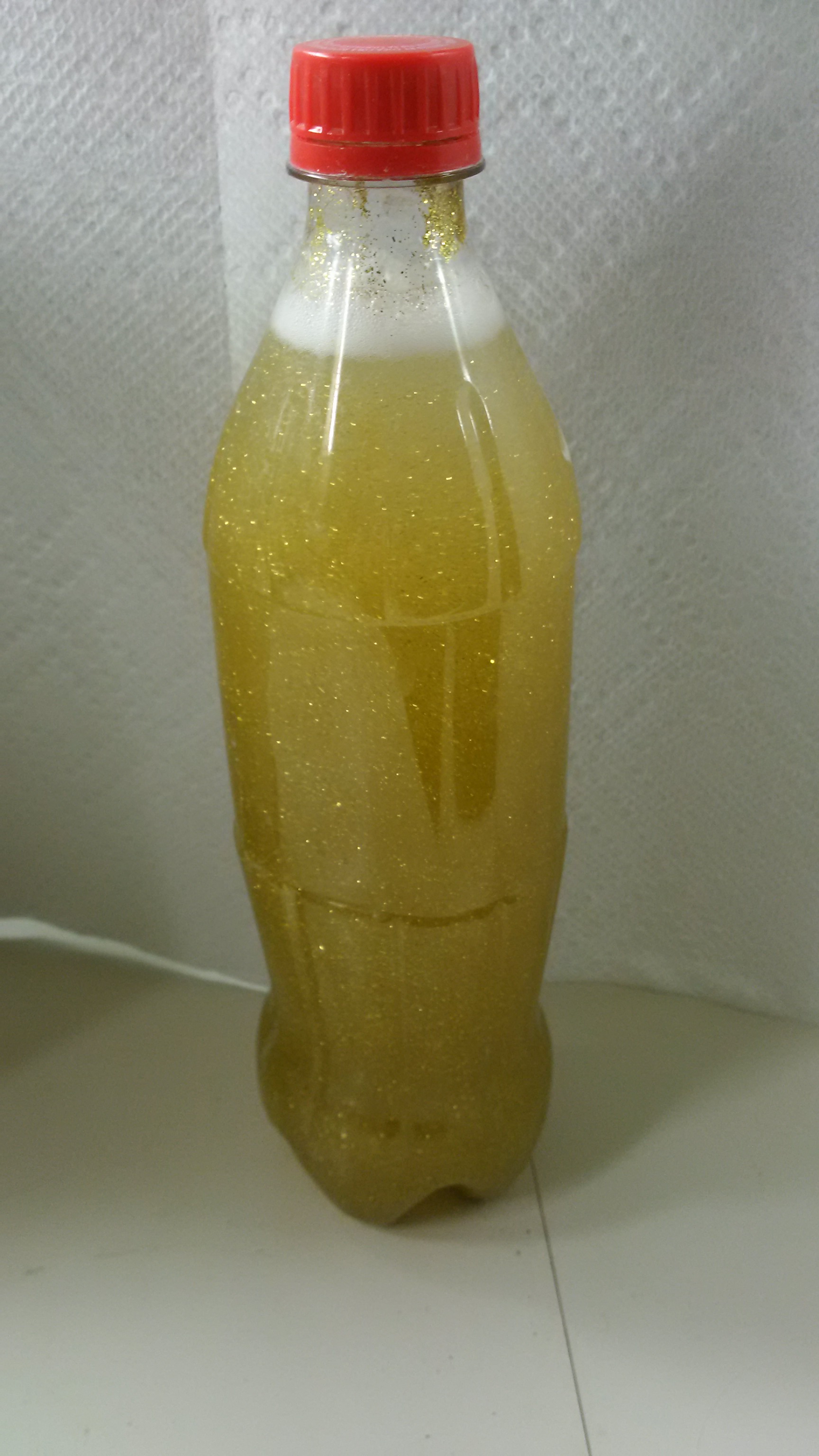
    a 500ml coke bottle filled with water and glitter
    My homemade calming bottle

    5. Hug it out – Although it seems counter-intuitive, sometimes more stimulation in the form of a tight hug can help alleviate a meltdown. Many kids on the spectrum benefit from deep pressure so a tight hug or some time in a Giant Pea Pod can be a huge help. A Dynamic Movement BodySox can be just the right amount of pressure, but check reviews carefully, sometimes saving a few dollars results in getting a product that rips on the first use.

    6. Remember – It’s Not About You. It can be hard to remember that your child isn’t doing this on purpose. Some days it feels like you just can’t take any more. Hopefully you have a support network you can call on to take the kids for an hour or two so that you can sit and have a coffee. It’s important for parents with kids on the spectrum to get some alone time. Not that it’s not important for all parents, but it has a way of slipping though the cracks for parents of special needs kids. If you don’t have friends or family who are able to watch your children, look into respite care. It will help you unwind and decompress which will in turn help your relationship with your child.

    A stuffed turquoise platypuys.
    This small stuffed Perry the Platypus is one of the most requested stuffies in my calming bag.

    Once a meltdown starts, it’s not easy to stop it but hopefully these tips make it a little more manageable.


  • Sensory 102

    Sensory 102

    Earlier this week, I wrote about the two most common sensory issues that affect children with Autism Spectrum Disorder (ASD) – sensitivity to clothing and to food textures.There are other sensitivities that affect children on the spectrum. Sensory issues can and do affect every sense.

    I was remiss in not mentioning oversensitivity to noise in the last post as it is one of the most common sensory issues and affects more than just children on the spectrum. It isn’t just loud or unexpected issues that can cause problems. One of the kids I work with, once told me that the humming of the fluorescent lights in his classroom can make it very hard for him to concentrate. He explained that he always hears the humming and can see the tiny flickers that are almost imperceptible to his neurotypical classmates. The energy he expends trying to tune out these distractions is energy he doesn’t have to use on his schoolwork or on social interactions, and leaves him drained at the end of the day. He had gone through the first 7 years of his school career before anyone thought to ask him if there were any parts of his classroom that made it harder for him to do work. Children with ASD do not typically volunteer extra information even when it is in their best interest to do so and had this question not been asked, the problem of the “noisy lights” as he calls them, would likely have never been addressed.  Luckily, he had a very understanding teacher who has brought in some floor lamps and tries to use natural light whenever possible so the “noisy lights” can stay off.

    Everyday noises that most of us take for granted and easily tune out such as the humming of the refrigerator or the whirr of the furnace fan can be unwelcome intrusions into the life of a child with sensory issues. Unexpected noises can derail an entire day.  Last week I was in a big box store and there was a little guy who was having what I recognized as a sensory overload meltdown. Note: a meltdown may look like a tantrum from the outside but whereas a tantrum usually results from a child not getting his or her way, a meltdown is a child’s uncontrollable response to overwhelming stimuli.  His mother was at the end of her rope, so I stepped in and asked if I could help (Yeah, I do this a lot – I hate seeing a child in distress). She agreed so I knelt down and asked the child if it was too loud. He said “yes it is” -we were standing about 4 aisles away from the electronics department where every TV was showing something different and someone had turned some of the volumes up it was too loud even for me. I went off in search of an employee and asked them to please turn down the overall volume  and asked if a few of the sets could be turned off and he readily agreed.  I went back to my new little friend and explained that next time, he should use his words to tell an adult if it is too noisy. He thanked me, and his mother told me that he had autism and “never talked to anyone outside of family” before talking to me.  (I hear that a lot too – I’m not sure why I can get kids to open up but it’s a gift I’m thankful for every day.)  For me the noise in the store was irritating, but it wasn’t stopping me from functioning. For a kid with ASD, who is unable to tune out the noise, it becomes all encompassing and they cannot function until the noise is reduced or eliminated.  However, it often takes someone asking directly if the situation is a problem as children with ASD don’t usually volunteer that kind of information.

    The sound volume icon - a speaker with 3 radiating bars -indicating full volume
    Check volume levels!

    Loud and unexpected noises can be a source of distress for a child with ASD.  To begin with, as a group, children with ASD do not tolerate the unexpected well.  Routine helps them make sense of their world, so unexpected noises that disrupt that routine are upsetting. Fire drills, car alarms, doorbells, and even phone calls are all noises that can interrupt and disrupt the daily routine.  Sometimes there is an easy fix – one of the children I work with was constantly upset by the doorbell.  His parents changed the standard doorbell for one of the ones with a customizable chime – and allowed him input of what the sound should be.  He chose one that was quieter but still loud enough to be heard and the problem was solved.  Sometimes it takes a lot of trial and error to discover the problem and to figure out a solution, be persistent and you will be rewarded. My friend Lisa notes that children who have sensory issues with loud noises often do not have issues being noisy themselves. This can be due in part to the fact that they don’t hear themselves at the same volume others do or are unable to successfully modulate their voices to the situation. However their own excess noise can contribute to their overall stress and usually causes siblings or classmates to raise their voices in return which can lead to a meltdown.

    Smells are another sensory issue that can affect children with ASD.  For some children a scent that others find quite pleasant can be quite upsetting. One child I know has an intense reaction to the smell of vanilla.  He dislikes it greatly and will cry inconsolably if he catches the scent in a store.  He was out with his parents running errands and a bottle of vanilla had been broken in the aisle of the grocery store.  He was so distraught that he had to leave the store in order to calm down.  For a child with sensory issues, sometimes the only recourse is to remove them from the situation.  Some scents can be avoided, and others can be gradually introduced in order to desensitize the child to them.  It may be worth investigating, if a child has a negative reaction to a friend or relative, whether they have a signature scent.  Sometimes the familiar scent of a relative is not comforting to a child with ASD. Unscented laundry detergents and soaps can go a long way to making life more comfortable for a child with olfactory sensory issues. Beware of cleaning agents with strong or even unusual scents – if your child is showing signs of distress after the house has been cleaned, ask them if the smells bother them. It may be that the smells of the cleaning agents are bothering them.

    An often neglected sense when discussing sensory issues is sight.  Conventional wisdom has had nurseries, bedrooms, and classrooms brightly decorated with lots of stimulation for developing minds.  Some children, however, including those on the autism spectrum, cannot process that much visual input and thus become overstimulated in such environments.  This is not to say that there cannot be decoration but make sure the child is not having to filter out unnecessary visual information to get to the important stuff.  Daily schedules should be free from extra adornments, and fonts should be simple and not overly ornate.  Even classroom bulletin boards should be free of extraneous information.  A couple of posters on a bedroom wall may be too much for one child but may be fine for another – see what works best for the individual child.

    Not all sensory issues are easy to identify.  It can take a lot of trial and error to find the right combination to work for each child. The rewards can be worth all the effort though. When a child with autism is comfortable in his surroundings, and not being overstimulated, they are better able to cope with their world, and live in ours.

  • Sensory 101

    Sensory 101

    One of the hardest things for many parents to understand about their child with Autism is their sensory issues. I’m writing from my experience, which is with kids who have ASD.  Sensory issues can come on their own, as part of Sensory Processing Disorder, or with another condition such as ADHD.

    If you don’t have a sensory issue, it can be very hard to understand why you child is refusing to put on the shirt grandma gave him for Christmas because it “doesn’t feel right”.  Often, parents chalk these tantrums up to behaviour or defiance, but as I explained in an earlier post, behaviour is how some children with ASD communicate that there is a problem. I have some sensory issues myself, but I also have the words to be able to explain why something is bothering me. I primarily have issues with fabrics, foods, and some sounds, so I’ve got it easy.  As an adult, I am able to avoid most of the things that drive me crazy, and as a child I was lucky to have parents who cared only that I was wearing clothes but didn’t care if i wouldn’t wear corduroy, or would only wear corduroy.

    Many parents try to make mornings less of a hassle by picking out (or having their children pick out) clothes the night before. While it is a good idea in theory, it can fail horribly in practice for a sensory kid (or grownup) because sometimes something that didn’t bother them yesterday does today.  They aren’t being intentionally difficult; they really cannot handle the stimulation those clothes provide on that day.  It should be noted, too, that in teens and adults hormones and hormone fluctuations can affect sensitivities so they literally can change day to day.

    The seams on clothing can be a constant irritant.  Sometimes I am able to filter it out and ignore it but sometimes it’s like a sunburn – my skin feels different and wrong and I can’t concentrate on anything until the situation is fixed.  I need to change clothes.  I have pairs of diabetic socks because they don’t have rough seams and they are non binding – the elastic at the top of socks is awful.   The fabrics themselves may rub the wrong way – and which fabrics bother me may change.  I lived in jeans in high school – I had 4 or 5 pairs and wore them more days than not.  Then I got to university and couldn’t stand the way denim felt on me. My favourite jeans sat neglected in my closet until partway through 4th year when suddenly, denim was okay again.  Clothes that haven’t had fabric softener (I use bounce unscented sheets because I’m allergic to a lot of scents and I am a static magnet) drive me around the bend. They are stiff and scratchy and if I have to wear them, I may look like I’m listening but really I’m just counting the hours until I can change.

    cartoon drawing of blue and green flip flops
    Nope. Just Nope.

    Flip Flops. Oh my god. I have tried to get into the spirit of summer and don flip flops at the cottage. My record so far is 6 minutes before they were ripped off my feet and tossed aside.  The only thing that goes through my head the entire time I am wearing flip flops is “There is something between my toes.  Why is there something between my toes?  The something between my toes must go away” On a constant loop.  I cannot carry on a conversation in flip flops, I can barely remember my name because I cannot tune out the sensory input coming from the little piece of plastic between my toes. Then there’s the characteristic sound that flip flops make.  It’s distracting enough when it comes from other people, but when I’m the one making it?  I’d stand still except then I still have something between my toes.  I can avoid flip flops but many kids with sensory issues have that level of input coming from everything they wear. Yes some clothes are worse than others, and over time, one can can learn to tune out some of the input but when it’s coming from everything all of the time?  It requires a tremendous amount of energy to do anything after tuning out the sensory distractions.

    There are clothing manufacturers out there who make clothes specifically for children and adults with Autism or Sensory Processing Disorder. They feature flat seams that are far less irritating than regular seams, some seamless designs. printed on labels, and soft fabrics.  They are expensive but can be a lifesaver if your child is really struggling.  Some regular clothing stores incorporate some sensory friendly elements in their clothing – Joe Fresh has some clothes with printed labels instead of tags and flat seams. I love Smartknit socks – not only are they seamless but they have no heels so they are easy to put on and fit growing feet for longer.  They also make seamless underwear and undershirts.

    With food, it often isn’t the taste that I cannot handle (though occasionally it is – the taste / smell of root beer drives me crazy) but the texture.  Certain food textures are more upsetting than others. I am well aware of how awesome chia seeds are for your health.  I can totally appreciate that adding them to chocolate pudding makes it somewhat healthier, but I cannot handle the texture of chia seeds. You can lie to me and tell me it’s plain pudding but it’s not a preference thing, I will feel the jelly-like seeds on my tongue and, because I was raised to be polite, I will swallow one bite and politely refuse any more.  Many kids can’t force themselves to swallow it.  I do not advocate trying to trick children with sensory issues into eating foods they dislike because they will know, and then they will be suspicious of any new food.  There are therapies, usually provided by an Occupational Therapist, specifically designed to help children whose sensitivity to food texture prevents them from being able to eat a healthy diet, but the majority of sensory kids have texture families they cannot stand but are fine with others.

    This doesn’t mean you shouldn’t introduce new foods, but don’t insist on a child with sensory issues swallowing the new food. If you can, ask them why they don’t like it.  Tastes can take time to develop, sometimes it takes a number of reintroductions before one acquires the taste for something. Textures, are another story – aversions to textures are unlikely to change as a result of repeated introductions. That’s not to say they can’t change, but it’s more of an internal change and not something that can be forced.

    Another food texture issue that is common is a refusal to try a food in an altered state.  Apples may be a favourite food, but apple crisp makes crunchy apples soft and that isn’t right.  Toasting marshmallows gives the outside a crunchy texture when marshmallows are supposed to be soft.  A child may like mashed potatoes but refuse to eat baked potatoes because the texture isn’t what they expect. Different textures can mean that even if a child likes the food, they cannot tolerate the altered state.  Smoothies can be a tricky sensory combination as some fruits like strawberries have tiny seeds that don’t get fully blended. Smoothies are also a combination of flavours and many kids (and adults) on the spectrum do not like flavours to mix.

    Figuring out what the sensory issue is can be a bit like solving a mystery. If a child is non verbal, it can be harder to identify the cause of the problem but not impossible.  You basically need to approach the situation like a detective – is anything new? If so, try reverting back and see if the behaviour stops.  Are there irritating tags? Take them out (use a seam ripper if possible since the stubs left from cutting can be worse than the tag itself). Is their skin dry?  Did you change detergents? Any of these can be the cause.  If the child can nod or give yes / no answers you can ask “is this bothering you” as you hold up different items of clothing. If a food was presented in an altered state (such as soft boiled eggs instead of scrambled), try introducing the food in the expected state and see if the child accepts it.

    A child who cannot handle wearing certain clothes, or deal with food textures may react in a way that looks like he is an overindulged brat. Friends and relatives will tell parents that they are spoiling the child by letting them get away with reacting.  There is nothing further from the truth.  We want to set children up for success.  A child is more likely to succeed when they are not being distracted by scratchy clothes and they have been fueled with food that they enjoy and that gives them adequate nutrition.    With a better understanding of sensory issues, it becomes easier to see how what looks like a tantrum is actually a cry for assistance.