Tag: english

  • Word Wednesday – through with the cough

    Word Wednesday – through with the cough

    I had big plans for a bunch of posts right around this time last week. Then I got hit hard with a virus that is going around. It started off with me being really tired, but since I’ve been on the verge of exhaustion for the last few weeks, I didn’t really notice. Phase II resembled a gastro bug. Unpleasant for sure but I figured they’re usually really short lived so rest for the weekend and I’d be good as new Monday. Not so much. Monday brought phase III – the cold of doom. My nose is either stuffed up or running like a faucet, my head is pounding, my sinuses ache, and then there’s the cough. I had a month long cough after Blissdom in October – heck I even lost my voice the day before I was supposed to present.  I figured I’d paid my dues, but the universe has other plans. It’s not too bad in the day time, apart from the occasional coughing fit that leaves me winded. At night though, I sound like a lost seal barking for her rookery (or pod, or colony – the internet gods were a little indecisive on this).

    The cough is keeping me up at night, which is having a decided impact on my ability to string coherent sentences together. I’m also not kicking this virus very quickly so the thought of waiting until I feel better to post was making me worry that it’d be 2016 before I wrote here again. So, I decided to suck it up and put together a Word Wednesday post. Inspired by a post I saw on the Grammarly Facebook Page and my current predicament, I bring you “Word Wednesday: getting through a cough – hey why don’t those words rhyme?”. One of the things that popped into my mind around 3 AM as I was coughing (again) was why is ‘ough’ such a weird letter combination. I can think of 8 different ways that the four letters can be pronounced in a word. EIGHT.  Two or three, sure, but eight? Insane.

    It’s true though. In ‘thought’ there’s an ‘aw’ sound, in ‘though’ it’s ‘oe’ – though, in ‘cough’ it’s more of an ‘off’ sound, which is similar but not identical to the sound at the end of ‘rough’ – ‘uff’, ‘bough’ ends with ‘ow’, and ‘through’ is the always fun ‘oo’. Those are the main six. The other two are less frequent but are used enough that they bear mentioning. ‘Scarborough’ ends with an ‘erow’ sound and the weirdest example of all – ‘hiccough’ has an ‘up’ sound at the end due to popular pronunciation. Is it any wonder people learning English as a second (or third.. or even first) language have issues when it comes to spelling words ending in ‘ough’? If my head wasn’t already spinning, this would do it.
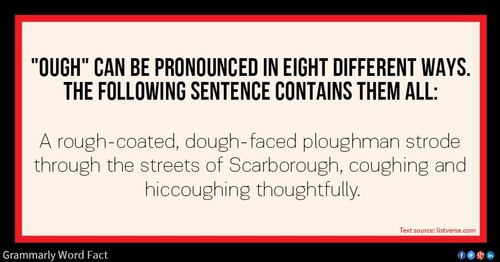
    Text reading "OUGH can be pronounced eight different ways. The following sentence contains them all. A rough-coated dough-faced ploughman strode through the streets of Scarborough coughing and hiccoughing thoughtfully"
    Granted, I don’t think it’s a very natural speech patern.

    Now that we’ve figured out how to pronounce all the ‘ough’ variants, may I present today’s Word Wednesday word: sick. Ha. I bet you thought it was going to be an ‘ough’ word like cough. I was kind of leading you that way wasn’t I?  Okay, two for one deal time. I’ll present two words and their origins simply because I’m nice.

    Interestingly, at least to me, sick is an older word than cough – dating from before the year 900 AD. Sick comes from the Middle English word sik or sek, which in turn comes from the Old English sēoc; sēoc is cognate with Dutch: ziek, German: siech, Old Norse: sjūkr, and Gothic: siuks (Source: Dictionary.com). I find it interesting that so many languages have a similar sounding word for sick and they all rhyme (mostly) with ick which describes how I feel right about now. 

    Cough, on the other hand, dates from around 1275 AD – Middle English form was coghen (note the ‘gh’ which was pronounced similarly to the Scottish ‘ch’ as in ‘loch’ ), which came from the Old English word cohhian which comes from the Germanic keuchen which means to wheeze. 

    So there you have it, cough and sick – two Word Wednesday words for a week when I’ve been down for the count.

    Sick (sik) Adjective

    1. Afflicted with ill health or disease; ailing.
    2. Feeling nauseous and wanting to vomit.
    3. Intensely annoyed with or bored by (someone or something) as a result of having had too much of them.

    Cough (kof) Verb

    1. To expel air from the lungs with a sudden sharp sound

    Noun

    1. An act or sound of coughing.
    2. A condition of the respiratory organs causing coughing.

  • #WordWednesday: The sequel

    #WordWednesday: The sequel

    Okay, So it’s looking like this may stick. At least for the next little while. Today’s word is one that I love using and as many of my friends will attest, I have been known to seek out occasions to use this word. Granted, sometimes I have had to shoehorn in in but it’s such a fun word, it’s totally worth the effort. You might say that playing with words is my thing. It’s my happy place, something I do for my own personal enjoyment.

    In other words, playing around on the linguistic jungle gym is my bailiwick.

    Stylized word Bailiwick
    Today’s Word Wednesday is Bailiwick

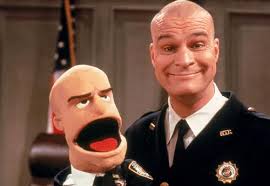
    There are plenty of synonyms I could use, wheelhouse, domain, even ‘thing’ – as in ‘it’s my thing’ but bailiwick just sounds so cool.  It rolls off the tongue. I was surprised to learn that the word bailiwick isn’t as old as I thought it was – it’s late middle English so not exactly new but not a Latin based word either. It does have a secondary meaning (which used to be the primary meaning) which is the one that it literally translates to. The original meaning of bailiwick was “an area under the supervision of a bailiff (this could be a mayor, sheriff, or other official instead of the bailiff we think of today – though I still picture Bull from Night Court whenever I hear that word).” The origin of the word is partly French – the word bailie refers to the official who was ordered to supervise an area.

    a bald man in a court officer's uniform holds up a puppet.
    Not this kind of bailiff…

    In France, this area was called a bailliage but the English never liked to steal a word outright, they always made a few changes. When they adopted the use of the word bailie, they added the word wik to the end. Wik in middle English meant village (it’s also the root word for a town name like Greenwich – literally ‘green village’) so bailiwick became the area or village that fell under the supervision of the bailie.  Surprisingly, there are still a few official bailiwicks left in the United Kingdom today – the islands of Jersey and Guernsey are legally bailiwicks. 

    With only two bailiwicks of the traditional sense left, it is the new meaning that has me using this word whenever I can. The modern definition of bailiwick is a person’s “specific sphere of interest, or area of expertise”. So, really, writing, and more specifically, grammar is my bailiwick. What’s yours?

    Bailiwick – (bai·li·wick ) Noun

    i) A person’s specific sphere of interest or area of expertise.

    ii) The area in which a bailiff has jurisdiction.

  • #WordWednesday

    #WordWednesday

    Okay, So I know that #WordlessWednesday is a thing, but I’m a writer by trade and I love using the perfect word for the situation so I’m going to try to do some #WordWednesday posts where I talk about a word and how it is used and / or misused. Maybe it will be a regular thing or maybe it will happen once a month.  I’m not sure – but I love words and I love learning more about my favourite words.

    Some of the words, I’ll choose because of the way they sound, others because I like the usage, others because I’ve stumbled across them and either had to look them up or work out the meaning for myself. This one I think I first learned while perusing (another fun word), Wordsmith.com ’s Word of the Day archives a few years ago.

    Stylized word Perendinate
    Today’s #WordWednesday word is perendinate

    Okay, so I’m a total Latin geek – I took it in high school and in university simply because I love learning new words and Latin is a great basis for that – and any word that makes me think back to those Latin root words is going to make my day. I remembered when we learned that in Latin, cras means tomorrow.  Suddenly the word procrastinate made a lot more sense – it literally means to put off until tomorrow. Which is all well and good, but what if you want to put something off until the day AFTER tomorrow? Surely there’s no English word for that right?  Except there is! You guessed it, that word that means to put something off until the day after tomorrow is perendinate.  The Latin root of this word is obviously dies or day. From there we get perendie which means “on the day after tomorrow” and ta-da – to perendinate is the action (verb form) of this, which means to put something off until the day after tomorrow.

    a grey felt journal with the words to do list on it
    What’s on your to-do list?

    So, to butcher an old proverb, never procrastinate when you could perendinate instead.

    Perendinate – (puh-REN-di-nayt) Verb. To put off until the day after tomorrow.

    There you go. Now use it wisely and impress your friends and family.